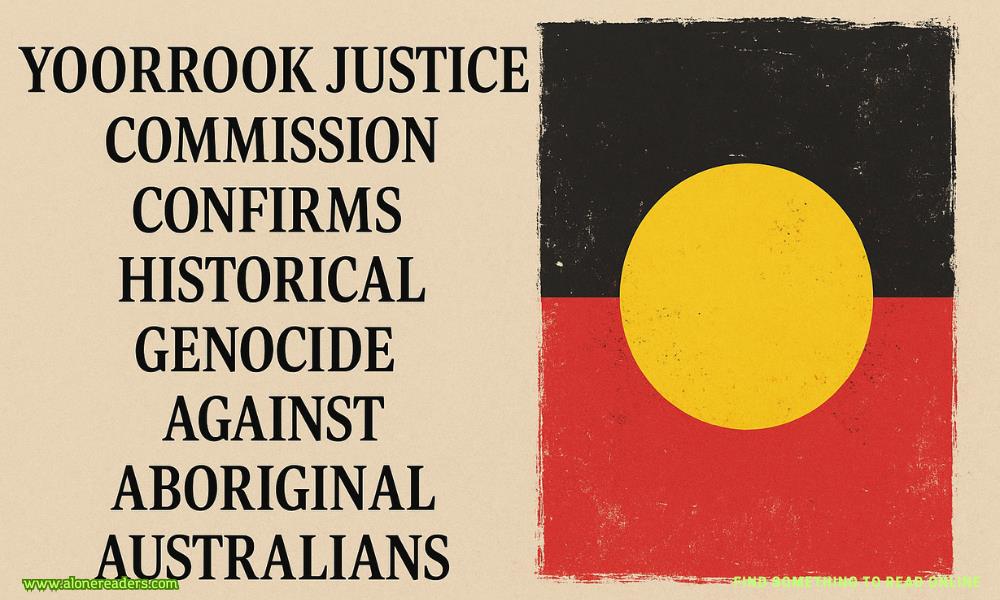
In a groundbreaking and deeply sobering revelation, Australia’s Yoorrook Justice Commission has formally acknowledged that acts committed against Aboriginal and Torres Strait Islander peoples throughout Australian history amount to genocide. This historic finding follows months of investigations, testimonies, and evidence presented by Indigenous elders, legal experts, historians, and members of the broader community. The commission’s interim report sheds light on the devastating legacy of colonization, forced removals, and systematic oppression that Indigenous communities have endured since European settlement.
The Yoorrook Justice Commission, established as Victoria's formal truth-telling body, is the first of its kind in the state and one of the few globally to be grounded in First Nations-led leadership. Its mandate is to uncover the truth of historical and ongoing injustices against Aboriginal peoples and provide a platform to facilitate healing and structural reform. After extensive consultations and inquiries, the commission concluded that the treatment of Aboriginal people by colonial authorities—characterized by mass killings, displacement, destruction of culture, and denial of identity—meets the criteria of genocide under international law.
This conclusion is not made lightly. The commission’s findings are rooted in the 1948 United Nations Convention on the Prevention and Punishment of the Crime of Genocide, which defines genocide not only as acts of mass killing but also includes the destruction of a group’s social structures, cultural institutions, and ways of life. Based on this definition, the commission highlighted a series of state-sanctioned practices throughout Australia's colonial history that constituted genocidal intent. These included violent massacres by settlers and police forces, the forced removal of Aboriginal children from their families (commonly referred to as the Stolen Generations), and policies that sought to "assimilate" Indigenous people into white Australian society—erasing their culture and identity in the process.
Among the most harrowing testimonies were those of Aboriginal elders who recounted multigenerational trauma resulting from stolen land, broken families, and systemic discrimination. Survivors and their descendants shared stories of children taken without consent, denied their language, and subjected to abuse in government institutions. Others told of entire communities decimated by settler violence, with little to no recognition or reparation from the state.
The commission also examined the contemporary implications of this history, drawing a direct line between historical genocide and the ongoing disparities experienced by Indigenous Australians today. These include drastically lower life expectancy, higher incarceration rates, widespread poverty, and limited access to education, healthcare, and justice. The commission argues that these systemic inequalities are not accidental but rather the continuation of structures designed to suppress and marginalize Aboriginal communities.
Importantly, the Yoorrook Commission’s work is not merely about historical record. It is also forward-looking, aiming to dismantle the enduring systems of colonial oppression and chart a new path based on truth, justice, and self-determination. The commission has called for a suite of reforms including constitutional recognition of First Nations peoples, the return of land, meaningful reparations, and the embedding of Aboriginal law and governance systems within Australia's legal and political frameworks.
This landmark report arrives at a time of growing public awareness and discourse around Indigenous rights in Australia. The failure of the 2023 Indigenous Voice to Parliament referendum, though disheartening to many Aboriginal advocates, has not diminished the momentum for change. Rather, the Yoorrook Commission’s findings serve as a renewed call to action—demanding that Australia face its colonial past with honesty and humility, and work to repair the harm that continues to reverberate through generations.
Reactions to the commission’s findings have been mixed. Indigenous leaders and communities have expressed a sense of validation and hope, seeing the recognition of genocide as a vital step toward justice. For many, it represents the first time that the pain and suffering of their ancestors have been formally acknowledged by a government-backed institution. Others, particularly conservative political figures and media commentators, have challenged the commission’s conclusions, arguing that the term “genocide” is inflammatory or inaccurate. However, legal scholars and international human rights organizations have largely supported the commission's legal reasoning and moral clarity.
The Australian government has not yet issued a formal response to the genocide finding, though it has reaffirmed its commitment to reconciliation and addressing Indigenous disadvantage. The commission's final report, due in 2025, is expected to include a comprehensive set of recommendations for policy, legal, and institutional reform. It remains to be seen how fully these recommendations will be embraced by federal and state authorities, and whether Australia will move beyond symbolic gestures to implement structural change.
Ultimately, the Yoorrook Justice Commission’s acknowledgment of genocide marks a pivotal moment in Australia’s journey toward truth and justice. It challenges the national narrative that has long sanitized or ignored the brutal realities of colonization. By giving voice to the suppressed histories of Aboriginal peoples and validating their lived experiences, the commission has set a new precedent for how Australia understands and confronts its past.
For many Australians—both Indigenous and non-Indigenous—this moment may serve as a profound reckoning. It demands not only empathy but action. If justice is to be more than a word, then the findings of the Yoorrook Commission must be met with courage, political will, and a genuine commitment to rewriting the relationship between Australia and its First Peoples.



 Meaning and Origins of Easter: A Deep Dive into Its History and Symbolism
 A Complete Guide to Healthy and Delicious Easter Brunch Recipes
 Creative DIY Easter Decorations to Brighten Your Home
 Easter Traditions Around the World: Egg Hunts, Bonfires & Festive Feasts in 2025
 Reforming Uber Driver Ratings: The Need to Count Unrated Rides for Fairer Evaluations
 Best Smartphones of 2025 (So Far): Top Picks, AI Features, and Market Trends