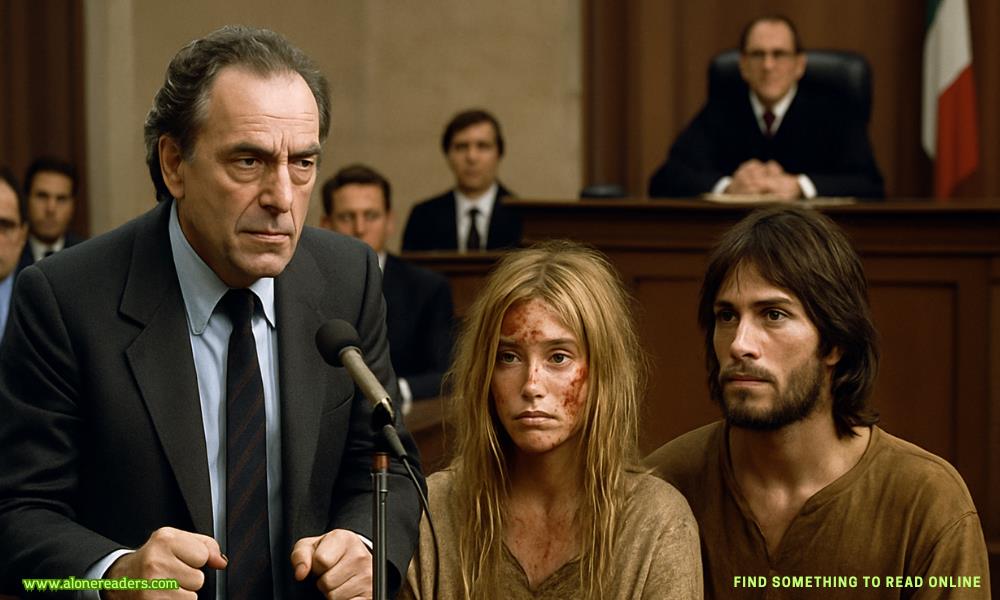
When Cannibal Holocaust premiered in 1980, it instantly became one of the most controversial films ever made. Directed by Italian filmmaker Ruggero Deodato, the film was not only shocking in its graphic violence and raw presentation, but it was so convincingly realistic that it sparked a legal case unlike any in cinematic history. Authorities genuinely believed that the actors had been murdered during the production, and Deodato found himself at the center of a criminal investigation for murder. What followed was one of the most bizarre and sensational legal sagas in the history of film, where a director had to literally prove that his actors were still alive.
The film itself is presented in a "found footage" style, which was revolutionary at the time and predated popular entries in the genre like The Blair Witch Project by nearly two decades. Cannibal Holocaust tells the story of a group of American documentary filmmakers who travel to the Amazon rainforest and encounter violent indigenous tribes. The movie is framed through recovered film reels showing their journey, and the graphic scenes of violence, torture, cannibalism, and sexual assault are portrayed in an extremely realistic way. This hyper-realistic style, paired with the gritty and degraded visual quality of the footage, made it feel more like a genuine documentary than a scripted movie. The actors were mostly unknown and had agreed, per their contracts, to disappear from public view for a year after the film's release to maintain the illusion that the footage was real. That decision would backfire spectacularly.
Shortly after its premiere in Italy, the film was seized by authorities, and Deodato was charged with obscenity. However, the situation escalated dramatically when rumors began to circulate that the film was, in fact, a real snuff film. Media outlets began to speculate that the deaths depicted on screen were not staged and that the director had orchestrated the actual killings of his cast. The public outcry was immense, and Deodato was soon arrested and charged with murder. The film’s graphic content—including scenes where characters are impaled, mutilated, and devoured—seemed impossible to fake at the time. Viewers, critics, and prosecutors were all convinced that something deeply sinister had occurred during production.
The most infamous scene, one that led directly to the murder allegations, involves a young woman impaled on a wooden stake. The visual was so convincing that even seasoned professionals in the industry had difficulty explaining how it was achieved. In court, Deodato had to provide detailed explanations of the special effects techniques he used. He described how the actress sat on a bicycle seat attached to the pole, while holding a small balsa wood stake in her mouth to simulate the impalement. To prove it further, he even brought the actress to court alive and well, effectively ending the murder charge—but not the controversy.
The rest of the main cast, too, had to appear in court to prove they were still alive. This dramatic court appearance was unprecedented and cemented Cannibal Holocaust’s place in the annals of film history. The actors' sudden reemergence helped prove that no murders had occurred, though it also revealed the ethically questionable tactics Deodato had used to promote the film. By instructing the actors to go into hiding, he had blurred the line between marketing and reality in a way that no other director had dared to do.
Even with the murder charges dropped, the film's troubles were far from over. Deodato was still prosecuted for animal cruelty, as several animals were killed on-screen during filming. Unlike the human gore, these killings were real. In particular, scenes involving a turtle, a pig, and a monkey drew international outrage. The scenes were not faked, and the animals were indeed killed on camera. Deodato later expressed regret for these actions, stating that he would not have filmed the scenes in the same way had he known the global backlash it would generate.
Despite—or perhaps because of—the controversy, Cannibal Holocaust developed a cult following. Banned in multiple countries including the UK, Australia, and Norway, it became a forbidden legend in underground cinema circles. Over time, it garnered respect from some horror aficionados for its raw power and unflinching social commentary. The film has been interpreted as a critique of Western imperialism and media sensationalism, with its ending highlighting the hypocrisy of the filmmakers who committed atrocities under the guise of documenting them. However, many still see it as exploitative and morally indefensible.
Ruggero Deodato’s career was forever shaped by the scandal. Though he directed other films afterward, none reached the notoriety or cultural impact of Cannibal Holocaust. In later interviews, he remained defiant about the film’s intent, defending its artistic value and claiming that it was meant to expose the brutality of both so-called “civilized” people and the media. He maintained that the realism was necessary to confront audiences with their own appetite for violence and voyeurism.
Today, Cannibal Holocaust stands as one of the most infamous films ever made—not only for its content but for the real-world legal firestorm it unleashed. The fact that a director had to defend himself against murder charges and produce living actors in court is unparalleled in cinematic history. It remains a stark example of how powerful and dangerous storytelling can be when it crosses the boundaries of realism.
While modern audiences have become more accustomed to found-footage horror and shocking imagery, Cannibal Holocaust still holds a unique place due to the extreme lengths it went to blur reality and fiction. It challenges not just viewers’ stomachs but also their perceptions of truth, media ethics, and artistic responsibility. Whether regarded as a pioneering work of horror or a disturbing piece of exploitation, its legacy is undeniable. And its director, Ruggero Deodato, will forever be remembered as the man who had to prove to a court of law that his movie did not actually kill its cast.



 Château de Vincennes: France’s Forgotten Royal Fortress and Medieval Stronghold
 Château de Carcassonne: Europe’s Greatest Medieval Citadel and Fortress
 Château de Chenonceau: The Castle Built by Remarkable Women
 Château de Chambord: France’s Magnificent Renaissance Castle and Architectural Wonder
 Tehri Dam: India's Tallest Dam and the Debate Behind It
 Bhakra Nangal Dam: India's Temple of Modern Development










