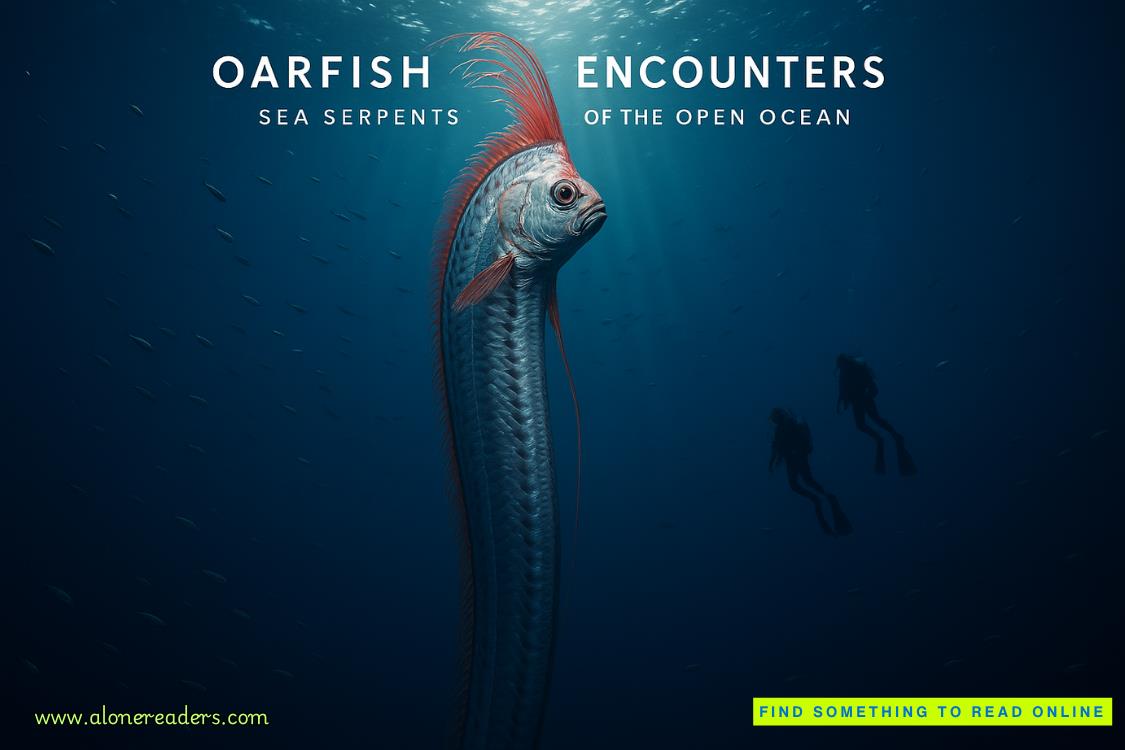
Oarfish are among the most mysterious creatures that inhabit the vast, unexplored world of the deep ocean. Rarely seen alive, these elongated, ribbon-like fish have long been associated with legends of mythical sea serpents. For centuries, sailors believed that sightings of oarfish were omens—warnings from the sea that earthquakes and storms were coming. While science has begun to explain their biology and behavior, human fascination with the oarfish remains rooted in myth, mystery, and awe. In reality, these creatures may be some of nature’s most fascinating and misunderstood marine species, revealing important clues about ocean health and geological activity.
The oarfish belongs to the Regalecidae family, and it holds a remarkable title: the world’s longest bony fish, with recorded specimens reaching over 11 meters in length. Unlike many marine predators, oarfish are not built for speed or aggression—they are slow-moving, delicate swimmers, surviving in the mesopelagic zone, often 600–1,000 meters below the surface. Their bodies are slender and metallic silver, with a striking scarlet dorsal fin that runs across their entire length, giving them an almost mythical appearance. This unusual anatomy, paired with their mysterious habitat deep below human reach, has fueled centuries of speculation and intrigue.
Despite their size, oarfish are not predatory threats. They feed mostly on small crustaceans, plankton, and tiny fish, using a suction-feeding mechanism that allows them to consume prey without pursuit. Their weak musculature and lack of defensive organs suggest that they are designed more for vertical drifting and survival in low-light conditions than for active hunting. Scientists believe that the slow, effortless rising of oarfish to the ocean surface may be tied to stress, sickness, or changes in underwater pressure, which explains why most encounters involve individuals found washed ashore or drifting near the surface, often already dying.
One of the most fascinating aspects of oarfish is their unusual vertical swimming behavior. Unlike most fish that swim horizontally, oarfish are sometimes observed floating upright, head toward the surface and tail downward, like a silver ribbon suspended in water. Marine biologists suggest that this posture helps them detect subtle shifts in underwater vibrations, which may explain why oarfish encounters sometimes precede seismic events or underwater disturbances. While this connection remains debated, several coastal communities in Japan and the Pacific regard oarfish appearances as natural warning signals—living barometers of the Earth’s movements beneath the sea.
The rarity of oarfish sightings adds to their mystique. Over the last century, only a handful of live encounters have been recorded on camera, and most of those occurred when the fish were already distressed or close to death. Their natural habitat lies at depths beyond human diving capabilities, making direct scientific observation extremely challenging. With such little data available, researchers must rely on washed-up specimens to study their anatomy, diet, and internal structures. Many samples show signs of deep-sea adaptation: large eyes for low-light vision, gelatinous flesh, and specialized organs for pressure regulation, all pointing to a life perfectly designed for the quiet darkness of the open ocean.
Historically, stories of sea serpents threatening ships or giant creatures rising from the waves were often inspired by oarfish encounters. Their long, snake-like shape and sudden appearances near the surface gave birth to countless maritime legends across the Mediterranean, Scandinavia, Asia, and the Pacific. Sailors told tales of creatures longer than their vessels, glistening in moonlight, moving with mysterious purpose in the waves. Though these stories were often exaggerated, their roots lay in real phenomena—deep-sea animals briefly entering the human world, only to vanish again into darkness.
Some researchers now believe that oarfish may play an unseen role as indicators of environmental change. When deep-sea conditions shift drastically—such as during major earthquakes, volcanic activity, or pollution events—these fish may rise from the depths unwillingly, pushed toward waters where they cannot sustain life. Their appearances on beaches or shallow waters could be signs of stress in marine ecosystems, making them valuable biological signals of deeper changes occurring far below the surface.
Oarfish are also unique in terms of reproduction and development, although much remains unknown. Females produce thousands of tiny transparent eggs that float near the surface, drifting with ocean currents. Once hatched, juveniles must quickly descend into deeper water, where survival is more likely. The early stages of oarfish life are rarely observed, but the few recorded larvae show miniature versions of adult features—elongated bodies, thin fins, and large reflective eyes, already adapted for low-light environments. This suggests that their life cycle is intricately tied to ocean stratification, with reproduction likely influenced by temperature, pressure, and food availability.
In recent years, advances in ROV technology (remotely operated vehicles) have allowed scientists to capture rare footage of live oarfish in their natural habitat. These recordings show peaceful, drifting animals that move with deliberate, slow motions, conserving energy in the frigid depths. Rather than fierce predators, they appear as calm guardians of the twilight zone, gliding through water with almost ghost-like elegance. Some marine biologists believe that studying their movements could help improve underwater detection technologies, especially those related to seismic monitoring and pressure-sensitive mapping.
Despite their delicate nature, oarfish have survived millions of years of evolution, adapting to conditions that few creatures can endure. Their survival strategy emphasizes minimal energy usage, camouflage, and vertical migration. Unlike fast predators such as tuna or marlin, they operate quietly, surviving through subtlety rather than strength. This deep-sea lifestyle highlights a key evolutionary principle—not all survival relies on speed, aggression, or power; sometimes, silence and adaptation win the battle of time.
The future of oarfish research depends on technological progress and increased deep-sea exploration. As the ocean remains one of Earth’s least understood frontiers, creatures like the oarfish offer a glimpse into ecosystems largely hidden from human knowledge. They challenge our perception of marine life, proving that evolution often creates forms that defy our expectations. With each rare encounter, humanity inches closer to understanding the unseen mechanisms of the ocean, its movements, and its creatures.
Ultimately, oarfish represent the perfect bridge between myth and science. They embody ancient fears and modern curiosity, blending folklore with marine biology. They are reminders that our planet still holds countless secrets, waiting beneath the waves. And each time an oarfish emerges from the deep, drifting silently toward the surface, it brings with it a message—that the ocean is alive, still mysterious, and far from fully discovered.
In the end, the oarfish remains more than a fish. It is a symbol of the ocean’s untamed spirit, a living legend that continues to inspire science, storytelling, and wonder. To encounter one is to witness the boundary between human understanding and the unknown—a rare moment when nature reveals just enough to remind us that the greatest mysteries lie not in the stars, but beneath the sea.



 Château de Vincennes: France’s Forgotten Royal Fortress and Medieval Stronghold
 Château de Carcassonne: Europe’s Greatest Medieval Citadel and Fortress
 Château de Chenonceau: The Castle Built by Remarkable Women
 Château de Chambord: France’s Magnificent Renaissance Castle and Architectural Wonder
 Tehri Dam: India's Tallest Dam and the Debate Behind It
 Bhakra Nangal Dam: India's Temple of Modern Development