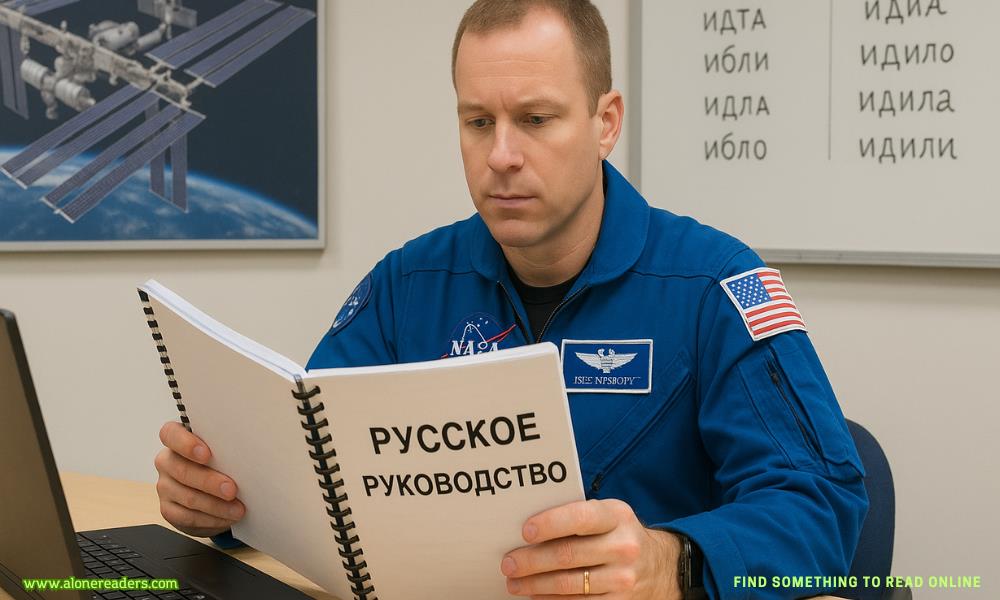
Space travel demands more than just physical strength and scientific knowledge—it requires linguistic flexibility, cultural understanding, and readiness for all contingencies. One of the lesser-known yet fascinating aspects of NASA’s astronaut training is the mandatory requirement for all US astronauts to learn the Russian language. This is not just a symbolic gesture of international cooperation; it is a crucial operational necessity. The International Space Station (ISS), a joint venture among multiple nations, including the United States, Russia, Japan, Canada, and members of the European Space Agency, has systems and modules built by different space agencies. Among them, Russia’s contribution, particularly the Soyuz spacecraft and parts of the ISS such as the Zvezda module, makes the knowledge of Russian vital for safe and effective operations.
Since the retirement of NASA’s Space Shuttle program in 2011, the United States relied heavily on Russia’s Soyuz spacecraft to transport astronauts to and from the ISS for nearly a decade. Although SpaceX and Boeing have since provided US-based transport options, the tradition of bilingual training has continued, and for good reason. Many critical systems on the ISS, especially those housed in Russian segments, are labeled in Russian. Emergency procedures, manuals, hardware components, and even communications with Russian Mission Control in Moscow (TsUP) are conducted in Russian. Therefore, astronauts must not only have conversational fluency but also technical command over the language to interpret complex procedures and troubleshoot issues in high-pressure scenarios.
The language training begins early in an astronaut’s candidacy. NASA collaborates with language instructors and linguists to immerse astronauts in intensive Russian lessons at the Johnson Space Center in Houston, Texas. The training typically includes reading and writing Cyrillic, technical vocabulary, listening comprehension for communications, and verbal proficiency for collaboration with Russian cosmonauts. On average, astronauts spend several hours a week in formal Russian lessons for months or even years. Those who are selected for spaceflights with Russian crew members or missions involving Soyuz spacecraft undergo even deeper immersion programs. Some even spend months training at the Gagarin Cosmonaut Training Center in Star City, Russia, where day-to-day interactions, simulations, and briefings are conducted almost entirely in Russian.
This bilingual requirement serves a deeper purpose than just operational flexibility. It is an embodiment of the partnership and diplomacy that define the ISS program. Despite political tensions between the US and Russia on Earth, collaboration in space has remained one of the strongest bridges between the two nations. Language fluency fosters better camaraderie among astronauts and cosmonauts, helps build trust, and ensures seamless coordination in space, where the margin for error is virtually nonexistent. A shared language becomes essential when dealing with high-stakes operations like spacewalks, docking maneuvers, or emergency evacuations, which often require quick, clear, and unambiguous communication.
The importance of Russian fluency becomes even more critical during emergencies. If a US astronaut is the only crew member awake or available during a crisis affecting the Russian module, they must be able to read emergency instructions, operate controls, and communicate with Russian mission control without delay or misunderstanding. Past simulations and real-life incidents aboard the ISS have demonstrated the necessity of such preparedness. NASA has even developed proficiency benchmarks and testing protocols to ensure astronauts can operate independently using Russian-language technical documents, manuals, and dialogue-based procedures.
Interestingly, Russian cosmonauts are also required to learn English, as much of the ISS’s core systems—particularly those developed by NASA—use English for documentation and operation. Thus, the ISS functions on a bilingual protocol where English and Russian are the official languages. Communications with mission controls in Houston and Moscow are conducted in their respective native languages, but astronauts must often translate, interpret, and even act as linguistic bridges between crew and ground personnel. This constant language-switching is mentally demanding but essential for mission success.
The psychological aspect of this linguistic challenge should not be underestimated. Astronauts must maintain sharp cognitive focus while switching between English and Russian under stressful conditions. During training, astronauts practice scenarios where they must conduct technical repairs, respond to life-support malfunctions, or initiate emergency procedures using only Russian-language instructions. This not only ensures language competence but also trains them to stay calm and analytical in high-stress environments where every second counts.
Despite advances in AI translation and onboard digital assistants, human language skills remain irreplaceable in space. Voice recognition tools may not be reliable during emergencies, and real-time translation often lacks the nuance required for technical dialogue. Moreover, in the vacuum of space, communications are sometimes delayed, distorted, or unavailable, making on-the-spot decision-making even more critical. That is why NASA continues to emphasize human linguistic training as a core pillar of its astronaut education program.
Some astronauts have spoken publicly about the challenge and joy of learning Russian. For many, it becomes a source of pride and connection with their international colleagues. Astronaut Scott Kelly, who spent nearly a year on the ISS, remarked that learning Russian was one of the most demanding parts of his preparation but ultimately one of the most rewarding. His ability to communicate fluently with his Russian counterparts helped foster deep bonds during his long-duration mission and enhanced crew morale.
As future space missions extend beyond low Earth orbit—toward the Moon, Mars, and possibly deeper into space—the need for multilingual crews will only grow. International collaboration is expected to play an even greater role in long-term missions. Lessons learned from the ISS regarding language training, intercultural communication, and cooperative system management will be vital for success. Russia remains a key player in global space exploration, and as such, Russian will likely remain a prominent language in astronaut training curricula for years to come.
Ultimately, the requirement for US astronauts to learn Russian is a testament to the practical demands of international cooperation and the human side of space exploration. It reflects a recognition that the most advanced technologies and life-support systems are still operated by humans who must understand, trust, and communicate with each other effectively—regardless of the language barrier. Whether orbiting 250 miles above Earth or working on interplanetary missions in the decades ahead, astronauts’ ability to speak each other's languages will continue to be as essential as their scientific knowledge, physical fitness, and technical skill.



 Château de Vincennes: France’s Forgotten Royal Fortress and Medieval Stronghold
 Château de Carcassonne: Europe’s Greatest Medieval Citadel and Fortress
 Château de Chenonceau: The Castle Built by Remarkable Women
 Château de Chambord: France’s Magnificent Renaissance Castle and Architectural Wonder
 Tehri Dam: India's Tallest Dam and the Debate Behind It
 Bhakra Nangal Dam: India's Temple of Modern Development










