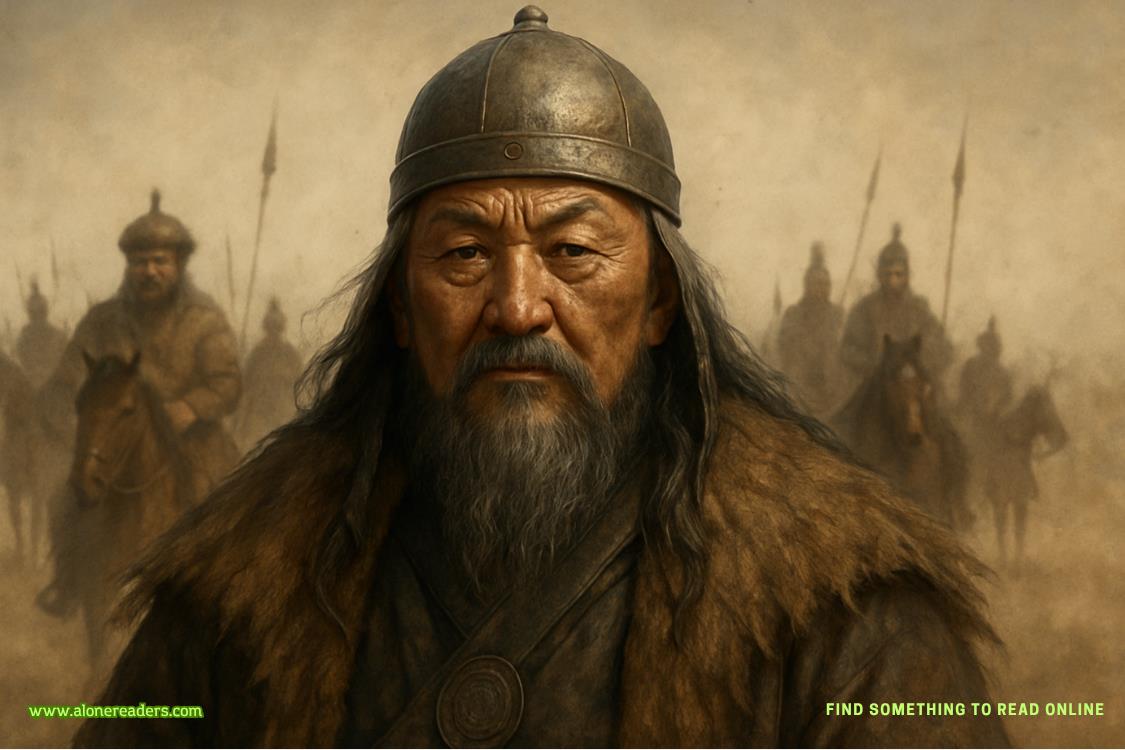
Genghis Khan, the legendary Mongol emperor who built the largest contiguous empire in history, left a legacy that continues to echo not just in the annals of history, but in the very DNA of millions of men living today. According to research conducted by an international team of geneticists, more than 16 million men, particularly those living in Central Asia, share a nearly identical Y chromosome that can be traced back to Genghis Khan himself. This astonishing discovery means that about one in every 200 men worldwide is, in a genetic sense, a direct male-line descendant of the great Mongol leader.
The revelation emerged in the early 2000s, when a team led by Dr. Chris Tyler-Smith from the University of Leicester undertook an ambitious study of genetic variation in Central Asia. By examining the Y chromosome, which is passed directly from father to son and rarely changes except through random mutations, scientists are able to trace direct male lineages over centuries. In their research, they identified a particular cluster of Y chromosomes—known as a haplotype—that was found in remarkably high frequency among the male populations of Mongolia and surrounding regions. This haplotype was both geographically widespread and unusually young in evolutionary terms, estimated to have originated about 800 years ago, which perfectly aligns with the lifetime of Genghis Khan, who lived from approximately 1162 to 1227.
The story of Genghis Khan’s genetic legacy is intimately tied to both his personal life and the practices of Mongol nobility. As the founder and leader of the Mongol Empire, Genghis Khan was renowned for his military prowess and his ruthless conquest of vast territories stretching from China to Eastern Europe. He fathered many children, both with his primary wives and through a network of consorts and wives acquired in conquered lands. It was a Mongol custom for leaders of his stature to take many wives and concubines, especially among the defeated nobility, ensuring the spread of their bloodline throughout their domains. The power and prestige of the Khan family meant that their descendants would have enjoyed not only wealth and influence but also many opportunities to reproduce.
The genetic study’s findings show that this particular Y chromosome lineage spread rapidly and extensively, far more than any other observed in the region. Today, it accounts for about 8 percent of men in the area once ruled by the Mongol Empire, which encompasses Mongolia, northern China, Uzbekistan, Turkmenistan, Kyrgyzstan, and parts of Russia. When extrapolated to the entire global population, this translates to more than 16 million men sharing this genetic marker—making Genghis Khan one of the most prolific patriarchs in human history.
But how did researchers determine that this Y chromosome haplotype could be attributed specifically to Genghis Khan? The answer lies in the combination of genetic data, historical records, and the peculiar distribution of this lineage. The haplotype is not only extraordinarily common but also closely associated with regions directly connected to the Mongol Empire’s conquests and settlements. Furthermore, the timing of the haplotype’s emergence, as calculated through genetic mutations, matches the era of Genghis Khan and his immediate male-line descendants. The probability that such a rapid and widespread expansion could occur without being linked to a powerful and influential figure is statistically slim. Historical chronicles further reinforce this genetic evidence, detailing the immense size of the Khan’s family and the high status given to his sons and grandsons, who in turn fathered numerous children themselves.
The story of Genghis Khan’s genetic legacy opens up fascinating questions about the intersection of genetics, history, and human society. It illustrates how individual actions and social structures—such as the power of rulers, the practices of polygamy, and the hierarchical nature of Mongol society—can have profound and lasting effects on the genetic makeup of entire populations. The Y chromosome, inherited solely along the paternal line, is particularly susceptible to these kinds of historical bottlenecks and expansions, allowing the genetic footprint of a single man to become amplified over centuries.
It’s important to note that this phenomenon is not unique to Genghis Khan, but his case is certainly the most famous and one of the best-documented. Other studies have identified similar, though usually smaller-scale, “super-y” lineages tied to regional rulers or historical populations. However, the sheer scale and rapid expansion of the Khan lineage stand out as a singular event in genetic history. The story also provides a remarkable example of how modern science can illuminate aspects of human history that would otherwise remain shrouded in mystery.
The impact of Genghis Khan’s genetic legacy is not merely a curiosity; it also carries cultural and even political resonance in Central Asia today. In Mongolia and other countries once part of the Mongol Empire, descent from Genghis Khan remains a source of pride and social status. Some families maintain genealogical records and oral traditions tracing their lineage back to the Great Khan, though the reliability of such claims can be questionable without genetic testing. Nevertheless, the idea of a shared ancestor connecting millions of people speaks to the profound and lasting influence of one man’s life and actions.
As DNA analysis becomes ever more sophisticated, our understanding of the way that historical figures shaped the modern gene pool continues to grow. Genghis Khan’s case is a vivid illustration of how the combination of historical data and genetic science can produce startling insights into our shared human past. It challenges us to consider how power, conquest, and social structures leave their mark not only in written records and monuments but deep within our own biology.
In summary, the revelation that one in every 200 men alive today is a direct male-line descendant of Genghis Khan is a testament to the sweeping scope of the Mongol Empire and the enduring impact of its founder. More than 16 million men worldwide carry the legacy of the Great Khan in their DNA, a genetic inheritance passed down through the centuries from a man whose ambitions forever changed the face of the world. This living legacy continues to connect people across vast distances and cultural divides, underscoring the profound ways in which the past is written not only in history books but in our very genes.



 Château de Vincennes: France’s Forgotten Royal Fortress and Medieval Stronghold
 Château de Carcassonne: Europe’s Greatest Medieval Citadel and Fortress
 Château de Chenonceau: The Castle Built by Remarkable Women
 Château de Chambord: France’s Magnificent Renaissance Castle and Architectural Wonder
 Tehri Dam: India's Tallest Dam and the Debate Behind It
 Bhakra Nangal Dam: India's Temple of Modern Development