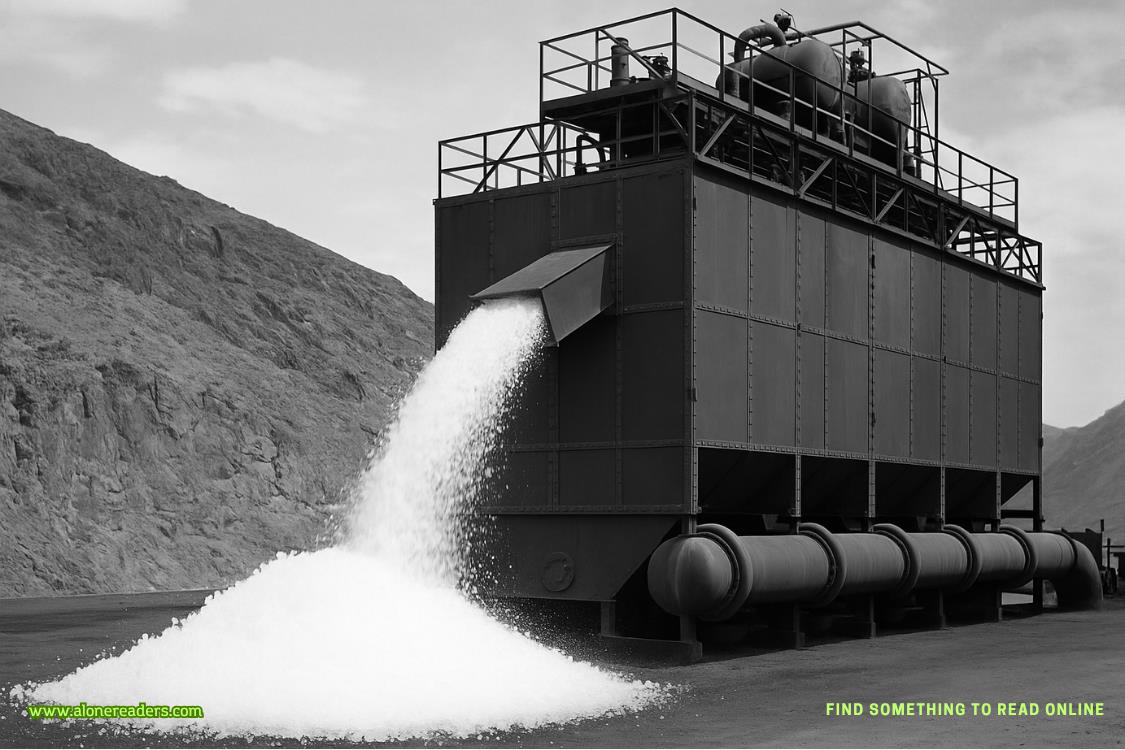
When we think of the Hoover Dam, towering between the Nevada and Arizona borders, we often marvel at its colossal size, breathtaking views, and the immense power it generates. Yet, one of the most fascinating aspects of the dam’s construction lies not just in its visible structure but in the ingenious solution engineers developed to overcome a fundamental problem: how to cool millions of tons of poured concrete quickly and safely. The answer was a feat of technical innovation, involving what was then the world’s largest refrigeration unit, capable of producing up to 1,000 tons of ice per day to accelerate the cooling process and ensure the dam’s structural integrity.
The story of the Hoover Dam begins in the early 1930s, at a time when the United States was in the throes of the Great Depression. This engineering marvel was designed to harness the power of the Colorado River, provide water for the arid Southwest, and generate much-needed electricity for a rapidly growing region. But as construction plans developed, the scale of the project posed a unique set of challenges, the most significant of which was the issue of concrete curing.
Pouring concrete for a structure as massive as the Hoover Dam is no small feat. The dam contains approximately 3.25 million cubic yards of concrete—enough to pave a two-lane highway from San Francisco to New York. Under normal conditions, when concrete sets, a chemical reaction known as hydration occurs, which produces significant heat. In a small pour, this heat dissipates naturally. But for a structure as immense as Hoover Dam, the heat generated would have been trapped inside the massive blocks of concrete, causing temperatures to soar up to 140°F (60°C) or higher. If left unchecked, this heat would have caused the concrete to crack as it cooled unevenly over years or even decades, threatening the stability and safety of the dam itself.
This is where the role of the world’s largest refrigerator became not just a footnote, but a central chapter in the story of the dam’s construction. Without rapid and controlled cooling, the dam would have required up to 125 years to cool naturally and cure completely. Such a delay was not only impractical but also dangerous, as unchecked thermal expansion and contraction could lead to severe structural weaknesses.
To solve this, a team of technical experts designed a massive refrigeration plant on-site—at the time, the largest of its kind in the world. This refrigeration unit was tasked with producing up to 1,000 tons of ice daily. But the process was more involved than simply pouring ice on the concrete. Instead, engineers embedded an extensive network of one-inch steel pipes throughout each massive concrete block as it was poured. Once a block was in place, chilled water, made frigid by the powerful refrigeration plant, was pumped through these pipes. The ice produced by the mega-fridge played a vital role in keeping this water cold enough to draw excess heat out of the concrete quickly and efficiently.
This technique of circulating icy water through the embedded pipes was revolutionary for its time and set a precedent for other massive concrete projects around the world. The pipes would absorb the heat from the curing concrete, and the warmed water was then cycled back to the refrigeration unit, where it was re-cooled, and the process would repeat until the temperature of the concrete block matched the surrounding air. Only then would the pipes be filled with grout, permanently encasing them within the dam’s structure.
This process of controlled, accelerated cooling offered several vital advantages. First, it reduced the risk of cracking and warping, ensuring the dam would be both durable and safe for generations. Second, it allowed construction to progress rapidly, with new blocks poured as soon as the previous ones were adequately cured and cooled. This efficiency was critical, as the construction schedule was ambitious, and the nation eagerly awaited the completion of the project for the benefits it promised.
The refrigeration plant itself was an engineering wonder. Its compressors, chillers, and distribution systems operated around the clock, churning out ice and circulating chilled water through miles of piping embedded in the dam’s rising walls. The scale was so immense that many at the time compared the refrigeration plant to an industrial city in its own right. Workers maintained the plant continuously, ensuring the delicate balance of temperatures and pressures required to keep the cooling operation running smoothly.
Beyond the technical achievement, the use of the world’s largest refrigerator at Hoover Dam represents the kind of creative problem-solving that defines great engineering projects. The challenge wasn’t simply one of scale but of adapting known technologies to unprecedented demands. Engineers had to account for the extreme desert climate, the need for uninterrupted operation, and the logistical complexities of coordinating the cooling process with the pouring and curing schedules for millions of tons of concrete.
Today, the legacy of the Hoover Dam’s refrigeration solution is seen not just in the dam’s enduring strength but in the lessons learned for other mega-construction projects. Cooling massive concrete pours is now a well-established practice, used in bridges, skyscrapers, and other dams worldwide. Yet, the Hoover Dam stands as a testament to doing it first, and on a scale previously unimaginable.
The numbers remain impressive even by today’s standards. To circulate chilled water through more than 582 miles of cooling pipes required careful planning and precise execution. The 1,000 tons of ice produced each day would fill dozens of modern industrial freezers. The goal was always the same: to extract heat as quickly as possible, allowing the dam’s structure to solidify safely and uniformly.
As visitors stand atop the Hoover Dam today, few realize the hidden infrastructure and the monumental effort that went into something as seemingly simple as cooling concrete. The story of the world’s largest refrigerator is a reminder that behind every visible engineering marvel lies a world of invisible innovation—solutions that make the impossible not just possible, but lasting. In a sense, the cold heart of the Hoover Dam—its network of pipes and the titanic refrigeration plant—ensured that the structure would stand the test of time, safely containing the raw power of the Colorado River for nearly a century and counting.
In the decades since its completion, Hoover Dam has become more than a symbol of American ingenuity; it is a lesson in anticipating challenges and leveraging technology to overcome them. The world’s largest refrigerator is a chapter that showcases how technical imagination can turn a daunting obstacle into an opportunity for greatness. The enduring presence of the dam, unmarred by structural cracks or thermal damage, speaks volumes about the success of this innovative cooling solution and the brilliance of the minds that made it possible.



 Château de Vincennes: France’s Forgotten Royal Fortress and Medieval Stronghold
 Château de Carcassonne: Europe’s Greatest Medieval Citadel and Fortress
 Château de Chenonceau: The Castle Built by Remarkable Women
 Château de Chambord: France’s Magnificent Renaissance Castle and Architectural Wonder
 Tehri Dam: India's Tallest Dam and the Debate Behind It
 Bhakra Nangal Dam: India's Temple of Modern Development