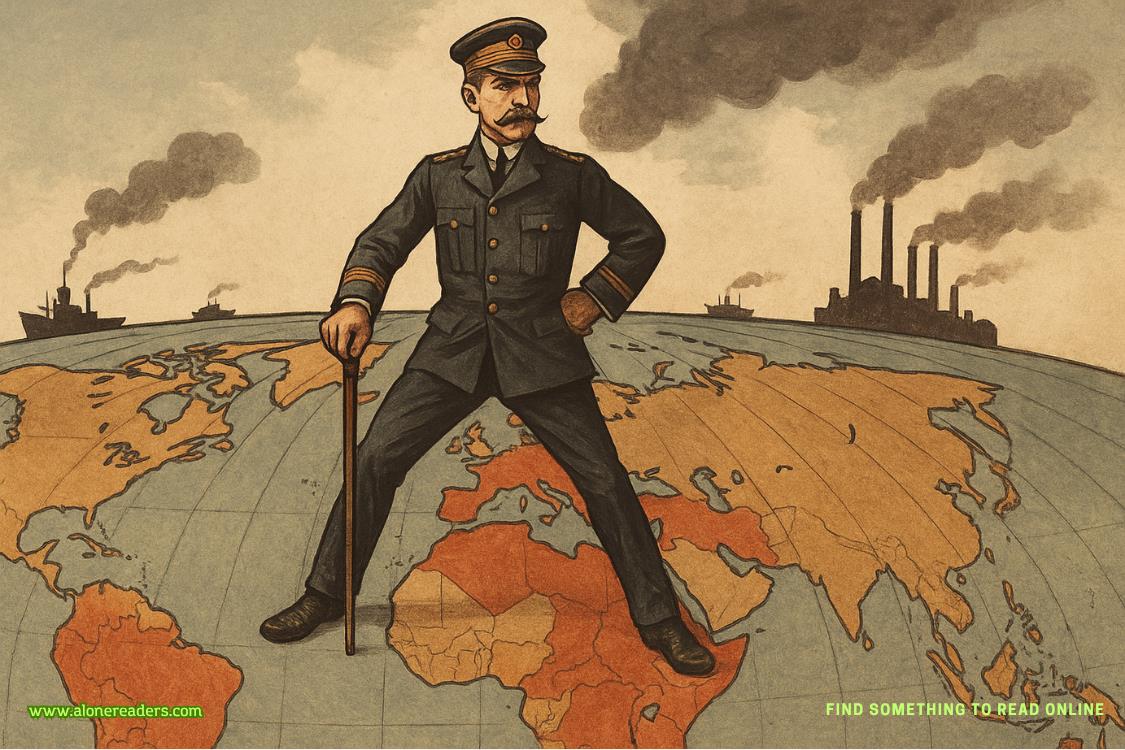
The term "Age of Imperialism" refers to the era from the late 19th to the early 20th century, roughly from the 1870s to the outbreak of World War I in 1914. During this period, major European powers, along with Japan and the United States, aggressively expanded their empires across Asia, Africa, and the Pacific. This was not merely a process of territorial acquisition; it was a fundamental transformation of global power dynamics. The Age of Imperialism reshaped political boundaries, altered economic systems, and triggered cultural exchanges and conflicts that would reverberate for generations. Unlike earlier forms of expansion, imperialism during this era was highly strategic, deeply rooted in industrial capitalism, and justified through a complex mix of racial, religious, and civilizational rhetoric.
Industrialization and the Search for Raw Materials
The Industrial Revolution created an unprecedented demand for raw materials—cotton, rubber, oil, copper, and more. European industries needed steady and cheap supplies, and colonies provided access to these crucial resources. Moreover, colonies offered new markets for manufactured goods, allowing European economies to grow beyond the constraints of their domestic markets.
Strategic Rivalry Among Major Powers
Imperialism was also propelled by intense competition among European states, particularly Britain, France, Germany, and later Italy and Belgium. The acquisition of colonies was seen as a mark of national prestige and a way to enhance strategic power, especially in naval terms. Control of key ports and sea routes—like the Suez Canal, Gibraltar, or Singapore—meant dominance in global trade and military movement.
Ideological Justifications: The ‘Civilizing Mission’ and Social Darwinism
European powers rationalized imperialism through the language of the "civilizing mission," claiming that it was their duty to bring progress, Christianity, and order to supposedly "backward" societies. Social Darwinism added a pseudo-scientific justification, arguing that it was natural and right for "superior" races to dominate "inferior" ones. These ideas were powerful tools, not only for mobilizing public support but also for subduing the resistance of colonized peoples.
Britain: The World’s Preeminent Empire
By the end of the 19th century, the British Empire had become the largest in history, with colonies and protectorates spanning every continent. British imperialism was characterized by both formal control (as in India) and informal dominance through economic leverage (as in China). The Royal Navy ensured British supremacy on the seas, while an elaborate network of administrators, merchants, and local collaborators kept the empire running.
France: A Mission Civilisatrice
France’s imperial ambitions were driven by a sense of cultural mission as well as strategic rivalry with Britain. French colonialism in Africa and Southeast Asia was marked by the imposition of French language and institutions, as well as attempts to assimilate local elites. The French model often combined direct administrative rule with the cultivation of a Francophone, Westernized local elite.
Germany, Belgium, and the “Scramble for Africa”
Germany, unified late in the 19th century, sought to catch up with Britain and France through rapid colonial expansion. The Berlin Conference of 1884–85 formalized the partition of Africa, giving Leopold II of Belgium personal rule over the Congo Free State—a brutal episode marked by forced labor, resource extraction, and widespread atrocities. German colonies in Africa and the Pacific were often managed with military rigor and harsh suppression of dissent.
The United States and Japan: Newcomers to Empire
The United States entered the imperialist arena with the annexation of Hawaii, the Philippines, and Puerto Rico after the Spanish-American War of 1898. American imperialism was shaped by the doctrine of Manifest Destiny and later the idea of spreading democracy and capitalism. Japan, after rapid modernization in the Meiji era, embarked on its own imperial project, conquering Korea, Taiwan, and parts of China, and challenging Western powers in Asia.
Direct vs. Indirect Rule
Colonial powers adopted varying administrative models. Direct rule involved replacing local leaders with European officials, while indirect rule used existing power structures, co-opting local elites to govern on behalf of the imperial power. The British, for instance, often employed indirect rule in Africa, while the French favored direct rule and cultural assimilation.
Economic Exploitation: Plantation, Mining, and Trade Monopolies
Colonies were restructured to serve the economic needs of the metropole. Plantations growing cash crops (sugar, tea, cocoa, rubber) were established, often through the expropriation of local land and forced labor. Mining operations extracted minerals and metals, with profits flowing almost entirely to the colonizers. Infrastructure like railways and ports was developed primarily to facilitate extraction and export, rather than local development.
Cultural Engineering and Education
Imperial powers sought to reshape local societies through missionary work, Western-style education, and the spread of European cultural norms. While some colonial subjects gained access to education and new opportunities, the broader effect was often the erosion of indigenous cultures, languages, and traditions.
Early and Violent Resistance
From the very outset, imperial expansion was met with fierce resistance. In India, the 1857 Sepoy Rebellion nearly toppled British rule. In Africa, the Zulu, Ashanti, and Herero peoples all mounted significant, though ultimately unsuccessful, military opposition. In Southeast Asia, the Vietnamese and Filipinos fought prolonged wars against French and American occupation, respectively.
The Growth of Nationalist Movements
By the early 20th century, resistance shifted from sporadic revolt to organized nationalist movements. Educated elites, often products of colonial educational systems, became leaders of anti-colonial struggle. Gandhi’s nonviolent movement in India, Sun Yat-sen’s revolution in China, and the rise of nationalist parties in Africa and the Middle East all signaled the beginning of the end for formal empires.
Redrawing the World Map
The Age of Imperialism redrew the political map of the world. Artificial borders, often disregarding ethnic or linguistic realities, were imposed across Africa, the Middle East, and Asia. These borders are the source of many ongoing conflicts, from Nigeria and Sudan to Iraq and Afghanistan.
Economic Structures and Dependency
Imperialism established economic patterns that persisted after independence. Former colonies were left dependent on the export of raw materials and the import of manufactured goods. This created lasting inequalities and patterns of underdevelopment that the Global South still struggles to overcome.
Cultural Hybridity and Identity
Imperialism produced complex legacies in culture, language, and identity. Postcolonial societies are often marked by hybrid languages, mixed traditions, and the enduring tension between indigenous and Western values. The debate over decolonizing education, art, and politics continues to shape intellectual life worldwide.
World Wars and the Crisis of Empire
The two World Wars devastated European powers and undermined the legitimacy of imperial rule. The post-1945 wave of decolonization saw the collapse of most formal empires, replaced by new nation-states, many of which faced immediate crises of identity, governance, and development.
Neo-Imperialism and Globalization
Imperialism did not simply disappear; it evolved. Economic control through multinational corporations, financial institutions, and military alliances has replaced direct political rule. The language of "development" and "partnership" often masks persistent imbalances of power between the former imperial centers and the rest of the world.
The Age of Imperialism was a turning point that fundamentally reordered global power structures. Its legacies—political, economic, and cultural—continue to influence international relations, development policies, and cultural identities. To understand today's global dynamics, from trade wars to cultural debates, is to recognize the deep and lasting imprint of imperialism on the modern world. A nuanced examination of this era reveals not just the mechanisms of domination and resistance but also the ongoing struggle over power, identity, and justice in the international arena.



 The Hundred Days Offensive: How the Allies Defeated Germany in World War I
 The Second Battle of the Marne: The Turning Point of World War I in 1918
 The Spring Offensive of 1918: Germany's Final Gamble to Win World War I
 The Treaty of Brest-Litovsk: How Russia Left World War I
 The Russian Revolution and World War I: How War Brought Down the Tsar
 The Zimmermann Telegram Explained: Germany's Secret Offer to Mexico in World War I










