The Freemasons have long occupied a unique and shadowy space in the public imagination, existing somewhere between a respected fraternal brotherhood and a secretive organization accused of wielding hidden power across governments, revolutions, and global events. Their origins stretch back centuries, yet their reputation has grown far beyond the modest gatherings of stonemasons they once were. Over time, the Freemasons became a symbol of secrecy, ritual mystique, and alleged behind-the-scenes influence, fueling endless theories about what truly takes place behind their guarded lodge doors. To understand why this organization is surrounded by such intrigue, one must examine not only their historical evolution but also the rituals, symbols, and claims of power that have shaped their mythos.
The earliest roots of Freemasonry lie in medieval Europe’s guilds of stonemasons, craftsmen who built cathedrals and castles. As architecture flourished, these guilds established strict ethical and professional codes. However, around the seventeenth century, the guilds began accepting members who were not actual stonemasons, men of influence such as scholars, aristocrats, and political thinkers. This shift transformed Freemasonry into an intellectual and philosophical society rather than a trade guild. From this moment onward, the organization developed layers of symbolism, ritual initiation, and moral teachings that blurred the line between fraternal association and esoteric mystery school. This transformation is one of the reasons the Freemasons quickly drew public curiosity and suspicion.
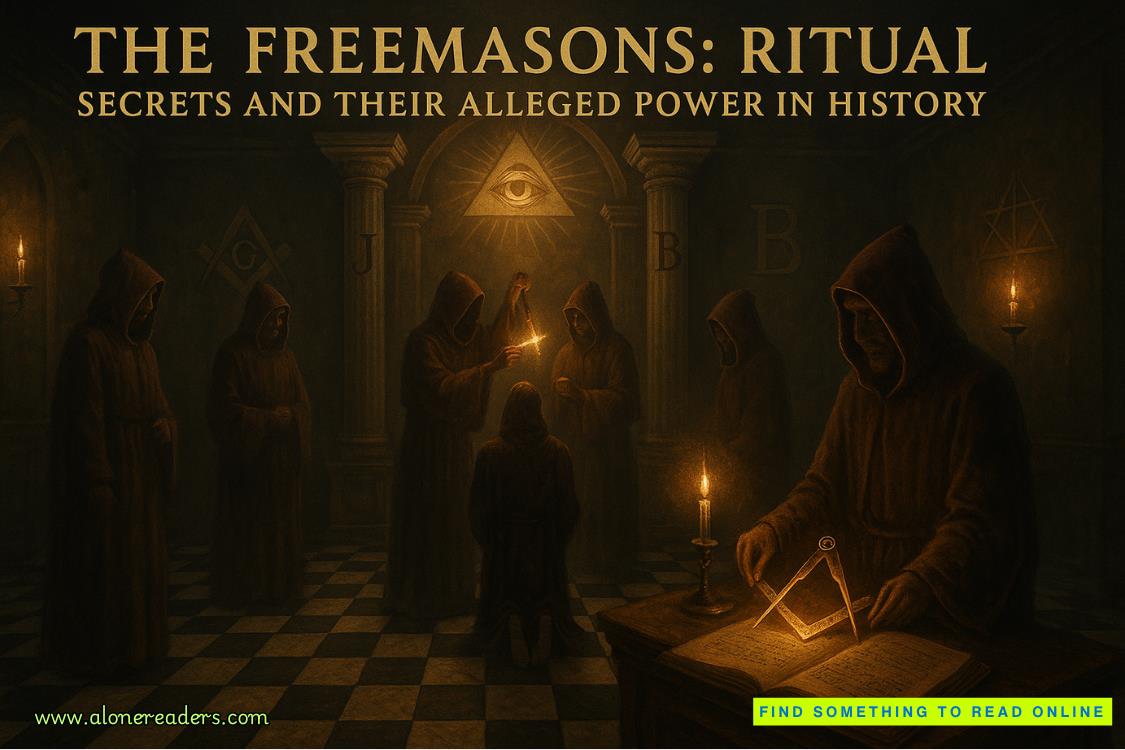
Freemasonry is structured around a system of degrees, each representing a level of moral and philosophical development. The three foundational degrees—Entered Apprentice, Fellowcraft, and Master Mason—form the core of Masonic membership. These degrees are conferred through elaborate ceremonies involving symbolic gestures such as handshakes, passwords, oaths, and ritual reenactments. Outsiders often view these ceremonies as enigmatic, but to Masons they are allegorical teachings meant to shape ethical behavior and personal discipline. Yet the secrecy surrounding such rituals has invited alternate interpretations. Many believe these ceremonies conceal more than moral lessons, hinting at hidden knowledge or political strategies, especially because members swear solemn oaths to protect the secrets of the order.
Masonic symbolism is equally layered and has fueled much speculation. The most recognizable symbol, the Square and Compasses, represents moral judgment and the boundaries of human action. Other symbols, such as the All-Seeing Eye, the Letter G, the Twin Pillars Jachin and Boaz, and the checkerboard lodge floor, have become intertwined with conspiracy theories about control, surveillance, and hidden hierarchies. While Masons interpret these symbols philosophically—relating them to virtue, self-improvement, and enlightenment—outsiders often associate them with covert power structures. Over time, these symbols found their way into political buildings, currency, and national iconography, further fueling the belief that Freemasonry exerts quiet influence over states and institutions.
The organization’s historical reputation cannot be separated from the prominent individuals who were members. From U.S. presidents such as George Washington and Franklin D. Roosevelt to European nobles, scientists, writers, generals, and business leaders, the membership of high-status individuals has shaped the perception of Freemasonry as a network of power. Critics argue that this fraternity offered its members an informal yet influential network, capable of shaping decisions in politics, business, and law. Supporters claim this network was simply a space for intellectual exchange. Yet the concentration of influential figures inside a secretive society inevitably led many to believe that the Masons operated as a hidden force guiding national and global agendas.
One of the most persistent claims regarding Masonic influence centers on the founding of the United States. Many of America’s founding fathers were Freemasons, and Masonic symbols appear on U.S. architecture and the Great Seal. The idea that the nation was shaped by Masonic ideals—particularly values of liberty, equality, rationality, and structured governance—has been widely explored. Although historians argue that the Masons’ influence was philosophical rather than conspiratorial, the symbolic connections have fueled theories that the United States was intentionally built as a Masonic project, carrying forward a hidden agenda of enlightenment-era governance through secret ritual and hierarchical order.
Freemasonry also became intertwined with major revolutionary movements in Europe, particularly during the eighteenth and nineteenth centuries. Some historians argue that Masons played roles in the French Revolution, using Masonic lodges as meeting points for intellectual dissent. Others have proposed connections between Freemasonry and Italian unification, Latin American revolutions, and even the movements that shaped early modern democracy. Whether true or exaggerated, these links created a narrative that Freemasonry was a silent engine behind political upheaval, guiding societies toward new forms of power.
The secrecy of the organization also made it vulnerable to persecution. In the eighteenth century, the Catholic Church issued bans against Freemasonry, accusing it of undermining religious authority and spreading Enlightenment thinking. In the twentieth century, totalitarian regimes such as Nazi Germany and Fascist Italy targeted Masons, confiscating their archives and accusing them of orchestrating international plots. Ironically, such persecution often reinforced the myth of Masonic power: if authoritarian regimes feared them so intensely, many concluded that Freemasons must possess real influence and hidden knowledge.
Much of the allure surrounding the Freemasons comes from their rituals, which blend dramatic reenactments, symbolic tools, and philosophical teachings. During initiation, candidates are blindfolded, guided through symbolic journeys, and instructed in allegorical lessons about life, death, morality, and enlightenment. Critics interpret these ceremonies as evidence of occult practices, while supporters view them as moral dramas designed to inspire introspection. The oath-taking process, which emphasizes loyalty to the order and secrecy regarding its teachings, is often one of the most controversial aspects. These oaths have been interpreted as attempts to create unbreakable bonds of loyalty, raising suspicions about whether such loyalty influences members’ public roles in politics or justice systems.
Another aspect frequently linked to conspiracy theories is the Masonic system of ranks, which extends far beyond the three foundational degrees for those who choose to pursue additional paths. Higher degrees, found in bodies such as the Scottish Rite or York Rite, introduce advanced symbols, philosophical teachings, and esoteric narratives that outsiders often describe as mystical or occult. While Masons claim that even the highest degrees do not grant political power, the existence of hierarchical layers has generated public speculation about inner circles, hidden leadership, and secret councils within the organization.
Claims of a global Masonic conspiracy reached a peak during the nineteenth century with the publication of sensationalistic anti-Masonic literature. Stories of plots, infiltrations, and murders circulated widely, including the infamous disappearance of Captain William Morgan in 1826, which triggered the rise of an anti-Masonic political movement in the United States. Although historians widely contest these claims, such events cemented the Freemasons’ reputation as an organization capable of hiding deep secrets and protecting its own members at all costs. The idea that Masons used their network to shield wrongdoing, whether true or not, became a core part of conspiracy narratives that persist today.
In modern times, the Freemasons continue to attract attention not only for their history but also for their perceived role in world affairs. Internet communities often associate Freemasonry with the Illuminati, proposing that the two groups form a shadow alliance responsible for global decisions. In many versions of these theories, the Masons are portrayed as an elite cabal that manipulates governments, corporations, media, and financial institutions. Some theorists even claim that global events—from wars to cultural shifts—are engineered by Masonic hands. While no credible evidence supports these claims, the combination of secrecy, symbolism, and historical influence has ensured that Freemasonry remains fertile ground for conspiracy speculation.
Despite the sensationalism, the modern Freemasons emphasize philanthropy, charity, personal ethics, and community service. Across the world, Masonic lodges raise funds for hospitals, educational programs, disaster relief, and medical research. Members argue that the organization’s true purpose is not political dominance but the cultivation of moral character and support for the community. Yet even these benevolent activities are sometimes seen through a conspiratorial lens, interpreted as attempts to maintain a respectable public image while concealing deeper agendas.
So why does Freemasonry continue to inspire such fascination? The answer lies in a combination of historical influence, symbolic richness, restricted access, and human psychology. Secret societies naturally invite speculation because they place boundaries on information. When outsiders cannot see what is happening inside, they fill the gaps with imagination, fear, or symbolic interpretation. Freemasonry, with its ancient rituals, elite membership, and visible symbols embedded in architecture and institutions, provides an ideal stage for such projections. The more the organization insists that no secrets of global importance exist, the more people believe that the truth must be hidden beneath layers of denial.
In reality, the alleged power of the Freemasons is likely a blend of historical influence, social networking, and the mystique of secrecy rather than the orchestration of world events. Yet the myths continue to thrive because they tap into universal questions about power, loyalty, and hidden knowledge. People are drawn to the idea that behind the visible institutions of society lies a concealed mechanism operated by a select few. Whether or not such a mechanism truly exists, the Freemasons have become a symbol of what people fear—and what they imagine—about secret power.
The continuing fascination with Freemasonry reveals more about society’s preoccupation with hidden structures than about the organization itself. Ultimately, the Freemasons exist at a crossroads between history and legend, philosophy and rumor, reality and imagination. Their rituals continue behind closed doors, their symbols remain etched into public buildings, and their members quietly meet in lodges around the world. Whether they represent a noble brotherhood or an enigmatic power network is a question that has shaped their legacy for centuries and will continue to do so as long as mystery surrounds their ancient and modern practices.



 The Hundred Days Offensive: How the Allies Defeated Germany in World War I
 The Second Battle of the Marne: The Turning Point of World War I in 1918
 The Spring Offensive of 1918: Germany's Final Gamble to Win World War I
 The Treaty of Brest-Litovsk: How Russia Left World War I
 The Russian Revolution and World War I: How War Brought Down the Tsar
 The Zimmermann Telegram Explained: Germany's Secret Offer to Mexico in World War I