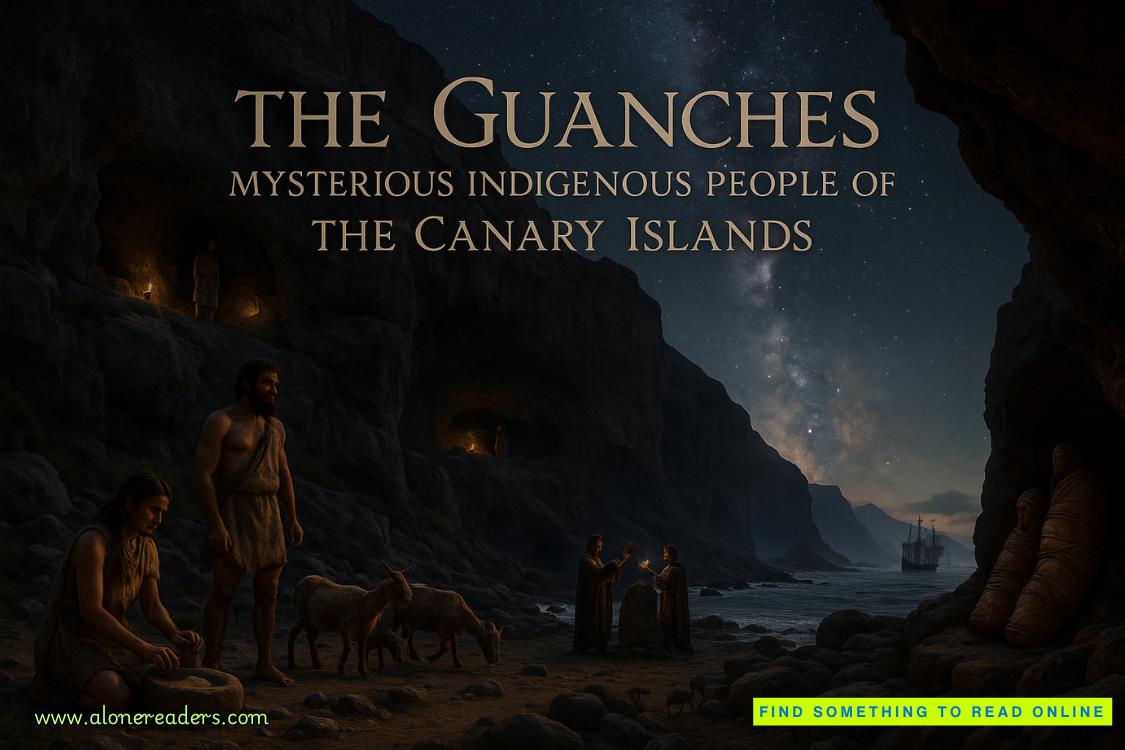
The Guanches were the enigmatic indigenous people of the Canary Islands, a volcanic archipelago that rises from the Atlantic Ocean off the northwest coast of Africa, yet their story has often been relegated to a footnote in broader narratives of European exploration and colonization. What survives today is a mosaic: skeletal remains, exquisitely preserved mummies, a few hundred recorded words of a lost language, archaeological sites scattered across basaltic landscapes, and echoes in Canarian festivals, place names, and even modern DNA. Piecing these fragments together reveals a small, isolated civilization that developed in parallel to the better‑known cultures of the Mediterranean, then was shattered within a century by the expansion of the Crown of Castile.
From the standpoint of origins, the Guanches are rooted firmly in North Africa, even though the islands themselves lie far out at sea. Ancient DNA studies from Guanche skeletons show that these islanders were genetically closest to Berber populations of Northwest Africa, confirming older linguistic and cultural suspicions. The leading hypothesis is that Berber‑like settlers reached the Canaries around the late 1st millennium BCE, probably between 1000 and 100 BCE, bringing with them domestic animals, basic agriculture, and a worldview adapted to arid, mountainous environments. Once established, however, the island groups became remarkably isolated: there is no firm evidence that the Guanches built seagoing ships capable of long voyages, which meant that over centuries they drifted out of the wider historical record and evolved in relative autonomy.
This isolation produced a society that was both technologically conservative and culturally distinctive. Archaeology suggests that the Guanches on the larger islands lived largely at a Neolithic level at the time Europeans encountered them: they used stone tools, had no metalworking, and did not practice writing in any systematic way, despite some debated rock inscriptions. Yet this apparent simplicity hides a surprisingly complex social fabric. They were skilled herders, adapted to rugged terrain, and they developed sophisticated funerary practices, calendrical knowledge, and elaborate oral traditions that impressed even hardened conquistadors.
The Guanche language remains one of the most tantalizing mysteries of the Canary Islands. Early travelers and missionaries wrote down scattered vocabulary, especially numerals, basic nouns, and some toponyms, and these fragments show strong affinities with Berber languages, particularly in counting systems. Modern linguistic work, however, has complicated the picture, arguing that some similarities might stem from prolonged contact rather than direct descent, and that Guanche could represent a distinct branch of the Afroasiatic family that diverged long before historically known Berber dialects crystallized. Whatever the deeper classification, the language disappeared within a few generations of conquest, leaving only fossil traces in island place‑names and a handful of ritual words preserved in folklore, a stark reminder of how quickly an entire linguistic world can vanish once colonization and forced acculturation take hold.
In everyday life, the Guanches were above all pastoralists. Their wealth and diet centered on goats, sheep, and pigs, which provided meat, milk, hides, and bone for tools. They cultivated barley and wheat, roasting and grinding the grains to produce gofio, a toasted flour still central to Canarian cuisine today, which could be mixed with water, milk, or fat into a portable, high‑calorie food ideal for mountainous terrain and seasonal migrations. Hunting and gathering—wild fruits, roots, and shellfish from the coasts—supplemented this base, especially on islands where arable land was limited by steep volcanic slopes and scarce freshwater sources.
Their settlements were intimately adapted to the rugged geography of each island. On Tenerife, Gran Canaria, and La Palma, many Guanches lived in cave dwellings, some natural and some carved into soft volcanic tuff, which offered insulation from heat and cold and could be easily defended. Archaeologists have found clusters of such caves equipped with hearths, grinding stones, storage pits, and animal enclosures, often perched above ravines and terraces used for small‑scale cultivation. In other areas, especially where suitable cliffs were scarce, they built stone huts with circular or oval floor plans, sometimes grouping them into small hamlets that suggest tight‑knit kin communities and local chieftaincies.
Socially, Guanche communities were organized into tribal polities that the Spanish later described with terms like menceyatos on Tenerife, each ruled by a mencey—a kind of local king or chieftain. Power appears to have passed hereditarily within elite lineages, but accounts also mention councils of elders and assemblies where free men deliberated on war, justice, and alliances, indicating that rulers could not govern without broader clan support. Society was clearly stratified: nobility, commoners, and slaves (often war captives from rival groups or islands) lived markedly different lives, a division that becomes most visible in funerary practices, where high‑status individuals received elaborate embalming while lower classes were buried simply in earth or shallow pits.
The religion of the Guanches blended a deep reverence for natural features with a pantheon that colonial chroniclers tried to fit into familiar Old World categories. On Tenerife, the sky god Achamán was associated with creation and high places, while on other islands names such as Acoran and Abora appear to denote supreme deities tied to the sun and mountains. The Guanches considered specific mountains and rocks to be sacred gateways to the divine, such as Roque Bentayga on Gran Canaria, Montaña de Tindaya in Fuerteventura, Roque Idafe in La Palma, and the massive Teide volcano on Tenerife, around which offerings, libations, and communal rituals took place.
Ritual life extended beyond worship of high gods to include ancestor cults and practices aimed at securing fertility and protection in a harsh environment. The Guanches venerated mummified ancestors, sometimes visiting burial caves to perform ceremonies, ask for guidance, or reaffirm clan bonds. Seasonal festivals likely marked the agricultural cycle and the movements of herds, with dances, feasting, and competitions that reinforced social cohesion, although most of the original mythological content has been filtered through Christianized retellings. Elements of this spiritual heritage survive indirectly in modern Canarian pilgrimages and devotions, such as those centered on the Virgin of Candelaria, which layered Catholic symbolism onto pre‑existing sacred sites and indigenous cult places.
Perhaps the most striking legacy of the Guanches lies in their mummification practices, which parallel Egyptian techniques in sophistication even though they evolved independently on distant Atlantic islands. For high‑status individuals, embalmers removed the viscera, washed and dried the body—often in sun and wind—and then packed it with natural preservatives before wrapping it in layers of goatskins or vegetal fibers, finally binding the shrouds with leather thongs. These prepared bodies were placed in remote mortuary caves, some of which reportedly contained hundreds or even around a thousand mummies at the time of European contact, forming a monumental ancestral archive carved into cliffs and ravines.
Recent discoveries show just how carefully these dead were treated. In Gran Canaria, archaeologists uncovered a cave‑tomb with 72 individuals, including adults and ten newborns, whose remains preserved both the mummies and the fragments of burial shrouds, confirming that similar embalming traditions extended across class and age more than earlier sources suggested. Microscopic and biochemical studies of Guanche mummies reveal excellent tissue preservation, intact organs in some cases, and evidence of specific embalming recipes, underscoring the existence of a specialized class of mortuary experts who guarded ritual knowledge and techniques within certain lineages or priestly groups. Tragically, many of these mummies were destroyed in later centuries when pulverized human remains, known as mummia, were sold as a medicinal product in European markets, contributing to an irretrievable loss of Guanche heritage.
Another enigmatic feature linked to Guanche culture is the presence of pyramidal structures on Tenerife, often referred to as the “pyramids of Güímar.” These stepped stone constructions, built from volcanic rock and aligned in some cases with solstices, show deliberate architectural planning and a working grasp of geometry and terrace construction. While their exact age, function, and degree of connection to pre‑Hispanic Guanche practices remain debated, their existence underscores that these islanders were not merely cave‑dwellers but also capable of complex monumental building when ritual or agricultural needs demanded it.
For centuries, the Guanches remained largely unknown outside maritime circles, but by the late Middle Ages, the Canary Islands drew the attention of European powers competing for Atlantic routes, resources, and slaves. Genoese, Portuguese, and Castilian sailors visited the archipelago from at least the 14th century onward to acquire dyes, orchil lichen, and captives, gradually mapping both the coasts and the internal political divisions of the islands. The situation escalated in 1402, when the Norman noble Jean de Béthencourt, under Castilian suzerainty, launched the first major conquest campaign, beginning with Lanzarote and Fuerteventura and inaugurating over ninety years of intermittent warfare and alliance‑making that would transform Guanche society forever.
Historians divide this process into señorial conquest—driven by nobles and private interests—and the later royal conquest directly backed by the Crown of Castile. The early phase saw Lanzarote, Fuerteventura, El Hierro, and La Gomera subdued through a mixture of military pressure, strategic marriages, and forced vassalage, though uprisings on La Gomera led to harsh reprisals and the enslavement of hundreds of rebels. The more decisive Conquista realenga unfolded between 1478 and 1496, when royal armies, lured by the rich pastures and strategic harbors of Gran Canaria, La Palma, and Tenerife, waged prolonged campaigns that met fierce Guanche resistance, particularly from Tenerife’s well‑organized menceyatos.
These wars were brutal. On Gran Canaria, sieges and scorched‑earth tactics devastated herds and harvests, while Guanche warriors relied on guerrilla warfare, slings, and intimate knowledge of ravines to slow the invaders. On Tenerife, famous battles, such as those near Acentejo, saw heavy Castilian casualties at first, but ultimately European advantages in steel weapons, cavalry, and imported diseases turned the tide, culminating in 1496 with the capitulation of the last menceyes and the formal integration of the entire archipelago into the Kingdom of Castile. The Treaty of Alcáçovas in 1479 had already recognized Spanish sovereignty over the Canaries in negotiations with Portugal, framing the conquest as the first successful European settler colonial project in Africa and a template for later ventures in the Americas.
The aftermath for the Guanches was catastrophic. Conquest ushered in mass enslavement, forced labor, and rapid cultural suppression, particularly of religious rites and language, which missionaries and administrators targeted as obstacles to Christianization and orderly taxation. Epidemics—likely of smallpox and other Old World diseases—further ravaged populations with no prior immunity, while many survivors were deported or dispersed as slaves throughout Iberia and beyond, fragmenting kin networks and weakening the basis for communal resistance. Over a few generations, the distinct Guanche identity blurred as intermarriage with European settlers, Africans, and later migrants produced a mixed population that spoke Spanish, worshiped under Catholic forms, and adapted to a sugar‑plantation economy tied into transatlantic trade routes.
Yet genetic and cultural traces of the Guanches endure. Modern studies estimate that between roughly 16 and 31 percent of the autosomal ancestry of present‑day Canary Islanders derives from the aboriginal population, with maternal lineages especially preserving ancient North African markers. Many island toponyms—names of ravines, peaks, and villages—are recognizably Guanche in origin, and elements of traditional Canarian music, shepherding techniques, and foods like gofio keep alive habits first shaped in pre‑Hispanic times. Museums in Tenerife, Gran Canaria, and Madrid now curate Guanche mummies and artifacts using advanced imaging and conservation methods, not only to showcase their extraordinary preservation but also to restore some measure of dignity to remains once exploited as curiosities and commodities.
The story of the Guanches also challenges familiar narratives about “progress” and “backwardness” in human history. At first glance, a people using stone tools and living in caves in the 15th century might be dismissed as primitive, especially when contrasted with contemporary Renaissance Europe or the Islamic polities of North Africa. But a closer look reveals a community that had optimized its way of life to a unique environment: sophisticated land‑use patterns, complex social hierarchies, advanced funerary science, and a cosmology that wove mountains, stars, and ancestors into a coherent whole. Their fate underscores that technological level alone does not determine the worth or resilience of a culture; external power imbalances and the ruthless logic of colonial expansion proved far more decisive.
For a blog focused on forgotten ancient civilizations, the Guanches occupy a poignant intersection between visibility and erasure. They were among the first indigenous peoples to feel the full force of early European overseas colonialism, decades before Columbus crossed the Atlantic, yet their story is often overshadowed by later conquests in the Americas and Asia. At the same time, the Canary Islands today are renowned primarily as tourist destinations, which can make it easy to overlook the layered histories beneath resorts and coastal promenades—histories marked by cave sanctuaries, cliffside necropolises, and the voices of a language that no longer has native speakers.
Recovering the memory of the Guanches therefore requires more than displaying a few mummies or repeating romantic legends of “white Berbers” lost in time. It involves integrating archaeology, genetics, linguistics, and local oral traditions into a nuanced picture of an island world that sustained itself for over a millennium before being drawn into global currents beyond its control. By telling their story in depth—tracing their North African roots, exploring their pastoral lifeways, examining their religious landscapes and pyramidal architecture, and confronting the realities of conquest and assimilation—modern readers can appreciate the Guanches not as a curiosity, but as a distinct civilization whose achievements and tragedies belong to the shared human past.



 The Hundred Days Offensive: How the Allies Defeated Germany in World War I
 The Second Battle of the Marne: The Turning Point of World War I in 1918
 The Spring Offensive of 1918: Germany's Final Gamble to Win World War I
 The Treaty of Brest-Litovsk: How Russia Left World War I
 The Russian Revolution and World War I: How War Brought Down the Tsar
 The Zimmermann Telegram Explained: Germany's Secret Offer to Mexico in World War I