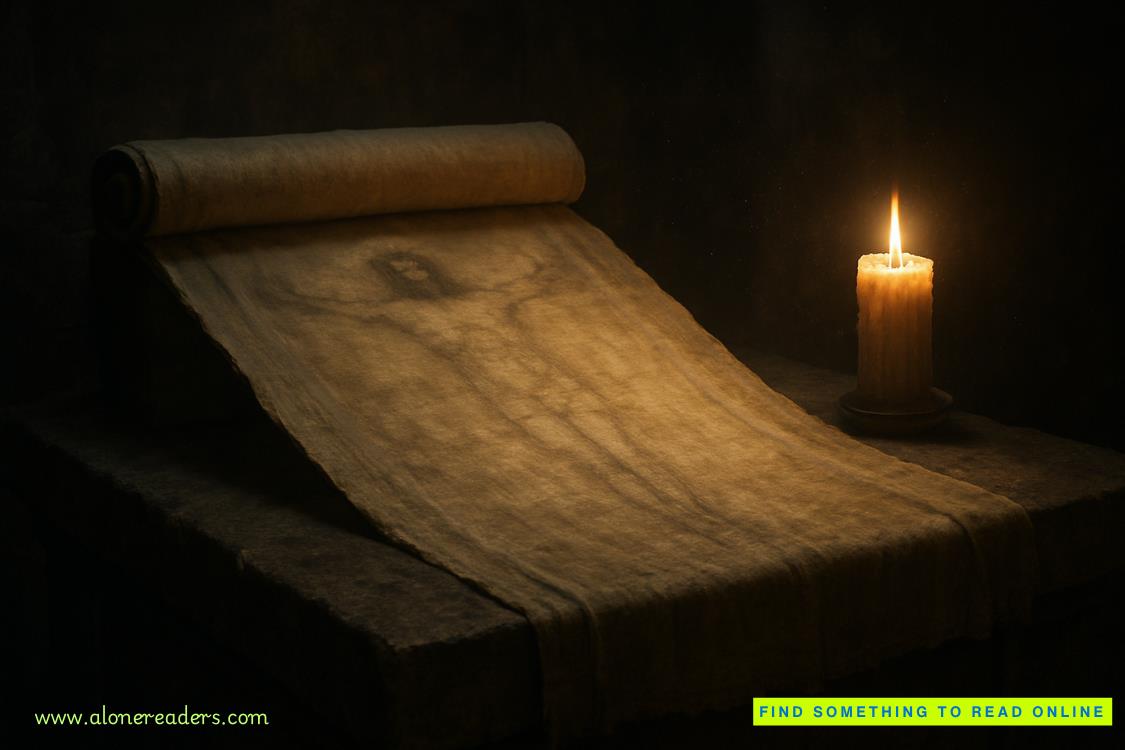
The fate of the Shroud of Turin remains one of history’s most enduring enigmas. A linen cloth bearing the faint, ghostly image of a crucified man has captivated believers and skeptics for centuries. Is this the burial shroud of Jesus of Nazareth — an unparalleled relic preserving the imprint of a divine resurrection? Or is it a cunning medieval deception — a devotional forgery designed to stir faith and attract pilgrims? The answer depends on how one weighs medieval documentation, scientific tests, artistic forensics and the nature of belief itself. In this exploration, we do not claim a definitive verdict. Instead, we assemble and scrutinize the principal threads of evidence — historical, scientific, and circumstantial — that continue to fuel the debate over authenticity.
The story of the Shroud’s modern prominence begins in the 14th century. The first undisputed historical record appears in 1354 when a French knight, Geoffroi de Charny, is documented as owning the cloth and exhibiting it publicly in a church in Lirey. Before that, no credible trace links the fabric to Jerusalem or first-century Judea. This sudden appearance in medieval France raises eyebrows: how could a relic of such significance vanish from all known Christian holdings for over a millennium, only to reemerge in a region disconnected from early Christian burial traditions? Defenders of the Shroud point to oral traditions, lost records, or secret guardianship to account for the silence. Skeptics regard those explanations as speculative cover for a likely medieval provenance. The abrupt arrival of the Shroud in 1350s Europe — devoid of verified documentation connecting it to earlier centuries — constitutes perhaps the most challenging problem for claims of ancient authenticity.
The physical cloth itself offers intriguing and perplexing details. The linen is woven in a herringbone twill of a kind that some say is consistent with first-century Mediterranean weaving. The figure depicted shows a man who appears tortured: scourge marks across the back and thighs, head wounds and a spear wound in the side. The body exhibits remarkable photonegative-like properties — when photographed, the image appears more lifelike and realistic in negative than in positive, a feature early believers considered miraculous. For centuries, this “negative image” phenomenon astonished clergy and pilgrims alike. Proponents argue that only a supernatural event — the resurrection or some form of radiation at the moment of Christ’s rising — could have caused an image with such lifelike depth, formed without visible pigment or brush strokes. This interpretation imbues the Shroud with sacred meaning beyond the visible cloth.
However, advances in forensic, chemical and radiocarbon science have brought powerful challenges to those claims. In 1988 the fabric underwent radiocarbon dating by three independent laboratories. Their results — placing the cloth’s creation between 1260 and 1390 AD — align precisely with the first documented historical appearance. This result suggests that the Shroud is not a 1st-century burial cloth at all, but a medieval artifact. To many scholars and observers this evidence decisively undermines claims of authenticity. The consistency of the three labs, their different geographic locations, and standard radiocarbon protocols all bolster confidence in the dating results. For skeptics, the data tipped the balance: medieval deception becomes far more plausible than genuine relic. For believers, questions linger — about sample selection and possible contamination — but most experts regard the 1988 dating as strong, and difficult to overturn.
Even setting aside radiocarbon dating, serious doubts arise from art-historical and textile analysis. Detailed scrutiny of the image — its proportions, posture, perspective, and the absence of any warp or weft deformation — suggests that it might resemble a carefully-crafted painting rather than a cloth impression of a real corpse laid upon it. Some art scholars observe similarities to medieval styles of body representation and devotional imagery. The consistency of the entire body’s proportions, the symmetry of wounds, and the lack of bleeding smears or distortions commonly seen when wrapping a wounded corpse all hint at an artist’s careful rendering rather than a natural imprint. Critics argue that no corpse, laid out and wrapped, would produce such a clean, uniformly detailed, front-and-back symmetrical image.
Supporters rebut that coffin-based painting could never reproduce the peculiar “negative” quality of the image or subtle depth cues such as light and shadow that change with viewing angle. They argue that medieval artists lacked knowledge not only of negative photography but also of coherent anatomically-accurate perspective at a level present on the Shroud. Moreover, analyses of the superficial fibers — the coloration seems confined to the outermost threads of the linen — suggest a shallow change in the chemistry of the fibers rather than penetration of pigment or paint. These supporters claim such subtle fiber-level changes are unlikely to result from conventional painting techniques. Rather, those changes fit better with theories invoking a burst of radiant energy or a chemical reaction triggered under unusual circumstances.
Beyond textile and image arguments, there are other curious features that continue to intrigue scholars. Pollens from plants native to the Jerusalem area and the Anatolian region have been reportedly found in dust embedded on the cloth. Traces of limestone typical of Jerusalem’s burial caves were also detected. Supporters see these as evidence of a Middle Eastern origin — perhaps consistent with a 1st-century Judean context — and argue that they survive as faint but meaningful clues despite centuries of handling, storage, and exposure. Skeptics counter that pollen can travel through trade, pilgrimage, and unregulated transport, contaminating the cloth without proving origin. They note that medieval pilgrims regularly travelled to and from the Holy Land, carrying souvenirs — including cloth — that later could find their way into Europe. These become fragile threads in a tapestry of circumstantial evidence: suggestive, but far from conclusive.
The interests and motivations surrounding the Shroud through history also weigh heavily in the balance. Once displayed, the cloth attracted huge crowds of pilgrims willing to pay to glimpse the relic believed to be Christ’s burial linen. For medieval institutions, this was not just a matter of piety — it was financially and politically lucrative. The surge in devotion, donations, and pilgrim traffic would have provided strong incentive for creation or promotion of such a relic. For a medieval noble like the original known owner, presenting a relic with dramatic visuals could have enhanced prestige and power. In that light, the notion that the Shroud was deliberately produced — perhaps even as a work of devotional propaganda — becomes plausible. The medieval Church, despite periods of strict scrutiny, also displayed variable standards for relic authentication. Lax controls, eager believers, and lucrative pilgrim revenues created fertile ground for fabrication. The possibility that the Shroud emerged from this milieu as a pious fraud cannot be dismissed simply because of reverence and hope.
On the other hand, for many believers the notion of a conscious medieval forgery cheapens a powerful object of devotion. Faith, particularly in the sacred traditions of Christianity, can transcend the demands of scientific scrutiny. The Shroud, for them, remains an icon of suffering and hope — the dire human pain of crucifixion preserved in linen, the silent witness to a divine act beyond mortal comprehension. Skeptical science may cast doubt on its earthly origin, but believers argue that the spiritual reality transcends empirical verification. The Shroud functions as a symbol and a focus for devotional experience — and in that context, its authenticity becomes a matter of faith rather than forensic proof.
Complicating matters is the impact of later events on the cloth’s condition. The Shroud has survived fires, water damage, handling by countless pilgrims, restorations, and conservation efforts. All of these could alter its physical properties. Skeptics argue such events may have contaminated or skewed radiocarbon samples, or introduced foreign fibers, dust, or pollen that distort origin evidence. Supporters respond that conservators followed rigorous protocols, that samples were carefully selected from areas away from known smoke- or repair-exposed zones, and that no credible contamination mechanism could shift radiocarbon dating by over a millennium. Nonetheless, the debate highlights a fundamental tension: relics — especially those cherished enough to survive wars, disasters, and thefts — rarely remain pristine. Damage, repair and conservation can cloud the path to clear scientific adjudication.
The broader historical and cultural context adds further complexity. Medieval Europe was a time of fervent religious feeling, crusades, rising trade, pilgrimages and the commodification of sacred sites and objects. Sacred relics — purported contact relics, bodily relics, cloth relics — proliferated throughout Christendom. Some were genuine, many were dubious, some were outright fraudulent. The period lacked the rigorous methods of provenance documentation, carbon dating or forensic analysis that modern scholars rely on. In that world, it was entirely feasible — even probable — for a noble or clergy member to commission or propagate a relic with the aim of inspiring devotion, consolidating status, or fueling pilgrimage economies. Seen in that light, the Shroud of Turin fits patterns prevalent in its first documented era: a powerful relic, stirring devotion, drawing attention, and carrying economic and social value. That context does not prove forgery — but it situates the Shroud within a cultural reality where relic-creation was common and sometimes unchecked.
At the same time, it is important to acknowledge that the Shroud continues to generate genuine scholarly and believer interest precisely because of its unique features. Unlike many medieval relics — which were often paintings, sculptures or relics of saints bones — the Shroud purports to present the visceral reality of suffering, death and resurrection. Its “negative image,” its anatomical detail, the continuity of front and back images, the symmetry of wounds, the absence of pigment infiltration — these aspects distinguish it from typical medieval artistry. For believers inclined to accept miracles, the combination of these features resists easy dismissal. Even modern imaging techniques, 3D mapping, ultraviolet fluorescence analysis and fiber microscopy have yet to reproduce all its unique qualities on a convincingly hand-crafted replica. To some, this enduring mystery suggests that the Shroud may lie outside the realm of normal medieval art or forgery — that it may indeed be something anomalous, sacred, and extraordinary.
The divide between skepticism and faith crystallizes around two competing rationales: one rooted in historical and scientific reasoning, the other in spiritual experience and symbolic meaning. From the perspective of a rigorous historical method, the radiocarbon dating evidence combined with the absence of pre-14th-century provenance, and the forensic/artistic inconsistencies, lean decisively toward the conclusion that the Shroud is a medieval artifact — likely a well-crafted forgery or devotional artifact from the 14th century. If judged solely on empirical evidence, the medieval origin appears far more plausible than the 1st-century shroud of Christ. Yet for believers, such empirical standards may not be the only valid criteria. The Shroud’s power lies not only in proven provenance but also in its ability to inspire awe, to connect believers across centuries, and to evoke the story of suffering, death and resurrection — capturing emotional and spiritual truth beyond the reach of carbon dating or textile analysis.
In the end, the status of the Shroud of Turin depends less on a final scientific ruling than on the interpretive lens one chooses. If one values historical documentation, empirical testing, and provenance, the evidence tilts sharply toward a medieval origin. If one values spiritual tradition, symbolic resonance, and the possibility of extraordinary events beyond scientific understanding, the Shroud remains a compelling relic, enigmatic and sacred. Perhaps the greatest truth is that the Shroud continues to live — in debate, devotion and mystery — more than 660 years after its first documented appearance. Its value is not only as a historical object but as a mirror reflecting humanity’s search for meaning in suffering, mortality and faith. Whether relic or deception, the Shroud of Turin endures as one of history’s most provocative and mysterious artifacts — a linen cloth that refuses to yield a definitive answer, and invites each generation to weigh evidence, faith and the limits of belief.





 The Hundred Days Offensive: How the Allies Defeated Germany in World War I
 The Second Battle of the Marne: The Turning Point of World War I in 1918
 The Spring Offensive of 1918: Germany's Final Gamble to Win World War I
 The Treaty of Brest-Litovsk: How Russia Left World War I
 The Russian Revolution and World War I: How War Brought Down the Tsar
 The Zimmermann Telegram Explained: Germany's Secret Offer to Mexico in World War I