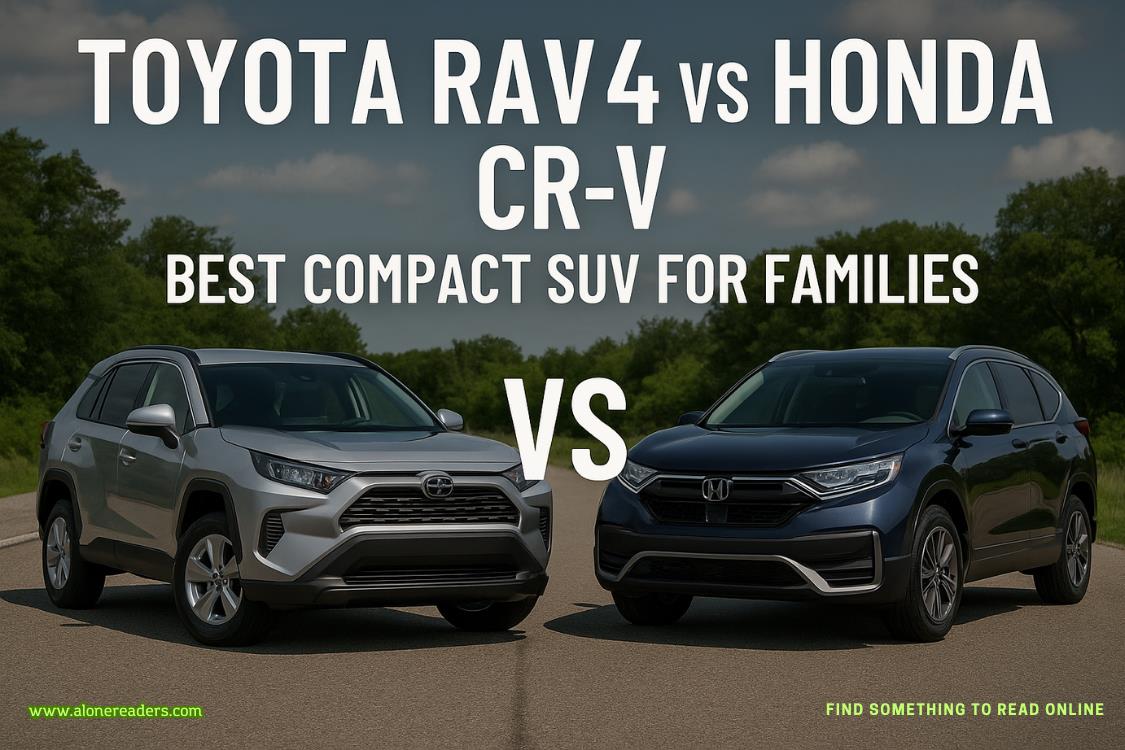
The compact SUV segment has been dominated for years by two strong contenders: the Toyota RAV4 and the Honda CR-V. Both are globally recognized for their reliability, practicality, and family-friendly features, yet they cater to slightly different preferences. For families looking to invest in a vehicle that balances comfort, safety, performance, and long-term value, understanding the specific differences between these two SUVs is crucial.
In this article, we will explore the RAV4 and CR-V in detail, analyzing their performance, space, design, safety, technology, fuel economy, and overall value to determine which might be the best fit for families.
Toyota RAV4 Performance
The Toyota RAV4 offers multiple engine options, including a standard 2.5L 4-cylinder engine producing 203 horsepower, making it one of the more powerful base engines in its class. Families who need an efficient yet robust option also have access to the RAV4 Hybrid and the plug-in hybrid RAV4 Prime. The Prime delivers an impressive 302 combined horsepower, providing near-sporty acceleration while still being fuel-efficient. Its suspension tuning strikes a balance between everyday comfort and composed handling, making it a versatile family vehicle for city and highway driving alike.
Honda CR-V Performance
The Honda CR-V features a 1.5L turbocharged 4-cylinder engine with 190 horsepower. While slightly less powerful than the RAV4, it emphasizes smoothness over aggression. Its Continuously Variable Transmission (CVT) is engineered to deliver seamless acceleration and quiet operation—an advantage for families seeking calm drives during school runs or long road trips. The CR-V Hybrid option provides extra fuel efficiency and improved torque, making it an excellent choice for families who prioritize low running costs.
Verdict
For families who value a more spirited drive and want a plug-in hybrid option, the RAV4 is the clear winner. For those who prefer quiet, smooth, and predictable performance, the CR-V may be more appealing.
Toyota RAV4 Interior
The RAV4 interior is designed with practicality in mind, offering durable materials and a slightly rugged feel. While front seating is spacious, rear passengers may find the legroom adequate but not class-leading. Cargo capacity is generous, offering about 37.6 cubic feet behind the second row and expanding to nearly 70 cubic feet with seats folded. Families with young children will appreciate its wide rear doors, which make installing child seats easier.
Honda CR-V Interior
The CR-V shines in interior space. It offers one of the roomiest cabins in the compact SUV segment, with exceptional rear legroom that makes it comfortable for taller passengers or growing teens. Cargo capacity is also impressive, with 39.2 cubic feet behind the second row and up to 75.8 cubic feet when seats are down, surpassing the RAV4. The CR-V’s cabin design feels more upscale, with soft-touch materials and a cleaner, more minimalist dashboard layout.
Verdict
For families prioritizing spaciousness and comfort—especially with older kids—the CR-V holds the edge. However, the RAV4 still provides plenty of practicality with a more durable, rugged interior feel.
Toyota RAV4 Tech Features
The RAV4 comes standard with a 7-inch touchscreen, with higher trims offering an 8-inch or even a new 10.5-inch option. It supports both Apple CarPlay and Android Auto. A standout is Toyota’s available digital rearview mirror, which provides a camera-based view behind the car, very useful when passengers or cargo block visibility. Optional features like a wireless charging pad and JBL premium audio enhance family convenience.
Honda CR-V Tech Features
The CR-V starts with a 7-inch touchscreen on most trims, with higher models offering a 9-inch version. Apple CarPlay and Android Auto are standard, with wireless connectivity on upper trims. The CR-V also offers a digital driver display, providing easy-to-read navigation and vehicle status. While it doesn’t have a digital rearview mirror like the RAV4, its system feels intuitive and family-friendly.
Verdict
Both SUVs offer family-essential technology, but the RAV4 offers more innovation-driven features. The CR-V, however, delivers a simpler, user-friendly interface.
Toyota RAV4 Safety
Every RAV4 comes standard with Toyota Safety Sense 2.5, which includes adaptive cruise control, lane departure alert with steering assist, lane tracing assist, and automatic emergency braking with pedestrian detection. The RAV4 consistently earns top crash test ratings and offers a sturdy build, making it reassuring for parents.
Honda CR-V Safety
The CR-V includes Honda Sensing as standard, which provides adaptive cruise control, lane keeping assist, road departure mitigation, and forward collision warning with automatic braking. The CR-V is also a top safety performer, with excellent crash-test scores. Families will appreciate features like a wide-angle rearview camera and traffic jam assist on newer models.
Verdict
Both are equally strong in safety, offering comprehensive standard safety suites. The choice here depends more on which brand’s system families find easier to use.
Toyota RAV4 Fuel Economy
The standard RAV4 returns around 27 mpg city and 35 mpg highway, while the RAV4 Hybrid boosts that to about 41 mpg city and 38 mpg highway. The RAV4 Prime offers up to 42 miles of all-electric driving before switching to hybrid mode, making it a standout for eco-conscious families.
Honda CR-V Fuel Economy
The CR-V’s 1.5L turbo achieves about 28 mpg city and 34 mpg highway. The CR-V Hybrid improves those numbers, offering roughly 40 mpg city and 34 mpg highway. While efficient, it doesn’t quite match the RAV4 Prime’s plug-in advantage.
Verdict
Families who want ultimate fuel savings and the flexibility of electric commuting will find the RAV4 Prime unbeatable. For those satisfied with strong hybrid efficiency, the CR-V remains an excellent contender.
Toyota RAV4 Reliability
Toyota has a reputation for unmatched reliability, and the RAV4 continues this tradition. Its maintenance costs remain low, and resale values are among the strongest in the compact SUV category.
Honda CR-V Reliability
Honda also has a long-standing reputation for dependability. The CR-V requires slightly more frequent turbo-specific maintenance compared to the RAV4’s naturally aspirated engine, but overall ownership costs remain competitive. Resale values are also strong, though slightly behind Toyota in most markets.
Verdict
Both SUVs are excellent long-term investments, but the RAV4 edges ahead with better resale value and slightly lower maintenance risks.
Toyota RAV4 Pricing
The RAV4 starts around the mid-$28,000 range, with higher trims and hybrid options going into the mid-$40,000s. The RAV4 Prime, being a plug-in hybrid, pushes prices further but offers federal and state incentives in some regions.
Honda CR-V Pricing
The CR-V starts slightly lower, around $27,500, with top trims reaching the low $40,000s for the Hybrid Touring. While more affordable at the base level, it doesn’t offer the plug-in hybrid flexibility of the RAV4 Prime.
Verdict
For budget-conscious families, the CR-V provides a solid value. For those willing to spend more upfront for cutting-edge hybrid tech and higher resale, the RAV4 is a smarter investment.
Both the Toyota RAV4 and Honda CR-V are exceptional compact SUVs that cater well to families. The RAV4 stands out for its stronger powertrain options, plug-in hybrid availability, resale value, and innovative features. Meanwhile, the CR-V excels in interior spaciousness, comfort, and a smooth, quiet driving experience.
For families with older children who value rear-seat comfort and cargo capacity, the Honda CR-V may be the better pick. For families seeking long-term value, eco-friendly driving, and stronger performance, the Toyota RAV4 emerges as the more future-proof choice.
In the end, the decision depends on what your family values more: maximum space and comfort (CR-V) or performance and long-term investment (RAV4).



 Top 10 Affordable Electric Cars for 2026: Best Budget EVs Worldwide
 Tesla Model S Review: Speed, Range, and Features in 2026
 Honda Accord vs Toyota Camry: Which Mid-Size Sedan Is Better?
 Chevrolet Silverado vs GMC Sierra: Which Truck Wins?
 2026 Jeep Wrangler Review: Off-Road Capabilities Tested in Extreme Terrain
 2026 Nissan Altima Review: Tech, Comfort, and Safety – In-Depth Expert Analysis