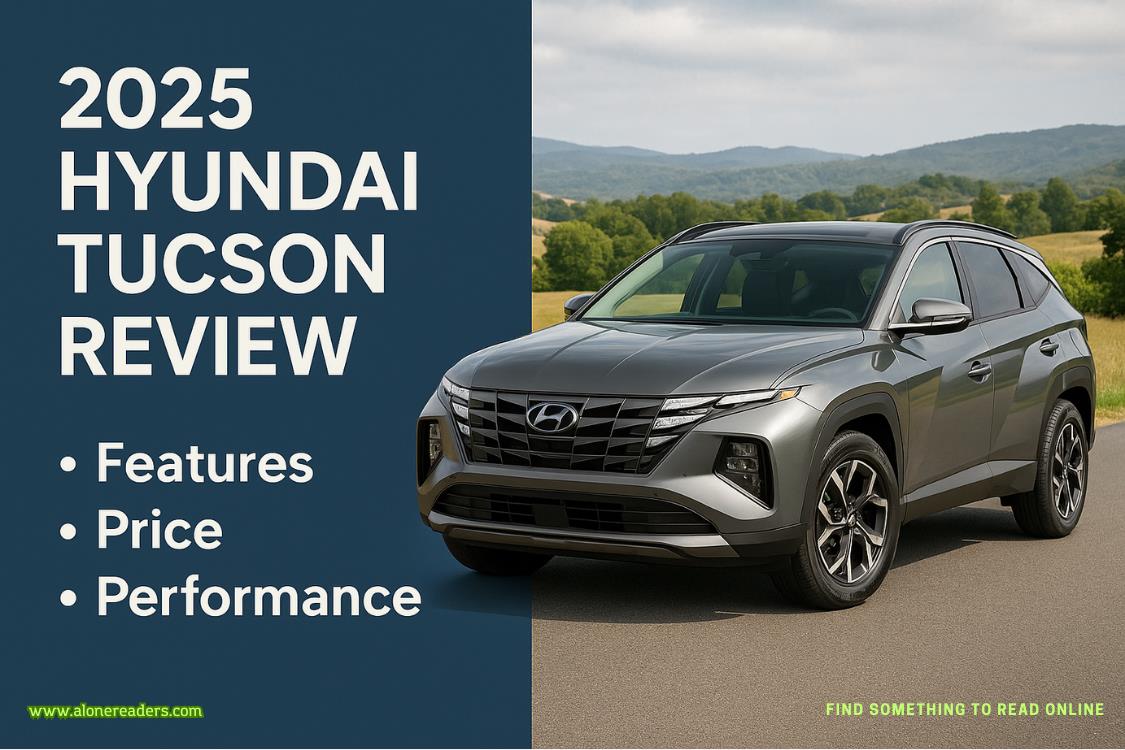
Hyundai has steadily transformed its Tucson from a modest family crossover into a segment leader that rivals Toyota RAV4, Honda CR-V, and Mazda CX-5 in design, technology, and performance. The 2025 Hyundai Tucson builds upon the success of its previous generation by refining its styling, enhancing comfort, expanding its hybrid offerings, and tightening the balance between affordability and premium feel. For those in the market for a midsize SUV, the 2025 Tucson represents one of the most well-rounded choices available today.
This review takes a deep dive into its design, interior features, trims, powertrain options, driving performance, pricing structure, and how it compares with competitors.
Bold Front Fascia
The 2025 Tucson continues Hyundai’s “Parametric Dynamics” design language with an aggressive grille that integrates seamlessly with hidden LED daytime running lights. This futuristic approach gives the Tucson a signature look, especially at night when the lights form a distinctive winged pattern.
Sharp Body Lines
Side creases and angular wheel arches emphasize a more athletic stance compared to the smoother shapes of Toyota or Honda competitors. Available 19-inch alloy wheels on higher trims complement its modern SUV proportions.
Rear Tail Lamps
The taillights feature a full-width LED strip with claw-like extensions. A hidden wiper tucked beneath the rear spoiler adds to the clean, uncluttered look.
Spacious Cabin Layout
The Tucson’s interior emphasizes minimalism with a dual-screen setup and touch-sensitive climate controls. Hyundai has managed to keep the cabin airy, with more rear legroom than many rivals, making it especially family-friendly.
Material Quality
Soft-touch panels, stitched leather on higher trims, and optional suede inserts provide a near-luxury feel. Base trims still feature durable plastics but remain well above average for the segment.
Technology and Displays
Cargo Space
The Tucson boasts 38.7 cubic feet of cargo space behind the second row, expanding to 74.8 cubic feet with seats folded—among the largest in the class.
Hyundai offers the 2025 Tucson in multiple trims, catering to different buyer profiles:
Gasoline Engines
The base engine is a 2.5-liter inline-4, producing 187 horsepower and 178 lb-ft of torque, paired with an 8-speed automatic transmission. It’s adequate for daily driving but tuned for efficiency over excitement.
Hybrid Powertrain
A 1.6-liter turbocharged hybrid delivers 226 combined horsepower, with improved torque response and fuel economy (up to 38 mpg combined). This version feels punchier in city driving compared to the naturally aspirated base engine.
Plug-in Hybrid (PHEV)
For eco-conscious drivers, the PHEV offers 261 horsepower and an all-electric range of around 33 miles. This makes it suitable for commuters who want electric efficiency with the flexibility of gasoline for long trips.
All-Wheel Drive (AWD)
AWD is optional on gasoline trims and standard on hybrid and PHEV models. With multiple drive modes—Normal, Sport, Smart, and Snow—the Tucson adapts to varied driving conditions.
Urban Performance
In city settings, the Tucson excels in smoothness. The suspension absorbs potholes and rough patches well, keeping passengers comfortable.
Highway Cruising
Noise insulation is one of the Tucson’s strongest suits, making long drives less fatiguing. Lane-keeping assist and adaptive cruise control work seamlessly for semi-autonomous highway driving.
Sport Mode
When switched to Sport mode, throttle response sharpens and steering gains weight, giving drivers more control. While not sporty like a Mazda CX-5, the hybrid and PHEV variants deliver satisfying acceleration for an SUV of this class.
These numbers make Tucson one of the most fuel-efficient SUVs, especially in its hybrid form, rivaling Toyota RAV4 Hybrid.
Hyundai equips every Tucson with Hyundai SmartSense, which includes:
Higher trims introduce Remote Smart Parking Assist, allowing the SUV to park itself in tight spaces, and Surround View Monitor for full 360-degree visibility.
The 2025 Hyundai Tucson is competitively priced:
Given the level of technology, warranty coverage (10-year/100,000-mile powertrain), and fuel efficiency, the Tucson stands out as a strong value against Honda and Toyota rivals.
Pros:
Cons:
The 2025 Hyundai Tucson cements itself as one of the most complete SUVs in its segment. With a futuristic design, an interior that blends practicality with sophistication, and a wide range of powertrains—from efficient hybrids to a plug-in hybrid—Hyundai has positioned the Tucson as a versatile option for families, professionals, and eco-conscious drivers alike.
Its combination of safety, technology, and value gives it a distinct edge. While the base engine may not thrill enthusiasts, the hybrid and PHEV variants add the punch and efficiency that most buyers will appreciate. For those seeking a well-rounded, feature-packed SUV with modern styling, the 2025 Tucson deserves serious consideration.



 Top 10 Affordable Electric Cars for 2026: Best Budget EVs Worldwide
 Tesla Model S Review: Speed, Range, and Features in 2026
 Honda Accord vs Toyota Camry: Which Mid-Size Sedan Is Better?
 Chevrolet Silverado vs GMC Sierra: Which Truck Wins?
 2026 Jeep Wrangler Review: Off-Road Capabilities Tested in Extreme Terrain
 2026 Nissan Altima Review: Tech, Comfort, and Safety – In-Depth Expert Analysis










