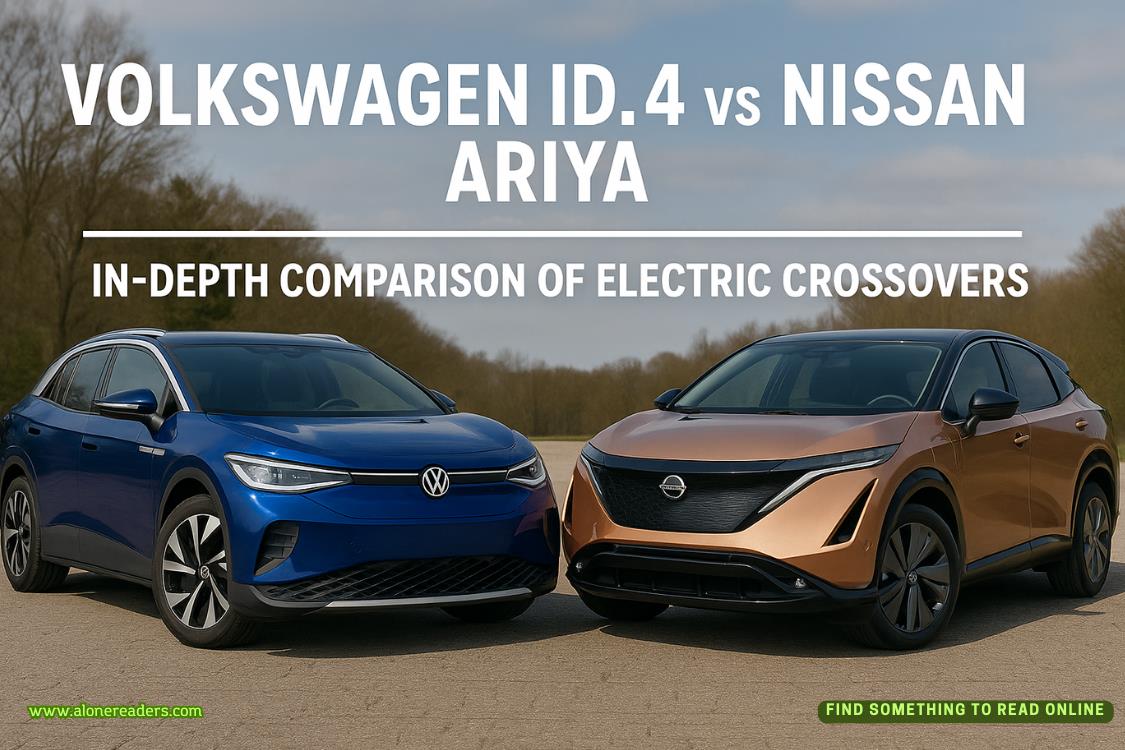
The compact electric crossover segment has quickly become one of the most competitive areas in the EV market, with nearly every major manufacturer aiming to capture buyers seeking practicality, efficiency, and modern design. Among the strongest contenders are the Volkswagen ID.4 and the Nissan Ariya, two models that represent different approaches to electrification while targeting a similar customer base. Both vehicles blend European and Japanese design philosophies, advanced battery technology, and the promise of long-distance usability. Yet, they differ in execution, driving dynamics, interior space, and long-term value. This article takes a deep dive into every aspect of these two electric crossovers to determine which one truly delivers the best package.
Volkswagen ID.4
The ID.4 emphasizes clean lines, restrained curves, and a subtle futuristic touch. Its overall aesthetic feels closer to traditional Volkswagen SUVs, which will appeal to buyers who prefer familiarity over radical styling. Aerodynamic optimization plays a role, with flush surfaces, smooth light signatures, and optional 20-inch wheels giving the ID.4 a balanced look. While not flashy, it communicates practicality and understated elegance.
Nissan Ariya
The Ariya, on the other hand, leans heavily into bold Japanese design cues. Nissan has embraced a more dramatic aesthetic with a coupe-like roofline, an illuminated “shield” grille, and intricate LED lighting signatures. The Ariya feels more premium at first glance, with contrasting two-tone paint schemes and an athletic stance. It is aimed at customers who want their EV to stand out, and visually it succeeds.
Volkswagen ID.4
Inside, the ID.4 favors functionality. A 12-inch central touchscreen dominates the dashboard, paired with touch-sensitive climate and volume controls, though these have drawn criticism for being unintuitive. The cabin emphasizes spaciousness, with generous headroom and cargo flexibility. Volkswagen’s interior build quality feels solid, though some materials in lower trims are more utilitarian than upscale. The rear seats offer strong comfort, making it suitable for families.
Nissan Ariya
The Ariya’s interior is where Nissan truly sets itself apart. Its cabin carries a lounge-like atmosphere, with a minimalist dashboard, hidden touch controls integrated into wood-like trim, and ambient lighting that exudes sophistication. The flat floor, enabled by the EV platform, gives a sense of openness, while the seats are plush and ergonomically advanced thanks to Nissan’s Zero Gravity design. Compared to the ID.4, the Ariya feels more premium, though its lower cargo capacity may deter those prioritizing practicality.
Volkswagen ID.4
The infotainment system in the ID.4 supports wireless Apple CarPlay and Android Auto, along with integrated navigation and voice control. However, software responsiveness and the reliance on touch-sensitive sliders can frustrate some users. The system continues to receive updates, which improves usability over time, but Volkswagen’s tech package feels less polished than its rivals.
Nissan Ariya
The Ariya offers dual 12.3-inch displays—one for the digital gauge cluster and another for infotainment. The interface is clean, responsive, and offers seamless smartphone integration. Nissan also emphasizes over-the-air software updates and includes Amazon Alexa integration, giving it an edge in connected services. The Ariya’s tech execution feels more premium and user-friendly than the ID.4’s.
Volkswagen ID.4
The ID.4 comes with two main battery choices depending on market: a 62 kWh pack and an 82 kWh pack. The larger battery offers an EPA-estimated range of up to 275 miles in rear-wheel-drive models. All-wheel-drive trims see a slight reduction due to added weight. For most drivers, the range is more than adequate, but efficiency isn’t class-leading.
Nissan Ariya
The Ariya offers a broader range of battery options, from 63 kWh to 87 kWh, with configurations in both front-wheel-drive and all-wheel-drive. The extended range variant can reach up to 304 miles on a single charge, giving it a slight advantage over the ID.4. This positions the Ariya as a stronger choice for those prioritizing longer road trips without frequent charging stops.
Volkswagen ID.4
With DC fast charging capability up to 170 kW (depending on the model year and battery), the ID.4 can replenish about 60 miles of range in 10 minutes and go from 10% to 80% in around 30-40 minutes. Its inclusion of three years of unlimited Electrify America charging in the U.S. is a significant advantage for early adopters looking to minimize charging costs.
Nissan Ariya
The Ariya supports DC fast charging at rates up to 130 kW. While respectable, it is slightly slower compared to the ID.4’s peak capacity. This means charging sessions are marginally longer, though still competitive. Unlike Volkswagen, Nissan does not bundle as generous a charging incentive, which could impact cost-conscious buyers.
Volkswagen ID.4
The ID.4 focuses on comfort and predictable handling rather than outright sportiness. The rear-wheel-drive model produces around 201 horsepower, while the AWD variant boosts output to 295 horsepower. Steering is light, suspension tuning favors smoothness, and the ID.4 delivers a calm, composed drive that appeals to daily commuters. It feels planted but not particularly exciting.
Nissan Ariya
Nissan takes a more performance-oriented stance with the Ariya. Power ranges from 214 horsepower in base trims to 389 horsepower in the e-4ORCE all-wheel-drive performance model. Acceleration is brisk, especially in higher trims, and the dual-motor AWD system provides impressive traction. The Ariya feels more engaging behind the wheel, though slightly firmer ride quality may not appeal to those prioritizing comfort above all else.
Volkswagen ID.4
Standard features include adaptive cruise control, lane-keeping assist, automatic emergency braking, and blind-spot monitoring. Higher trims offer Travel Assist, Volkswagen’s semi-autonomous driving suite, which provides hands-on assistance on highways. Safety ratings have been strong, reinforcing the ID.4 as a family-friendly option.
Nissan Ariya
The Ariya introduces Nissan’s latest ProPILOT Assist 2.0, which allows for hands-free driving on certain highways, making it more advanced than Volkswagen’s Travel Assist. Features like intelligent blind-spot intervention, traffic jam assist, and automated lane changes give the Ariya a technological edge in driver assistance.
Volkswagen ID.4
The ID.4 is competitively priced, often starting lower than the Ariya in base trims. Combined with Volkswagen’s charging incentives and solid range, it represents a value-focused proposition. It targets buyers who want affordability and practicality without premium pricing.
Nissan Ariya
The Ariya positions itself as a more premium EV, reflected in its higher starting price. Buyers pay more for design sophistication, richer interior quality, and advanced driver-assistance features. For those who value luxury touches and performance, the Ariya justifies its cost. However, for budget-conscious families, it may feel less accessible.
The Volkswagen ID.4 and Nissan Ariya both deliver compelling reasons to buy, but they cater to slightly different audiences. The ID.4 is ideal for practical families, first-time EV buyers, and those who value affordability and charging incentives. It delivers comfort, reliability, and straightforward usability.
The Ariya, by contrast, appeals to buyers seeking a more premium experience, higher performance, and cutting-edge driver assistance. Its design flair, upscale interior, and extended range options make it the more aspirational choice.
Ultimately, the decision comes down to priorities: if you want value and practicality, the Volkswagen ID.4 fits the bill. If you desire style, technology, and performance, the Nissan Ariya is the stronger contender.



 Top 10 Affordable Electric Cars for 2026: Best Budget EVs Worldwide
 Tesla Model S Review: Speed, Range, and Features in 2026
 Honda Accord vs Toyota Camry: Which Mid-Size Sedan Is Better?
 Chevrolet Silverado vs GMC Sierra: Which Truck Wins?
 2026 Jeep Wrangler Review: Off-Road Capabilities Tested in Extreme Terrain
 2026 Nissan Altima Review: Tech, Comfort, and Safety – In-Depth Expert Analysis










