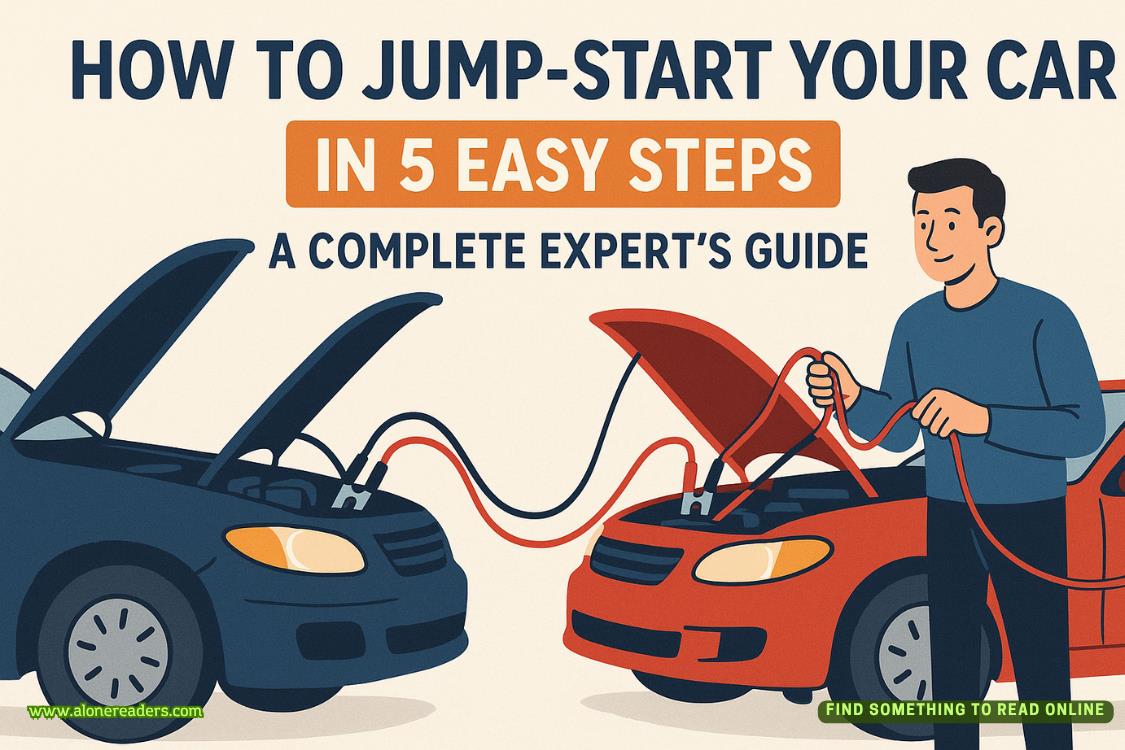
Few moments are as frustrating as turning your car key and hearing only a weak click—or worse, nothing at all. A dead battery can strike unexpectedly, often at the most inconvenient time. Fortunately, learning how to jump-start your car is one of the most valuable pieces of knowledge any driver can have. It’s not just about getting your vehicle running again—it’s about doing it safely, efficiently, and without causing damage to your car’s electrical system.
Below is a comprehensive, specialist-level guide on how to jump-start your car in five easy but carefully detailed steps.
Before jumping straight into the steps, it’s important to understand why your car battery might be dead. Most dead batteries are caused by simple issues like leaving the headlights or interior lights on, extreme cold or heat, or natural battery wear after years of use. However, there are also cases of alternator failure, corroded battery terminals, or faulty wiring that mimic the symptoms of a dead battery.
So, before you attempt a jump-start, do a quick assessment:
What you’ll need:
Positioning the vehicles:
Safety note:
Avoid smoking or creating sparks near the battery area—car batteries emit hydrogen gas, which is highly flammable.
This is the most critical part of the process. A wrong connection can result in severe electrical damage or even a battery explosion.
Follow this exact order:
Red clamp to the dead battery’s positive terminal (+).
Identify the positive terminal—it’s usually marked with a “+” sign or covered with a red cap. Make sure the clamp is secure and has solid contact with the metal terminal.
Red clamp to the good battery’s positive terminal (+).
Connect the other red clamp to the donor car’s battery positive terminal.
Black clamp to the good battery’s negative terminal (–).
Attach one black clamp to the donor car’s negative terminal.
Black clamp to an unpainted metal surface on the dead car’s engine or frame.
Do not attach the black clamp to the dead battery’s negative terminal. Instead, connect it to a clean, solid metal part of the car—such as a bolt or engine block. This minimizes the risk of sparking near the battery.
Tip:
If the terminals are corroded or loose, wiggle the clamps slightly to ensure a strong connection. Poor contact is one of the most common reasons jump-starts fail.
Once the cables are properly connected:
Expert Tip:
If your dead battery has been sitting for a long time or completely drained, you may need to let it charge for 10 minutes before attempting to start it.
After a few minutes of charging, attempt to start the dead vehicle:
If your car still doesn’t start after several attempts, it might be due to deeper issues such as:
In that case, it’s better to stop and call for professional roadside assistance rather than risk damaging your vehicle.
Once the car starts:
Let both cars run connected for about 3–5 minutes to stabilize the electrical systems.
Disconnecting the cables must be done carefully and in the reverse order to avoid electrical shock or short circuits.
Follow this order exactly:
Be cautious not to let any of the clamps touch each other or any metal surfaces during disconnection.
After the jump-start:
Keep the revived car’s engine running for at least 20–30 minutes to allow the alternator to recharge the battery fully. If you can, take it for a short drive rather than letting it idle.
Jump-starting your car is often a temporary fix. If your battery dies again within a short time, it indicates an underlying problem.
Perform these checks soon after the jump-start:
Keeping a portable jump starter in your car is also a smart idea. Modern lithium-ion jump packs are compact, rechargeable, and can start most vehicles without another car’s help.
If you’ve followed every step correctly and your vehicle still won’t start, it’s time to call a mechanic or roadside service. A dead battery might be just one symptom of a larger electrical issue—alternator malfunction, blown fuses, or wiring faults.
Professional technicians can test both your battery and charging system using specialized tools, helping you identify whether you need a new battery or further electrical repair.
Jump-starting your car doesn’t have to be intimidating. With the right tools, correct technique, and an understanding of the risks, you can confidently handle one of the most common roadside emergencies on your own. Remember that this skill is as much about precision as it is about safety.
By carefully following these five steps—preparing, connecting, charging, starting, and disconnecting—you can get back on the road safely and efficiently. Keep your jumper cables handy, inspect your battery regularly, and consider investing in a portable jump starter for extra peace of mind.
A little preparation today can save you a lot of frustration tomorrow.



 Top 10 Affordable Electric Cars for 2026: Best Budget EVs Worldwide
 Tesla Model S Review: Speed, Range, and Features in 2026
 Honda Accord vs Toyota Camry: Which Mid-Size Sedan Is Better?
 Chevrolet Silverado vs GMC Sierra: Which Truck Wins?
 2026 Jeep Wrangler Review: Off-Road Capabilities Tested in Extreme Terrain
 2026 Nissan Altima Review: Tech, Comfort, and Safety – In-Depth Expert Analysis