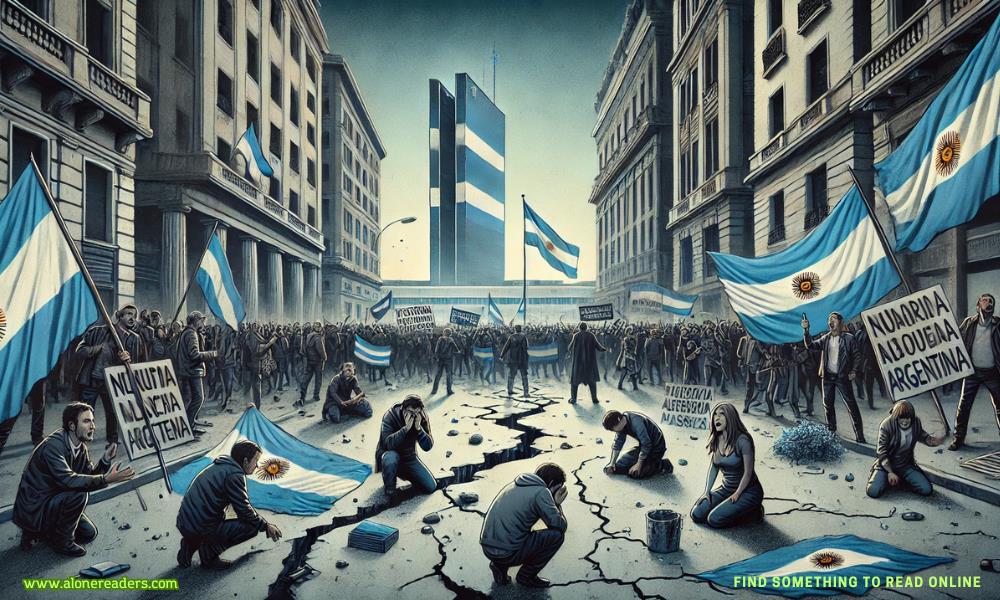
Between 2015 and 2019, Argentina underwent a period of significant economic transformation under President Mauricio Macri. Elected on a platform of liberal economic reforms and a promise to end the interventionist policies of his predecessor, Cristina Fernández de Kirchner, Macri took office with ambitious plans. However, his tenure became synonymous with sweeping austerity measures, a deepening financial crisis, and growing public discontent. These years marked a pivotal era in Argentina's economic history, where optimism about market-friendly reforms gave way to widespread frustration over inflation, unemployment, and a depreciating currency.
Macri's administration inherited a fragile economy characterized by high inflation, stagnating growth, and depleted foreign currency reserves. His solution was to implement a series of neoliberal economic reforms intended to stabilize the economy and regain international investor confidence. Early on, his government lifted currency controls, reduced export taxes on agricultural products, and eliminated energy subsidies that had previously kept household utility bills artificially low. These moves were applauded by international markets but quickly began to erode the purchasing power of ordinary Argentinians.
A cornerstone of Macri’s policy framework was fiscal discipline. He aimed to reduce the fiscal deficit primarily through spending cuts rather than increased taxation. To this end, his government initiated austerity measures that included slashing subsidies for transportation, electricity, and gas. Public sector wages were frozen or grew below inflation, and social welfare programs were curtailed. While these steps were designed to reduce government spending and attract foreign investment, they had the unintended consequence of stifling domestic demand and increasing the cost of living for millions.
Inflation, a long-standing problem in Argentina, worsened under Macri despite efforts to control it through tighter monetary policy. Prices continued to rise, reaching over 50% annually by 2019. In response, the Central Bank raised interest rates dramatically, at one point reaching nearly 70%, making credit virtually inaccessible for businesses and consumers. These high rates further contracted the economy, pushing Argentina into a deep recession. The steep devaluation of the Argentine peso exacerbated inflation and undermined wage gains, fueling further unrest.
The situation took a more severe turn in 2018 when Argentina faced a full-blown currency crisis. Investors lost confidence in the government’s ability to manage the economy, triggering massive capital flight. In an attempt to stabilize the situation, Macri’s administration negotiated a record $57 billion standby loan agreement with the International Monetary Fund (IMF)—the largest in the institution’s history at the time. While the IMF deal was intended to reassure markets and restore stability, it became a focal point of domestic opposition. Many Argentinians viewed it as a surrender of national sovereignty and a return to the painful structural adjustment programs of the past.
Public reaction to Macri’s policies became increasingly hostile as the economic pain intensified. Widespread protests erupted across major cities, organized by labor unions, student groups, and civil society organizations. Demonstrators decried job losses, rising utility costs, and cuts to social services. In the eyes of many, Macri’s reforms disproportionately affected the working and middle classes while benefiting wealthy elites and foreign investors. The government's emphasis on austerity in the face of growing hardship eroded its political support and sowed deep divisions in Argentine society.
By the time Macri sought re-election in 2019, the economic situation had deteriorated significantly. The country was in recession, poverty levels had risen to over 35%, and unemployment was on the rise. Many of the promises made at the start of his presidency—such as reducing inflation and restoring economic growth—remained unfulfilled. His defeat to Alberto Fernández, who campaigned on a return to more socially inclusive economic policies, reflected a popular backlash against austerity and neoliberalism.
While some economists argue that Macri’s policies were necessary to correct macroeconomic imbalances and restore investor confidence, the results were undeniably mixed. The austerity measures may have improved some fiscal indicators temporarily, but they came at a significant social and political cost. Critics contend that the speed and scale of the reforms were too aggressive for an economy as fragile as Argentina’s and that more gradual, balanced policies could have achieved better outcomes without causing such widespread suffering.
The IMF itself later acknowledged shortcomings in the implementation of the loan program. In a 2021 review, the Fund admitted that the program had overestimated Argentina’s capacity to reduce its fiscal deficit while maintaining growth and underappreciated the political and social costs of austerity. This recognition underscored the complexities involved in managing an economy like Argentina’s, where historical cycles of boom and bust, debt crises, and political instability have created deep-rooted structural vulnerabilities.
Macri’s economic legacy continues to be a subject of intense debate in Argentina and among international observers. For some, his presidency represents a bold attempt to modernize the economy and reverse the damage done by years of populist policies. For others, it is a cautionary tale about the dangers of applying rigid neoliberal prescriptions to economies with high levels of inequality and institutional fragility. The period between 2015 and 2019 remains emblematic of the broader struggle in Latin America between market-oriented reforms and social protection policies.
In conclusion, the austerity measures pursued by Mauricio Macri during his presidency led to significant macroeconomic shifts but failed to deliver the promised stability and growth. The resultant financial crisis, combined with rising poverty, inflation, and public dissatisfaction, ultimately led to a change in government and a reassessment of the neoliberal path. Argentina's experience during these years offers valuable lessons for policymakers navigating the balance between fiscal responsibility and social equity in times of economic stress.



 Top 10 Highest-Paid Professions in the United States (2025): Salaries, Roles, and Career Paths
 Top 10 Largest U.S. Companies by Revenue in 2025 (Fortune 500 Analysis)
 Top 10 Highest-Earning Global Tech Companies in 2025: Revenue, Strategy, and Market Power
 Top 10 Highest-Earning Mobile Apps in 2025: Revenue, Monetization, and Market Dominance
 ZombieAgent: Inside the Zero-Click AI Attack That Turns ChatGPT Agents into Persistent Data-Leaking Zombies
 China’s Urban Air Is a Hidden Plastic Reservoir: Inside the Microplastic Clouds Over Megacities