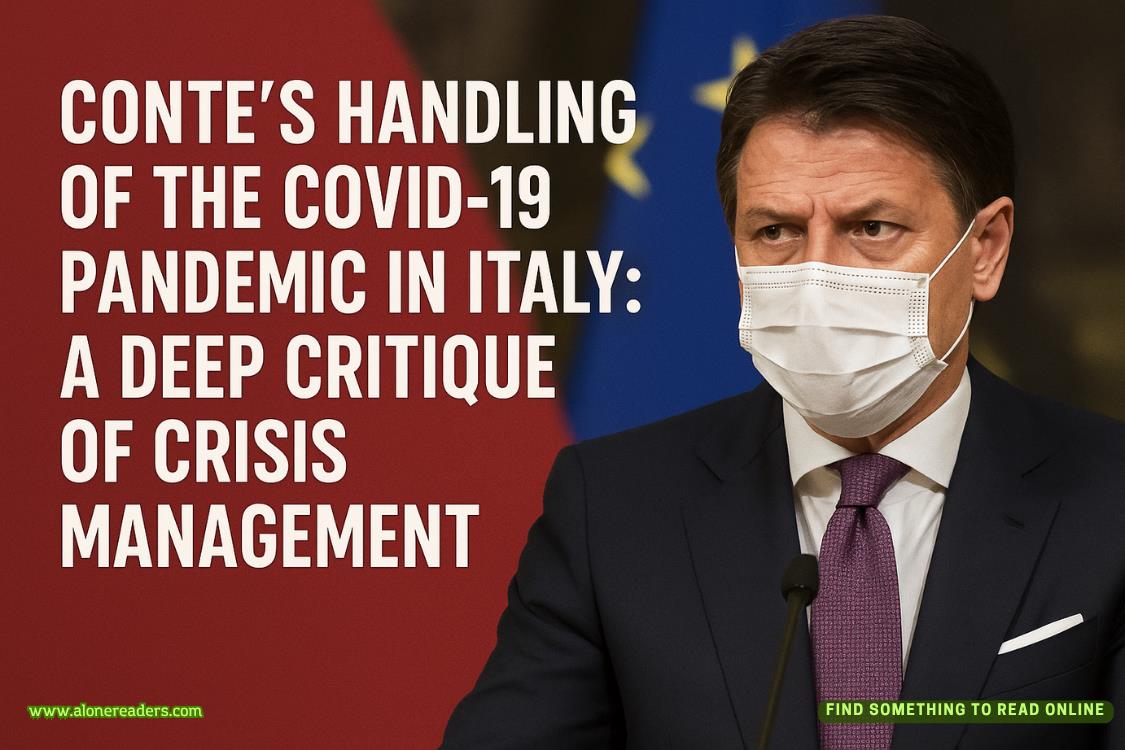
When Italy became the epicenter of the COVID-19 pandemic in early 2020, the world watched with horror as hospitals in Lombardy overflowed and death tolls rose at staggering rates. At the helm was Prime Minister Giuseppe Conte, an independent academic-turned-politician who suddenly faced one of the gravest national crises since World War II. His government’s handling of the pandemic became both a model and a cautionary tale—a mixture of decisive early actions, bureaucratic confusion, communication missteps, and political fallout.
The emergence of the crisis
Italy reported its first confirmed cases of COVID-19 in late January 2020—two Chinese tourists visiting Rome. At the time, Conte’s government moved swiftly to halt flights from China, making Italy the first European country to impose such a ban. Yet, this initial measure proved symbolic rather than strategic. The virus had already entered northern Italy through community transmission, unnoticed and unchecked for weeks.
Delays and local mismanagement
Lombardy and Veneto saw clusters of infections by mid-February, but the central government hesitated to impose immediate nationwide restrictions. Instead, Conte initially authorized “red zones” in affected towns such as Codogno and Vo’. While this regionalized strategy was logical given Italy’s decentralized healthcare system, it proved inadequate. Mobility between regions continued, allowing the virus to spread undetected across the north. By the time broader lockdown measures arrived, the healthcare infrastructure—particularly in Bergamo and Milan—was collapsing.
Decision to impose nationwide restrictions
On March 9, 2020, Conte announced a full national lockdown—the first of its kind in the Western world. The move was unprecedented in peacetime Italy and signaled both courage and desperation. While many praised the decision’s swiftness compared to other European leaders, critics argued that it was reactive rather than preemptive. The weeks lost in February had already doomed the north to catastrophe.
Public communication and leadership tone
Conte adopted a solemn, paternal tone in his televised addresses, appealing for unity and sacrifice. His phrase “Rimaniamo distanti oggi per abbracciarci domani” (“Let’s stay apart today to embrace each other tomorrow”) became emblematic of Italy’s collective struggle. His calm demeanor and straightforward language earned trust in the early weeks. However, as the restrictions dragged on and economic suffering deepened, that trust began to erode. The public wanted clarity, but the government’s rules were often inconsistent—oscillating between strict enforcement and ambiguous relaxations that confused both citizens and local authorities.
The regional dilemma
Italy’s constitutional setup divides responsibility for healthcare between the central government and the regions. During the pandemic, this division became a structural flaw. Regional governors, especially in Lombardy and Veneto, frequently clashed with Rome over the extent of restrictions and control over testing. The result was a patchwork response: Veneto implemented mass testing early and limited fatalities, while Lombardy delayed testing and saw staggering mortality rates.
Conte’s government struggled to assert centralized control, often issuing decrees that regional presidents interpreted differently. This lack of coherent coordination fueled the perception of institutional chaos. Critics accused Conte of being too legalistic, preferring executive decrees (DPCM) rather than involving Parliament, which created tension between technocratic governance and democratic accountability.
The economic emergency
By April 2020, Italy’s economy was in free fall. Conte’s government unveiled a series of decrees worth over €400 billion in loans and guarantees, including the “Cura Italia” and “Decreto Rilancio” packages. These measures aimed to protect jobs, support small businesses, and provide emergency income. However, implementation was slow. Bureaucratic bottlenecks, complex paperwork, and delays in distributing aid led to public frustration.
Impact on small businesses and workers
The government’s aid programs, while generous on paper, were difficult to access. Small business owners complained of long waits for relief funds, and self-employed workers—especially in the tourism and service sectors—were left in limbo. The pandemic exposed Italy’s deep economic fragilities: a reliance on small enterprises, high public debt, and sluggish bureaucracy. Conte’s government tried to balance health priorities with economic survival, but many Italians felt abandoned.
Transparency vs. overload
Conte’s daily press conferences and DPCM decrees kept citizens informed but also overwhelmed them. The constant stream of new regulations—sometimes changing weekly—created confusion about what was permitted. Italians coined the term “infodemia” to describe the flood of information that blurred the line between clarity and chaos.
Media narrative and image management
Conte initially appeared as a unifying figure above party politics. Yet as months passed, political opponents accused him of exploiting the emergency to consolidate personal authority. He often appeared alongside health experts and civil protection officials, reinforcing an image of technocratic governance. But critics argued that behind the calm exterior lay an indecisive leader too dependent on advisors.
Summer complacency and reopening
By June 2020, Italy had dramatically reduced infection rates. Conte declared that “the worst is over,” and Italy reopened borders and businesses. Tourism resumed cautiously, and Italians began to relax. However, experts warned that the reopening lacked adequate long-term planning. Testing infrastructure remained underdeveloped, and contact tracing systems were fragmented.
When the second wave hit in autumn 2020, the government reintroduced regional restrictions using a “traffic light” system (red, orange, yellow zones). This nuanced approach attempted to balance economic and health concerns but was perceived as overly complex. Citizens complained of inconsistent classifications, and regional leaders protested the central government’s metrics for determining risk zones.
Erosion of political consensus
Conte’s coalition—composed of the Five Star Movement and the Democratic Party—began to fracture under the strain. Matteo Renzi’s Italia Viva party withdrew support in early 2021, citing mismanagement of the pandemic recovery fund. This ultimately led to Conte’s resignation in February 2021, marking a political casualty of the very crisis he had managed.
Giuseppe Conte’s leadership during the pandemic was defined by contrasts—empathy and control, decisiveness and delay, technocracy and populism. He faced an unprecedented situation with limited institutional precedent. While his initial actions were guided by prudence and moral responsibility, his government’s long-term strategy was reactive and fragmented.
Conte embodied Italy’s struggle between national unity and regional autonomy, between saving lives and preserving livelihoods. His calm demeanor gave Italians a sense of direction in chaos, yet his administration’s structural inefficiencies magnified existing weaknesses in Italy’s public administration.
In hindsight, Conte’s pandemic management cannot be judged solely by infection rates or GDP contraction but by its broader implications: it accelerated Italy’s debate on centralization, reshaped its political landscape, and exposed the limits of European solidarity before the Recovery Fund’s historic intervention.
Giuseppe Conte’s handling of the COVID-19 crisis in 2020 remains a pivotal chapter in Italy’s modern history—a case study in leadership under pressure. He demonstrated moral courage and composure but was constrained by Italy’s bureaucratic inertia and regional fragmentation. The pandemic tested not only his government but the resilience of Italy’s institutions and citizens.
In the balance of history, Conte’s legacy as a crisis manager lies somewhere between redemption and reproach—a leader who did enough to prevent collapse, yet not enough to prevent disillusionment. His tenure during the pandemic reveals both the fragility and endurance of democracy when tested by an invisible enemy.



 Top 10 Highest-Paid Professions in the United States (2025): Salaries, Roles, and Career Paths
 Top 10 Largest U.S. Companies by Revenue in 2025 (Fortune 500 Analysis)
 Top 10 Highest-Earning Global Tech Companies in 2025: Revenue, Strategy, and Market Power
 Top 10 Highest-Earning Mobile Apps in 2025: Revenue, Monetization, and Market Dominance
 ZombieAgent: Inside the Zero-Click AI Attack That Turns ChatGPT Agents into Persistent Data-Leaking Zombies
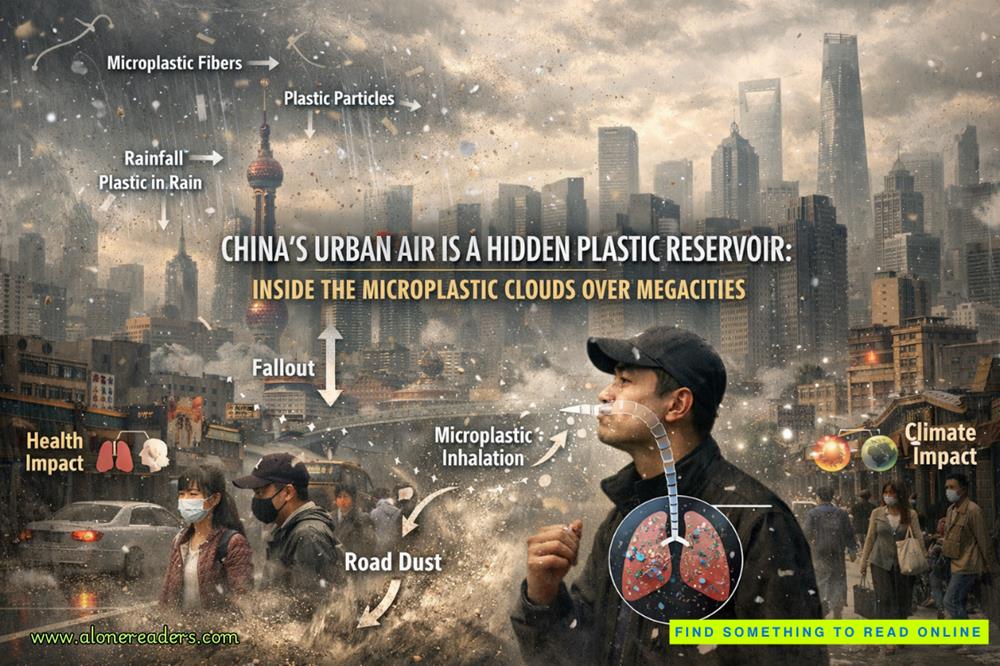 China’s Urban Air Is a Hidden Plastic Reservoir: Inside the Microplastic Clouds Over Megacities










