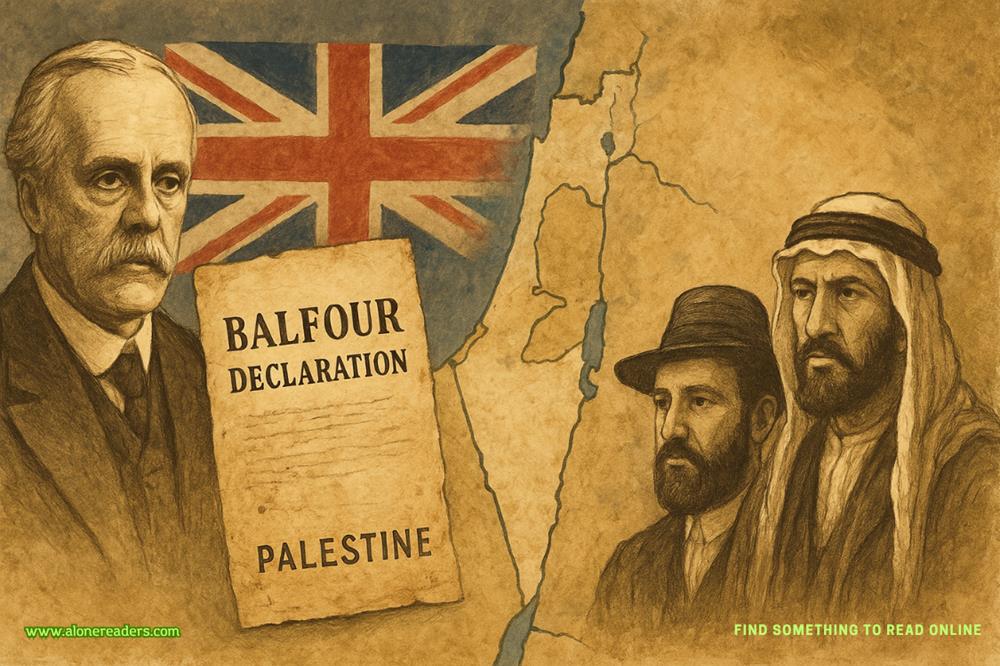
In the tapestry of twentieth-century Middle Eastern history, few documents have proven as consequential as the Balfour Declaration of 1917. Issued in the midst of World War I, this brief but monumental letter from the British government to the Zionist movement set in motion a complex web of political, social, and cultural changes whose reverberations are still acutely felt today. To understand the roots of the enduring conflict between Israelis and Palestinians, one must explore the historical circumstances, motivations, and profound consequences of this declaration—a statement that shaped the fate of Palestine and redefined the modern Middle East.
The Balfour Declaration took shape against the chaotic backdrop of World War I, when the Ottoman Empire, which had ruled over much of the Arab world including Palestine for centuries, was crumbling under the pressures of global conflict. The British government, seeking to secure strategic interests in the region, engaged in a series of diplomatic maneuvers that would leave a lasting legacy. On November 2, 1917, British Foreign Secretary Arthur James Balfour addressed a letter to Lord Rothschild, a prominent leader of the British Jewish community and a supporter of the Zionist movement. The letter famously stated that “His Majesty’s Government view with favour the establishment in Palestine of a national home for the Jewish people, and will use their best endeavours to facilitate the achievement of this object, it being clearly understood that nothing shall be done which may prejudice the civil and religious rights of existing non-Jewish communities in Palestine, or the rights and political status enjoyed by Jews in any other country.”
At first glance, the declaration may appear diplomatic, almost cautious, balancing support for a Jewish national home with the rights of the region’s existing inhabitants. But this short letter would soon expose deep contradictions and conflicts. At the time of the Balfour Declaration, Palestine was home to a diverse population, the vast majority of whom were Arab Muslims and Christians, alongside a small but significant Jewish minority. The idea of creating a “national home” for Jews in Palestine, long advocated by the international Zionist movement, was deeply controversial among the Arab population, who feared displacement and loss of autonomy in their own land.
The motivations behind the Balfour Declaration were complex and multi-layered. For the British, the declaration was partly a pragmatic war measure. London sought to gain the support of Jewish communities worldwide, particularly in Russia and the United States, hoping to encourage broader backing for the Allied cause. Additionally, British policymakers believed that fostering a pro-British Jewish community in Palestine could help secure imperial interests in the region after the anticipated defeat of the Ottomans. At the same time, British officials had made conflicting promises to other groups: through the Hussein-McMahon correspondence, they had hinted at supporting Arab independence in former Ottoman territories; through the secret Sykes-Picot Agreement with France, they had agreed to carve up much of the Middle East between the two colonial powers. The Balfour Declaration, therefore, was just one piece of a larger and deeply contradictory puzzle of British wartime diplomacy.
For the Zionist movement, the Balfour Declaration was a watershed moment. For decades, Jewish leaders such as Theodor Herzl had lobbied the great powers of Europe to support the creation of a Jewish homeland in Palestine, motivated by rising antisemitism in Europe and the desire for self-determination. The British declaration represented the first significant international recognition of Zionist aims, providing a legal and political framework upon which Jewish immigration and settlement could be justified. It was a dramatic step towards realizing the dream of a modern Jewish state, though it was also ambiguously worded and left open the question of how the rights of Palestine’s existing Arab population would be protected.
In the years that followed the Balfour Declaration, the consequences of this document quickly became evident. After World War I, the League of Nations granted Britain the mandate to govern Palestine, enshrining the principles of the Balfour Declaration into international law. British authorities encouraged Jewish immigration, facilitating the purchase of land and the establishment of new communities. As the Jewish population in Palestine steadily increased, so too did tensions with the Arab majority, who perceived these changes as a threat to their own national aspirations and way of life.
Throughout the 1920s and 1930s, the friction between Jews and Arabs in Palestine intensified. Arab leaders, feeling betrayed by what they saw as broken British promises of independence, organized strikes, protests, and at times violent uprisings. The most significant of these, the 1936-1939 Arab Revolt, reflected deep frustration over British policies and the perceived encroachment of Zionism. The British government, caught between conflicting promises and rising violence, issued a series of White Papers—official policy statements—each attempting to redefine or walk back earlier commitments, but none able to resolve the underlying conflict.
By the end of World War II, global sympathy for the survivors of the Holocaust added urgency to the call for a Jewish homeland. Yet the conflict in Palestine had become more intractable than ever. Britain, exhausted and unable to find a solution acceptable to both sides, referred the issue to the newly formed United Nations. In 1947, the UN voted to partition Palestine into separate Jewish and Arab states, with Jerusalem as an international city. This plan was accepted by the Jewish leadership but rejected by the Arab side, who viewed it as another act of colonial imposition and a violation of the principle of self-determination. The following year, the British withdrew, the State of Israel was declared, and the first Arab-Israeli war erupted, setting the stage for decades of further conflict.
The legacy of the Balfour Declaration remains deeply contested. For many Jews worldwide, it is remembered as a foundational moment that paved the way for the reestablishment of a Jewish state after centuries of diaspora and persecution. For many Palestinians and Arabs, however, it is a symbol of imperial injustice—a declaration that disregarded the will and rights of the indigenous majority. The ambiguous language of the declaration, especially the phrase “national home” and the vague promise not to “prejudice” the rights of existing communities, ensured that its implementation would be fraught with controversy and conflict.
The ramifications of the Balfour Declaration extend far beyond the borders of Israel and Palestine. It set precedents for the involvement of external powers in the internal affairs of the Middle East, contributing to a pattern of international intervention that would continue throughout the twentieth and twenty-first centuries. The declaration’s ambiguous balancing of competing national rights highlighted the limits and pitfalls of diplomatic promises made without the full consent or understanding of the peoples most affected.
More than a century after its issuance, the Balfour Declaration continues to shape debates over history, justice, and nationhood in the Middle East. Each anniversary brings renewed calls for Britain to apologize or acknowledge the suffering caused by its policies, as well as counter-arguments that emphasize its historical context and the competing pressures of wartime diplomacy. For historians, the declaration is a case study in the unintended consequences of international politics and the perils of vague promises. For millions living in the region, its legacy is still very much alive—in the contested narratives, the disputed lands, and the continuing struggle for identity and sovereignty.
In reflecting on the Balfour Declaration, one is reminded that seemingly simple statements can have complex, far-reaching consequences. The roots of the UK-Palestine conflict are entwined with the hopes and fears, aspirations and betrayals, of peoples caught in the crosscurrents of empire, nationalism, and global change. The path from the Balfour Declaration to today’s enduring conflict is not a straight line, but the declaration itself remains a pivotal moment—a document whose impact continues to echo through history.



 Top 10 Highest-Paid Professions in the United States (2025): Salaries, Roles, and Career Paths
 Top 10 Largest U.S. Companies by Revenue in 2025 (Fortune 500 Analysis)
 Top 10 Highest-Earning Global Tech Companies in 2025: Revenue, Strategy, and Market Power
 Top 10 Highest-Earning Mobile Apps in 2025: Revenue, Monetization, and Market Dominance
 ZombieAgent: Inside the Zero-Click AI Attack That Turns ChatGPT Agents into Persistent Data-Leaking Zombies
 China’s Urban Air Is a Hidden Plastic Reservoir: Inside the Microplastic Clouds Over Megacities










