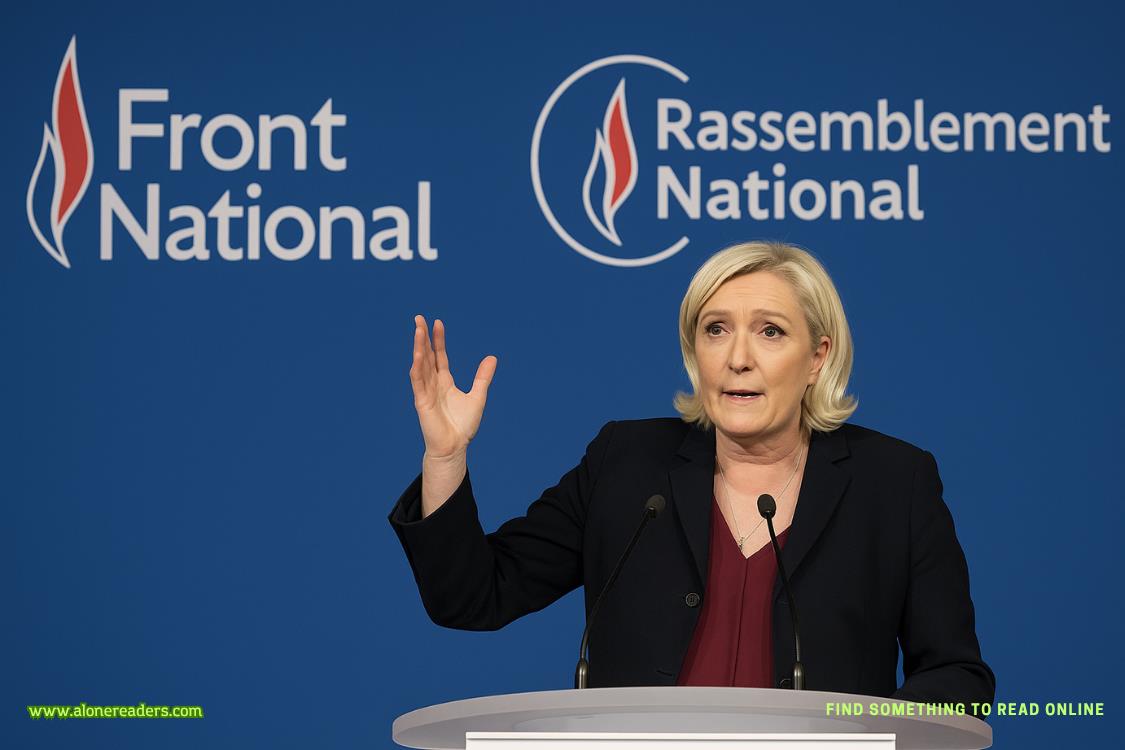
In 2018, French politics witnessed a bold transformation when Marine Le Pen, the high-profile leader of the far-right National Front, announced a historic rebranding of the party. Known for decades as a lightning rod in French public life, the National Front had built its reputation—and its notoriety—on hardline stances against immigration, skepticism towards the European Union, and a combative approach to French identity. By the time Marine Le Pen took the reins from her father, Jean-Marie Le Pen, in 2011, the party had already established itself as a formidable, if deeply divisive, force in France’s political landscape. However, the National Front’s reputation was also a double-edged sword: while it drew fervent support from certain segments of the electorate, its name had become synonymous with extremism, racism, and antisemitism for much of the French public.
Marine Le Pen’s rise marked the beginning of a gradual but deliberate effort to shed the party’s most toxic associations. Her father, Jean-Marie Le Pen, had founded the National Front (Front National, or FN) in 1972 and spent decades at the helm, cultivating an image of proud defiance against the political mainstream. However, Jean-Marie’s numerous inflammatory remarks—particularly those downplaying the Holocaust—alienated many French voters and led to frequent condemnations from across the political spectrum. As a result, the FN was trapped by what political analysts called a “glass ceiling”: it could galvanize a devoted base but struggled to win wider legitimacy or enter government.
Marine Le Pen understood the necessity of change. Her leadership style was less incendiary than her father’s, and she often spoke of “de-demonizing” the party—a process she hoped would make it more acceptable to mainstream voters while retaining its populist core. The 2017 presidential election proved both the strength and the limitations of this approach. Le Pen advanced to the second round, a historic feat for her party, but ultimately lost to Emmanuel Macron by a wide margin. The defeat underscored a fundamental challenge: many French citizens still viewed the National Front with deep suspicion, regardless of any softening in rhetoric.
It was against this backdrop that Marine Le Pen made her most dramatic move yet. At the National Front’s party congress in Lille in March 2018, she proposed changing the party’s name to “Rassemblement National” (National Rally). The idea, she argued, was to “open up” the party and give it a new image—one that would break with the legacy of her father and signal a broader, more inclusive political movement. This was not just a cosmetic shift; it was a carefully calculated attempt to recalibrate the FN’s brand, shed the baggage of past controversies, and position the party as a credible alternative for voters disillusioned with the traditional right and left.
The rebranding was met with both anticipation and controversy. Supporters hailed it as a savvy step towards modernizing the party and reaching new demographics. They argued that the National Front’s old name was a relic of another era—one indelibly associated with political pariah status. By becoming the National Rally, the party could reframe itself as a legitimate, patriotic force willing to work with others in defense of French values. Marine Le Pen’s inner circle believed that a new name would help erase the memories of past scandals and refocus attention on contemporary issues: economic anxiety, fears over national security, and dissatisfaction with globalization.
Critics, however, saw the move as little more than a cynical marketing ploy. For many on the left and center, changing the party’s name did nothing to alter its policies or its underlying ideology. They pointed out that, despite Marine Le Pen’s efforts to moderate the party’s image, the core of its platform—opposition to immigration, calls for stricter law and order, and skepticism about the EU—remained intact. Detractors insisted that a new name could not erase decades of incendiary rhetoric, nor the party’s long history of courting controversy and division. Some even accused Le Pen of trying to “whitewash” the National Front’s past to make its far-right agenda more palatable.
The rebranding debate also exposed tensions within the party itself. Jean-Marie Le Pen, now estranged from his daughter, denounced the name change as a betrayal of the movement he had built. He called it “political suicide” and predicted that it would confuse or alienate the party’s traditional base. Some older members echoed his concerns, fearing that the transformation would dilute the FN’s identity and abandon its core principles. Yet many younger activists and local leaders supported Marine Le Pen’s vision, arguing that adaptability was essential for political survival and growth.
Beyond internal drama, the rebranding had real strategic implications for French and European politics. Marine Le Pen hoped the National Rally could become a rallying point—not just for the French far right, but for a wider coalition of nationalist and populist forces across Europe. With anti-establishment movements gaining traction in countries like Italy, Hungary, and Poland, Le Pen believed her party could play a pivotal role in shaping the continent’s political future. The new name, with its connotations of unity and inclusivity, was meant to broaden the party’s appeal both at home and abroad.
The immediate aftermath of the rebranding produced mixed results. Opinion polls showed that many voters remained wary of the party, regardless of its new image. The name change did not spark a sudden surge in popularity, nor did it dispel the skepticism of the French media. Nevertheless, the move did succeed in signaling a new era—one in which Marine Le Pen was clearly in control, steering the party toward the political mainstream, and attempting to shake off the most damaging elements of its legacy.
The longer-term effects of the rebranding became more apparent in subsequent years. In the 2019 European Parliament elections, the National Rally performed strongly, finishing ahead of Macron’s La République En Marche and sending a powerful message about the continuing resonance of nationalist and anti-globalization politics in France. By 2022, Marine Le Pen once again advanced to the second round of the French presidential election, winning a record share of the vote for a far-right candidate. While she did not win the presidency, the normalization and “de-demonization” of her party had undeniably succeeded in pushing the French political center of gravity to the right.
The National Front’s metamorphosis into the National Rally stands as a compelling case study in political branding and the ongoing evolution of far-right movements in Europe. Marine Le Pen’s gamble—to turn a party once defined by its outsider status into a mainstream contender—reflected both the risks and the rewards of adapting to changing times. The rebranding was never just about a name; it was about identity, legacy, and the future of French politics.
In conclusion, the 2018 rebranding of the National Front was more than a superficial facelift. It was a calculated, controversial, and ultimately transformative step by Marine Le Pen to position her party for the next chapter of French and European politics. Whether seen as a genuine attempt at renewal or as a strategic move to obscure the past, the shift from National Front to National Rally symbolized a critical moment for the far right—not just in France, but across a continent grappling with questions of identity, belonging, and the boundaries of political respectability. As Marine Le Pen continues to shape her party’s path, the legacy of this rebranding will be debated for years to come, both by supporters who see it as visionary and by critics who view it as cosmetic. What is clear is that, in 2018, French politics changed in a way that cannot be easily undone.



 Top 10 Highest-Paid Professions in the United States (2025): Salaries, Roles, and Career Paths
 Top 10 Largest U.S. Companies by Revenue in 2025 (Fortune 500 Analysis)
 Top 10 Highest-Earning Global Tech Companies in 2025: Revenue, Strategy, and Market Power
 Top 10 Highest-Earning Mobile Apps in 2025: Revenue, Monetization, and Market Dominance
 ZombieAgent: Inside the Zero-Click AI Attack That Turns ChatGPT Agents into Persistent Data-Leaking Zombies
 China’s Urban Air Is a Hidden Plastic Reservoir: Inside the Microplastic Clouds Over Megacities