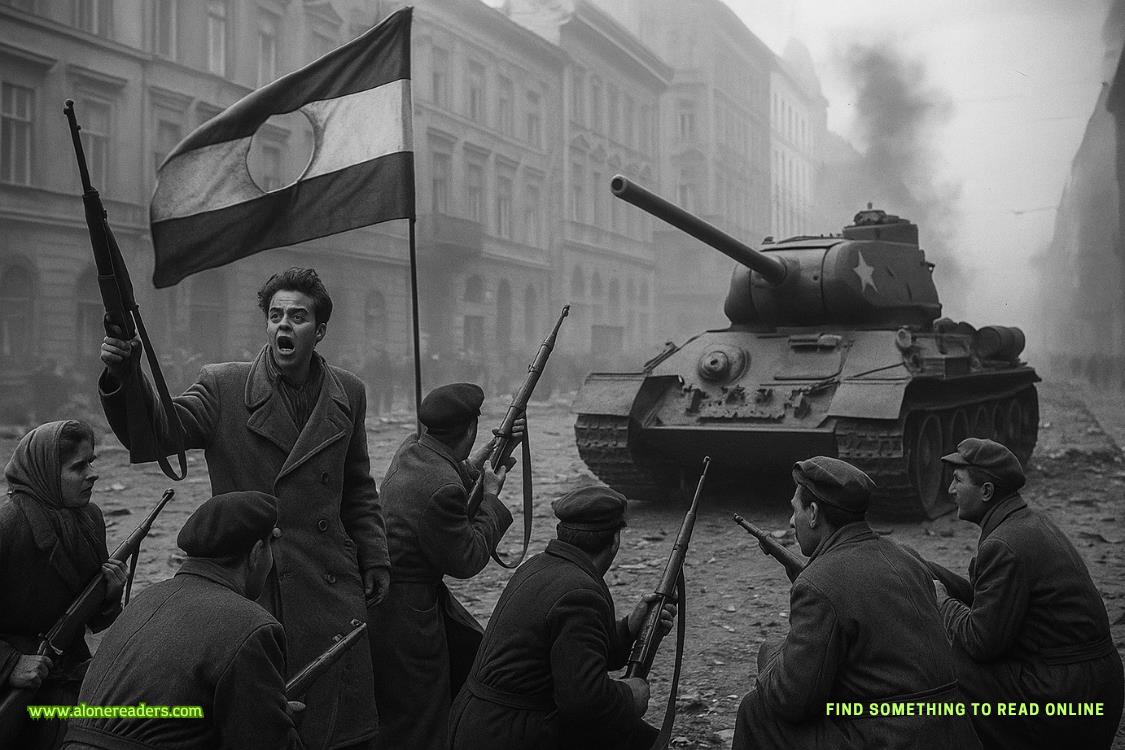
In the heart of Europe, during the Cold War’s most oppressive decades, one of the most significant and tragic revolts against Soviet dominance erupted: the Hungarian Uprising of 1956. This spontaneous nationwide revolt against Soviet-imposed policies, led by students, workers, and ordinary citizens, became an enduring symbol of hope and tragedy for people yearning for freedom under communist rule. The events in Hungary not only revealed the courage of a nation but also laid bare the brutal realities of superpower politics and the limits of Western intervention during the Cold War era.
The story of the Hungarian Uprising begins in a climate of growing discontent. After World War II, Hungary, like much of Eastern Europe, fell under the control of the Soviet Union. The new government, dominated by the Hungarian Working People's Party and supported by Moscow, implemented harsh Stalinist policies. Political repression, economic hardship, and the suppression of personal freedoms defined daily life. By the mid-1950s, the wounds of war were compounded by forced collectivization, widespread surveillance, and the elimination of political dissent. Hungary’s once vibrant culture and economy had been suffocated by the rigid hand of Soviet-style communism.
By 1956, tensions were reaching a boiling point across the Eastern Bloc. The death of Joseph Stalin in 1953 had created a sense of uncertainty and a modest thaw in Soviet politics, as new leader Nikita Khrushchev spoke of “de-Stalinization.” The prospect of reforms sparked hope in Hungary, particularly among students and intellectuals, who watched developments in neighboring Poland with growing interest. In October 1956, workers in Poland had successfully pressured their government for reforms and the return of a more moderate leader, inspiring Hungarians to believe change was possible in their own country.
On October 23, 1956, students from the Technical University of Budapest organized a demonstration in solidarity with the Polish reform movement. What began as a peaceful gathering quickly swelled as thousands joined the march, chanting slogans like “Russians go home!” and “We want freedom!” The protestors demanded democratic reforms, the withdrawal of Soviet troops, freedom of speech, and the appointment of Imre Nagy—a reform-minded communist—as Prime Minister. Their demands were posted in a document known as the “Sixteen Points,” reflecting a desire for both national sovereignty and basic human rights.
As evening fell on Budapest, the situation escalated. Crowds gathered at the Hungarian Radio building, demanding their demands be broadcast to the nation. The police and secret security forces responded with tear gas and, eventually, live fire. The first shots rang out, killing several protestors and turning the demonstrations into an outright revolt. The violence rapidly spread, and within hours, armed conflict erupted across the city. Civilians, students, and workers seized weapons from army depots and police stations, forming makeshift militias. They battled Soviet tanks and the Hungarian State Security Police, toppling Soviet statues and tearing communist emblems from buildings.
The scale of the uprising stunned the world. For several days, Budapest became a battleground, with revolutionaries using Molotov cocktails and small arms against Soviet armored units. Despite being outgunned and outnumbered, the rebels achieved surprising victories, forcing Soviet troops to retreat from Budapest by October 28. The Hungarian government, reeling from the chaos, reinstated Imre Nagy as Prime Minister. Nagy promised to negotiate a withdrawal of Soviet forces, legalize banned political parties, and restore civil liberties. Most dramatically, he announced Hungary’s intention to withdraw from the Warsaw Pact and declare neutrality—an unprecedented challenge to Soviet control.
For a brief, euphoric period, Hungary tasted freedom. Political prisoners were released, censorship eased, and new newspapers appeared. People openly debated the country’s future and the prospects of independence. The Soviet Union, however, viewed these moves as an existential threat to its dominance in Eastern Europe. Khrushchev and his advisors, fearing a domino effect across the communist bloc, decided to act decisively.
On November 4, 1956, Soviet forces launched “Operation Whirlwind,” a massive military intervention to crush the revolution. Thousands of tanks and tens of thousands of troops poured into Hungary, encircling Budapest and other major cities. The resistance, though brave and widespread, was ultimately overwhelmed. Urban warfare raged for nearly two weeks, with thousands of Hungarians killed and many more wounded. The revolutionaries fought valiantly, but they stood little chance against the overwhelming might of the Red Army. By November 10, organized resistance had been largely crushed.
The Soviet crackdown was swift and brutal. Imre Nagy, the symbol of the revolution, sought asylum in the Yugoslav embassy but was later captured and executed in secret. Tens of thousands were arrested, imprisoned, or sent to labor camps. The new puppet government, led by János Kádár, reversed the reforms and reimposed Soviet control. Over 200,000 Hungarians fled as refugees, escaping to Austria and beyond. The dreams of freedom were dashed, and the reality of life under Soviet occupation returned, even more oppressive than before.
The Hungarian Uprising sent shockwaves across the globe. In the West, the revolt was met with public outpourings of sympathy, but governments stopped short of direct intervention, wary of triggering a broader conflict with the Soviet Union. Radio Free Europe and other Western broadcasts encouraged the revolutionaries, but ultimately, Hungary was left to fight alone. The events of 1956 exposed the limitations of Western influence behind the Iron Curtain and the harshness with which the Soviet Union would defend its sphere of control.
Yet, the legacy of the 1956 Uprising endures. It revealed the depth of opposition to communist rule within the Eastern Bloc and shattered the illusion of monolithic Soviet control. The revolution inspired dissidents in Czechoslovakia, Poland, and elsewhere, laying the groundwork for future resistance movements. It demonstrated that the desire for freedom and national self-determination could not be entirely suppressed, no matter how formidable the forces arrayed against them.
In Hungary itself, the memory of 1956 became a symbol of national pride and sorrow. For decades, open discussion of the uprising was forbidden, and official accounts portrayed it as a “counter-revolution” led by reactionaries. However, in private, families remembered the sacrifices of their loved ones and honored the courage of those who stood up to tyranny. When communism finally collapsed in Eastern Europe in 1989, Hungary’s path to freedom was paved, in part, by the martyrs and survivors of the 1956 revolution. The nation’s first free elections in 1990 and the subsequent reburial of Imre Nagy were powerful reminders of the uprising’s enduring influence.
The Hungarian Uprising of 1956 remains a defining moment in the history of the Cold War and of Hungary itself. It stands as a testament to the resilience of the human spirit, the high cost of liberty, and the complexities of international politics. Though the revolution was ultimately crushed, its echoes continue to inspire those who struggle against oppression and long for a world where nations and individuals can choose their own destinies. The events of 1956 remind us that even in the darkest of times, ordinary people can rise up and, for a moment, alter the course of history.



 Top 10 Highest-Paid Professions in the United States (2025): Salaries, Roles, and Career Paths
 Top 10 Largest U.S. Companies by Revenue in 2025 (Fortune 500 Analysis)
 Top 10 Highest-Earning Global Tech Companies in 2025: Revenue, Strategy, and Market Power
 Top 10 Highest-Earning Mobile Apps in 2025: Revenue, Monetization, and Market Dominance
 ZombieAgent: Inside the Zero-Click AI Attack That Turns ChatGPT Agents into Persistent Data-Leaking Zombies
 China’s Urban Air Is a Hidden Plastic Reservoir: Inside the Microplastic Clouds Over Megacities










