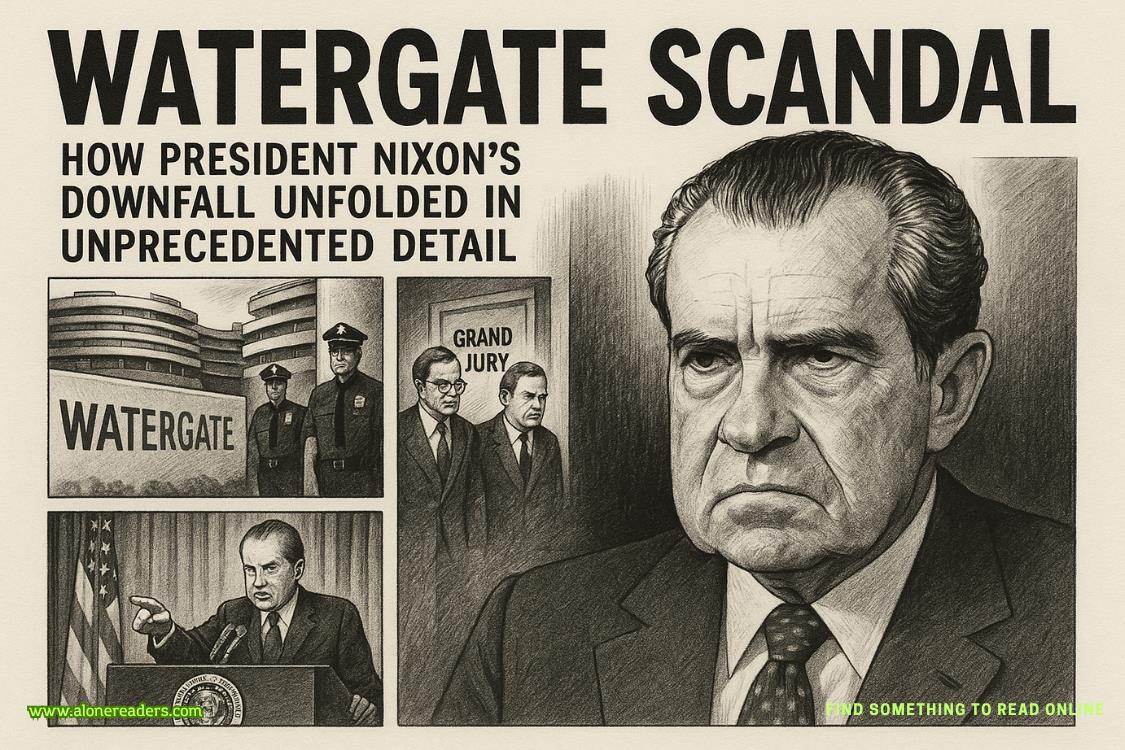
On August 9, 1974, at exactly 11:35 a.m., U.S. President Richard Nixon signed a short, historic document containing just one decisive sentence: “I hereby resign the Office of President of the United States.” With that act, Nixon became the first—and so far only—American president to resign from office. This seismic political moment was the culmination of two years of escalating revelations surrounding what would be known as the Watergate scandal, an event that transformed journalism, politics, and public trust in government forever.
To understand why Nixon was forced into this unprecedented decision, we must revisit the scandal’s origins, the relentless investigation by The Washington Post, and the unmasking of political corruption that stretched right into the Oval Office.
The Setting: Watergate Hotel, Washington, D.C.
In June 1972, the upcoming U.S. presidential election was months away. The Democratic National Committee (DNC) headquarters, situated on the sixth floor of the Watergate Hotel, was a hub of activity for Senator George McGovern’s campaign. On the night of June 17, 1972, five men quietly entered the office with a mission—install wiretaps, photograph documents, and gather political intelligence.
The Mistake That Exposed Them
The break-in might have succeeded if not for an overlooked detail: the burglars taped open door latches to prevent them from locking. Frank Wills, a night watchman, noticed the tape and called the police. Officers quickly apprehended the intruders, finding burglary tools, two sophisticated listening devices, lockpicks, walkie-talkies, cameras, tear-gas pen guns, and $2,300 in sequentially numbered $100 bills.
One suspect, Eugenio Martínez, a Cuban national, later described the event in a 1974 Vanity Fair article titled Mission Impossible. But the real story—the connection between this break-in and the White House—was just beginning to unfold.
The First Report
The next day, The Washington Post ran a headline: “Five Held in Plot to Bug Democrats’ Office Here.” Two relatively young reporters, Bob Woodward and Carl Bernstein, were assigned the case. At first glance, it appeared to be a low-level political espionage attempt. But the more the reporters dug, the more troubling the links became.
The Role of “Deep Throat”
An anonymous source—codenamed Deep Throat—fed Woodward and Bernstein critical information. In October 1972, just weeks before the election, they published a bombshell: the FBI had traced the Watergate break-in directly to members of Nixon’s re-election campaign, formally known as the Committee to Re-elect the President (mockingly called “CREEP”).
At the time, Nixon denied all involvement, claiming political opponents were conspiring against him. The American public seemed to believe him—his popularity remained strong, and he won the November 1972 election in a landslide, taking 49 of 50 states.
The $100 Bills That Spoke Volumes
Among the most incriminating discoveries by Woodward and Bernstein was that the sequential $100 bills found on the burglars matched funds raised for Nixon’s re-election campaign. This financial link between the burglars and Nixon’s inner circle made it impossible to dismiss the operation as the work of “rogue” actors.
Key Figures Exposed
It emerged that one of the burglars, James W. McCord, was a former CIA officer and the security coordinator for CREEP. His arrest directly connected the scandal to Nixon’s campaign machinery.
Congressional Investigation
As media coverage intensified, the U.S. Senate established a special committee to investigate. At the same time, special prosecutor Archibald Cox demanded White House tape recordings. Since Franklin D. Roosevelt’s presidency, conversations in the Oval Office had been recorded—a fact Nixon had to his disadvantage.
The Saturday Night Massacre
When Nixon refused to hand over the tapes, Cox persisted. In retaliation, Nixon ordered his Attorney General, Elliot Richardson, to fire Cox. Richardson resigned instead, as did his deputy. Solicitor General Robert Bork finally carried out the dismissal. This unprecedented act, dubbed the “Saturday Night Massacre,” intensified calls for impeachment.
After months of legal wrangling, Nixon surrendered the tapes, though one from June 20, 1972, was mysteriously missing 18½ minutes. The surviving recordings revealed Nixon had discussed using the CIA to block the FBI investigation—a clear obstruction of justice.
In July 1974, the House Judiciary Committee approved three articles of impeachment:
Avoiding Impeachment
Facing certain removal from office, Nixon resigned on August 9, 1974. His brief resignation letter passed authority to Vice President Gerald Ford, who, in a controversial move, granted Nixon a full pardon one month later, shielding him from prosecution.
Impact on Journalism and Politics
Woodward and Bernstein’s investigative work won The Washington Post the 1973 Pulitzer Prize for Public Service. Their book, All the President’s Men, later became a film that won multiple Academy Awards. The term “Watergate” has since become shorthand for political scandal.
Though unrelated to Watergate’s domestic roots, Nixon’s name also carries a controversial association in South Asia. During the 1971 Bangladesh Liberation War, Nixon—alongside National Security Advisor Henry Kissinger—ignored evidence and diplomatic warnings about the Pakistani army’s atrocities, prioritizing Cold War alliances over humanitarian intervention.
Watergate left an enduring mark on American political culture:
As Carl Bernstein once said in All the President’s Men: “The best reporting is the best obtainable version of the truth.” Watergate remains a defining example of that principle in action.



 Top 10 Highest-Paid Professions in the United States (2025): Salaries, Roles, and Career Paths
 Top 10 Largest U.S. Companies by Revenue in 2025 (Fortune 500 Analysis)
 Top 10 Highest-Earning Global Tech Companies in 2025: Revenue, Strategy, and Market Power
 Top 10 Highest-Earning Mobile Apps in 2025: Revenue, Monetization, and Market Dominance
 ZombieAgent: Inside the Zero-Click AI Attack That Turns ChatGPT Agents into Persistent Data-Leaking Zombies
 China’s Urban Air Is a Hidden Plastic Reservoir: Inside the Microplastic Clouds Over Megacities