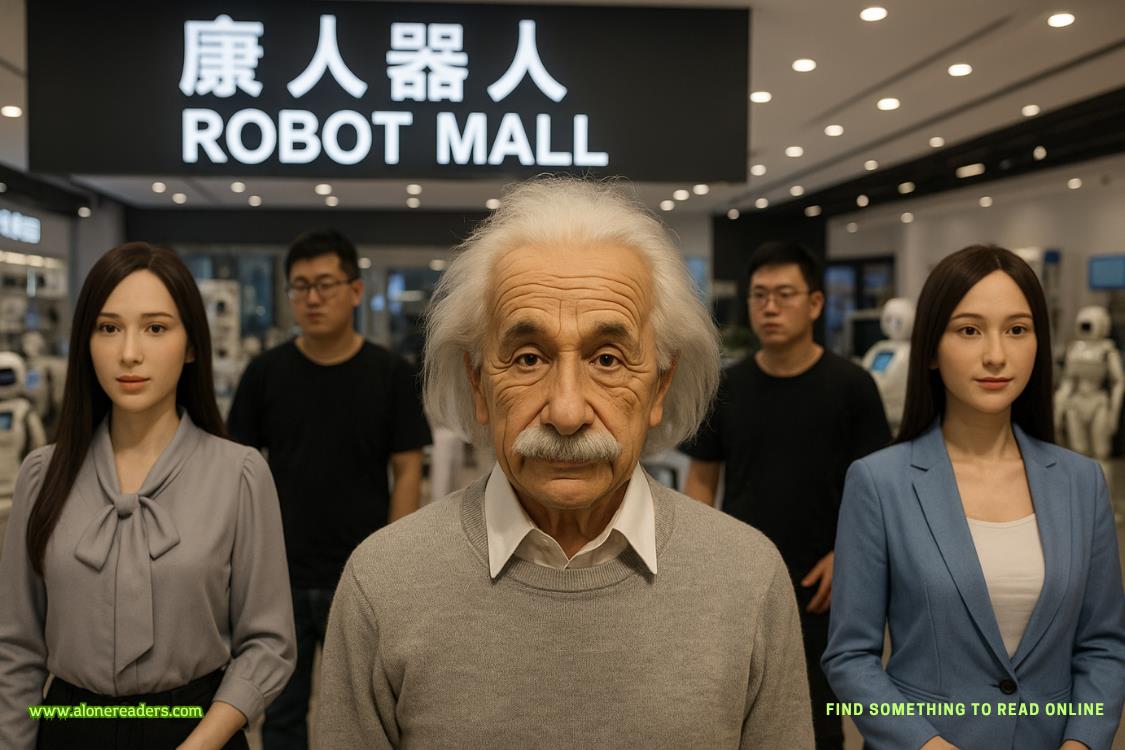
Beijing has taken a futuristic leap with the opening of its first large-scale retail store dedicated entirely to humanlike robots—aptly named the Robot Mall. Inside, visitors can encounter a stunning array of machines, from an Albert Einstein look-alike capable of explaining the theory of relativity to bartender robots, robot pets, and even historical figures brought to life through advanced robotics.
This store is more than a novelty—it is a strategic showcase of China’s growing ambitions to lead the global artificial intelligence (AI) and robotics market. By bringing cutting-edge humanoid technology into a retail setting, China is making it easier for everyday consumers to purchase and integrate robots into their homes and workplaces.
A Variety of Humanlike Robots
The Robot Mall features over 100 different robots from more than 40 Chinese brands, including industry leaders like Ubtech Robotics and Unitree Robotics. The lineup is not limited to static display models—these are functional, interactive robots designed for a range of uses:
Entry-Level Models
The most affordable robots start at 2,000 yuan (approximately $278 USD). These models tend to be compact home robots or robotic pets that focus on entertainment, companionship, or educational assistance.
Premium & Professional Robots
At the higher end, some robots cost over 1 million yuan ($139,000 USD). These are sophisticated humanoids equipped with advanced AI, high-fidelity sensors, and mechanical dexterity suitable for industrial, commercial, or research purposes.
Robot Mall director Wang Yifan describes the shop as a “4S” robotics hub, mirroring the service model used in automotive dealerships:
This approach ensures customers not only buy a robot but also have access to the support and infrastructure needed for long-term use.
China’s push into robotics is not just about technology enthusiasm—it’s rooted in addressing serious economic and social challenges:
In 2024 alone, China invested over $20 billion USD in robotics development. Now, Beijing is planning an additional $137 billion USD fund to accelerate AI and robotics innovation nationwide.
The Robot Mall is a physical symbol of the mainstreaming of AI-driven machines. Instead of being limited to tech expos or industrial labs, robots are now available to walk-in customers. This not only increases public exposure to robotics but also helps manufacturers gain direct consumer feedback to refine their products.
Integration into Daily Life
As technology matures, these robots could become as common in homes as smartphones or smart speakers—capable of tutoring children, monitoring the elderly, serving in restaurants, or even offering personalized entertainment.
While the Robot Mall is an exciting step forward, several challenges remain:
With the launch of Beijing’s Robot Mall, China is signaling its intent to bring robotics into the consumer mainstream. From educational robots like the Einstein model to service industry bots and cultural replicas, the store offers a glimpse of how AI-powered machines could soon become everyday companions and workers.
Backed by massive government funding and a robust domestic tech ecosystem, China’s bet on robotics could reshape not only its own economy but also the global AI market. The Robot Mall is not just a store—it’s a statement: the future is here, and it’s made of steel, circuits, and intelligence.



 Top 10 Highest-Paid Professions in the United States (2025): Salaries, Roles, and Career Paths
 Top 10 Largest U.S. Companies by Revenue in 2025 (Fortune 500 Analysis)
 Top 10 Highest-Earning Global Tech Companies in 2025: Revenue, Strategy, and Market Power
 Top 10 Highest-Earning Mobile Apps in 2025: Revenue, Monetization, and Market Dominance
 ZombieAgent: Inside the Zero-Click AI Attack That Turns ChatGPT Agents into Persistent Data-Leaking Zombies
 China’s Urban Air Is a Hidden Plastic Reservoir: Inside the Microplastic Clouds Over Megacities