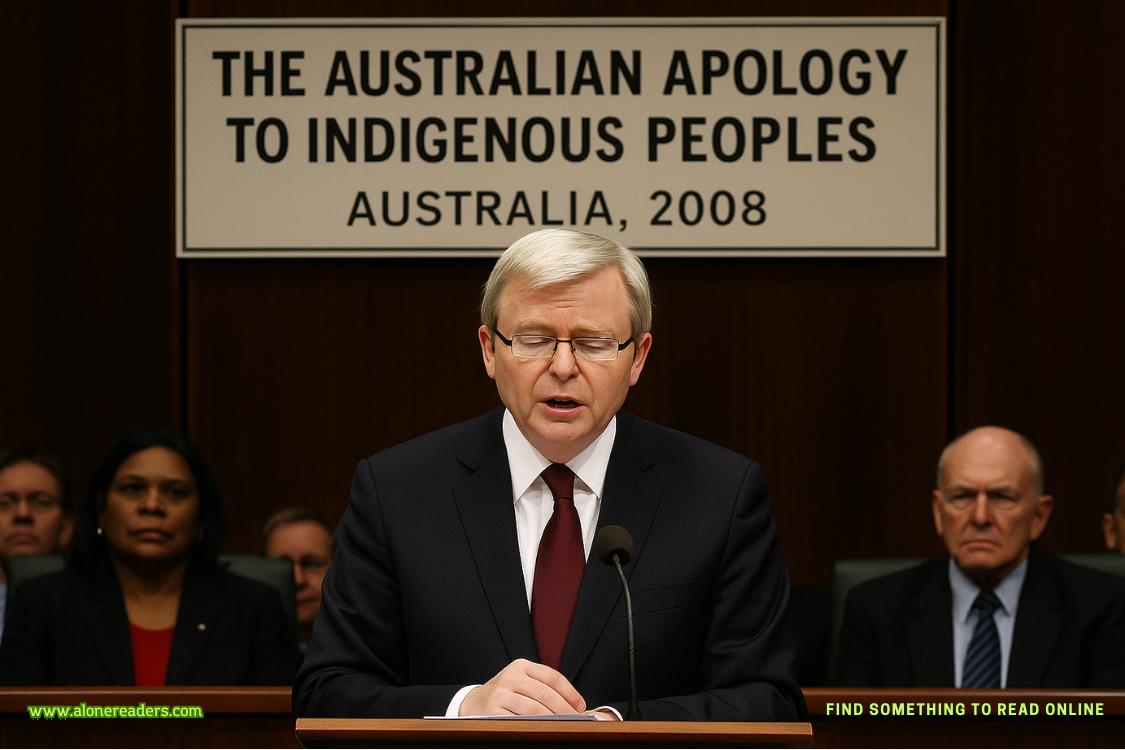
On 13 February 2008, a defining moment unfolded in the Australian Parliament when Prime Minister Kevin Rudd delivered a formal apology to the Indigenous peoples of Australia, particularly the Stolen Generations. This apology was not merely symbolic; it was a long-awaited recognition of decades of pain, injustice, and systemic discrimination endured by Aboriginal and Torres Strait Islander peoples. For many Australians, both Indigenous and non-Indigenous, it was a moment of profound emotional significance, marking a shift toward reconciliation and mutual respect. Rudd’s words were clear, direct, and heartfelt, acknowledging the suffering caused by past government policies and committing to a future shaped by justice and understanding.
The Stolen Generations refer to Aboriginal and Torres Strait Islander children who were forcibly removed from their families under government-sanctioned policies, which lasted from the late 1800s well into the 1970s. The rationale at the time was framed under misguided notions of assimilation, with authorities believing Indigenous children would be “better off” if raised in white households or institutions. This policy tore families apart, eroded cultural identity, and inflicted lasting trauma across generations. Many survivors have recounted harrowing stories of abuse, neglect, and deep loneliness. For decades, there was little acknowledgment from the government, and when recognition did come, it was often met with political resistance to issuing an outright apology.
Rudd’s decision to make the apology early in his tenure was deliberate. He understood the symbolic power of such a gesture and the necessity of confronting history with honesty. Standing before Parliament, he said “sorry” multiple times—not as a political formality, but as a moral necessity. His speech acknowledged the pain, suffering, and loss experienced by the Stolen Generations and admitted that past government policies had caused “profound grief, suffering, and loss.” This was not an attempt to rewrite history, but to face it without excuses. The apology did not assign personal blame to individuals in contemporary society; rather, it addressed the collective responsibility of the Australian state to confront its historical wrongs.
The reaction across the nation was overwhelming. In Parliament House, the public gallery was filled with Indigenous elders, community leaders, and members of the Stolen Generations, many of whom wept openly as they listened. Across the country, crowds gathered in public spaces to watch the speech live on big screens, some holding hands, others in tears. For survivors, the apology was a validation of their truth after years of being ignored or doubted. For non-Indigenous Australians, it was an invitation to participate in a process of national healing. While there were those who dismissed it as “mere words,” the majority recognized it as a crucial first step toward building a better future.
The apology also had international resonance. Australia joined other countries, such as Canada, in formally apologizing to Indigenous populations for similar injustices. In the years following, Rudd’s speech has been studied as an example of political leadership grounded in empathy and moral courage. It demonstrated that acknowledging wrongdoing, even when it is uncomfortable or politically risky, can strengthen a nation’s sense of unity.
However, the apology was not an endpoint—it was a beginning. Many Indigenous leaders welcomed the gesture but emphasized that words must be matched by concrete action. The apology did not come with immediate compensation, and debates about reparations, systemic inequality, and constitutional recognition continue to this day. Indigenous Australians still face significant disparities in health, education, employment, and life expectancy compared to non-Indigenous Australians. While the apology was a milestone, it also underscored the need for sustained policy reform and genuine partnership with Indigenous communities.
Rudd’s apology has since become an annual point of reflection. Every year on the anniversary, Australians are reminded of both the progress made and the work still to be done. Schools, workplaces, and community groups often hold events to discuss reconciliation and the importance of acknowledging history. For many young Australians, the apology is one of the first moments they learn about the Stolen Generations in a meaningful way. It has shaped the national narrative by embedding the concept of reconciliation into public consciousness.
In the years since 2008, Australia has continued to grapple with the question of how to fully reconcile with its Indigenous peoples. Discussions about a formal treaty, constitutional recognition, and implementing the Uluru Statement from the Heart remain central to this ongoing journey. The apology laid the groundwork for these conversations, demonstrating that the nation can confront uncomfortable truths while striving for unity.
Rudd’s words on that February day continue to echo: “For the pain, suffering and hurt of these Stolen Generations, their descendants and for their families left behind, we say sorry.” It was a promise not just to remember the past, but to build a better future. While the journey toward equality and justice is far from complete, the Australian Apology of 2008 stands as a historic gesture of leadership, compassion, and national humility—one that will be remembered for generations.



 Top 10 Highest-Paid Professions in the United States (2025): Salaries, Roles, and Career Paths
 Top 10 Largest U.S. Companies by Revenue in 2025 (Fortune 500 Analysis)
 Top 10 Highest-Earning Global Tech Companies in 2025: Revenue, Strategy, and Market Power
 Top 10 Highest-Earning Mobile Apps in 2025: Revenue, Monetization, and Market Dominance
 ZombieAgent: Inside the Zero-Click AI Attack That Turns ChatGPT Agents into Persistent Data-Leaking Zombies
 China’s Urban Air Is a Hidden Plastic Reservoir: Inside the Microplastic Clouds Over Megacities










