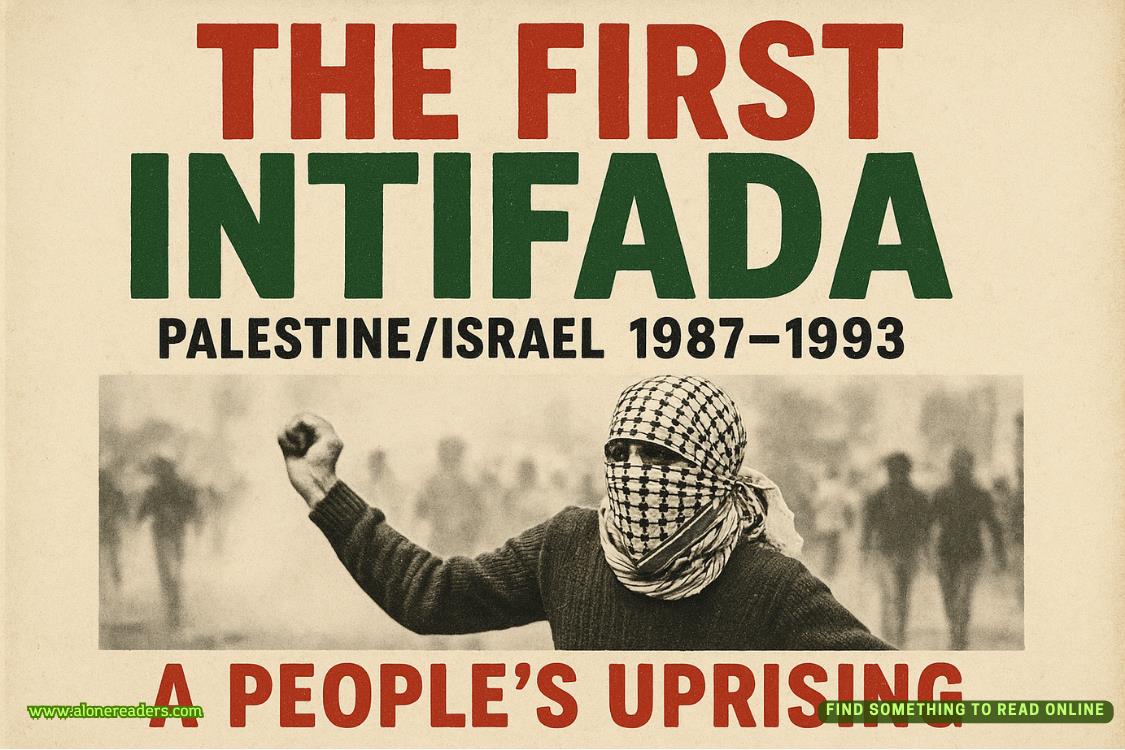
The First Intifada, which erupted in December 1987 and lasted until the signing of the Oslo Accords in 1993, was a historic turning point in the modern Palestinian struggle. Unlike previous wars and confrontations that had been waged primarily by armies or organized militias, the Intifada was distinct in being a largely popular, grassroots uprising. It was initiated and carried forward by ordinary Palestinians—students, workers, women, and community leaders—who rose up in defiance of two decades of Israeli occupation in the West Bank and Gaza Strip. This mass mobilization not only transformed the dynamics of the Palestinian national movement but also fundamentally altered the political landscape of the Israeli-Palestinian conflict on the global stage.
The roots of the Intifada lay in deep social, economic, and political grievances. After the 1967 Six-Day War, Israel occupied the West Bank, East Jerusalem, and the Gaza Strip. Over the next twenty years, Palestinians in these territories faced increasing land confiscations, settlement expansion, restrictions on movement, and economic marginalization. At the same time, international diplomacy offered little prospect of a just solution. The Palestine Liberation Organization (PLO), led by Yasser Arafat, operated in exile and had limited ability to directly influence life under occupation. This left Palestinians inside the territories with a growing sense of frustration and urgency, which finally boiled over in 1987 following an incident in Gaza when an Israeli truck collided with a Palestinian vehicle, killing four laborers. What began as local demonstrations rapidly spread into a full-scale uprising.
The methods of resistance employed in the Intifada were strikingly diverse and innovative. At its core, it was a campaign of civil disobedience. Palestinians organized widespread boycotts of Israeli products, labor strikes, refusal to pay taxes, and the creation of underground schools and social institutions when Israel shut down universities and organizations. Stone-throwing youths became a symbol of the uprising, representing the defiance of a largely unarmed population against a heavily armed military. Neighborhood committees coordinated protests and distributed leaflets to guide strategy, ensuring that participation came from across all sectors of society. Women’s groups played a particularly important role, not only sustaining families during economic boycotts but also leading demonstrations and creating self-sufficient community networks.
The Israeli response was swift and harsh. The military adopted a policy often summarized by then-Defense Minister Yitzhak Rabin’s infamous phrase “force, might, and beatings.” Soldiers were deployed in large numbers to suppress protests, using live ammunition, rubber bullets, tear gas, and mass arrests. Thousands of Palestinians were imprisoned, and many were deported. According to human rights organizations, over one thousand Palestinians were killed during the Intifada, including a significant number of children. The images of heavily armed Israeli soldiers confronting stone-throwing Palestinian youth were broadcast worldwide, generating widespread international condemnation of Israel’s tactics and drawing unprecedented attention to the plight of Palestinians under occupation.
One of the remarkable features of the First Intifada was the way it reshaped Palestinian politics. While the PLO remained the recognized representative of the Palestinian people internationally, much of the daily leadership of the uprising came from inside the occupied territories through the Unified National Leadership of the Uprising (UNLU). This coalition of local factions coordinated strikes, protests, and communications, effectively decentralizing authority. At the same time, a new force emerged: Hamas, founded in 1987 as an offshoot of the Muslim Brotherhood in Gaza. While the Intifada was initially dominated by secular nationalist groups, Hamas introduced a religiously inspired framework of resistance, challenging the dominance of the PLO and setting the stage for future divisions in Palestinian politics.
The Intifada also had profound effects on Israeli society. It exposed the limits of military control over an unwilling civilian population and placed the occupation at the center of Israeli political debate. Some Israelis argued for harsher measures to suppress the uprising, while others began to advocate more seriously for negotiations with the Palestinians. The uprising also coincided with shifting regional and global dynamics, including the end of the Cold War, which created new opportunities for diplomacy. For the first time, many in Israel and abroad began to accept the idea of negotiating directly with the PLO and recognizing Palestinian national rights.
Internationally, the First Intifada dramatically increased global awareness of the Palestinian cause. Media coverage highlighted the imbalance of power between Israel and the Palestinians, portraying the latter not merely as refugees or terrorists, as often depicted before, but as a people struggling for basic human rights and self-determination. Humanitarian concerns grew louder, and international organizations began pressing for a negotiated solution. The uprising paved the way for the Madrid Conference of 1991 and ultimately the secret talks in Oslo that produced the 1993 Oslo Accords.
The Oslo Accords marked a formal end to the Intifada, though the issues at its heart remained unresolved. Under Oslo, Israel recognized the PLO as the legitimate representative of the Palestinian people, and the PLO recognized Israel’s right to exist. The accords created the Palestinian Authority and promised gradual steps toward Palestinian self-rule in parts of the West Bank and Gaza. Yet many Palestinians felt the agreements fell short, leaving core issues such as settlements, refugees, and Jerusalem for later negotiation. Still, the fact that Oslo emerged at all was a testament to the impact of the Intifada, which had made the status quo of occupation untenable and forced both sides toward dialogue.
Looking back, the First Intifada is remembered as a watershed in Palestinian history. It demonstrated the power of popular mobilization in confronting occupation and shifted the image of Palestinians from passive victims to active agents of their struggle. It also underscored the human costs of prolonged conflict: the lives lost, the suffering of families, and the enduring scars of repression. The uprising’s legacy is complex, marked both by the hope it generated for eventual peace and by the disappointments that followed in the years after Oslo. Yet it remains a defining episode, not only in the Palestinian struggle but in the broader history of resistance movements worldwide, showing how ordinary people, through persistence and unity, can challenge entrenched systems of domination.
The First Intifada was more than an outburst of anger; it was a carefully sustained movement that lasted over six years. Its endurance revealed the depth of Palestinian grievances and aspirations. While it did not bring about immediate independence, it altered the trajectory of the conflict in lasting ways, forcing the world to confront the realities of occupation and shaping the discourse of peace that continues to this day. In many ways, the period between 1987 and 1993 remains a crucial reference point for understanding the Israeli-Palestinian conflict and the enduring quest for justice, dignity, and self-determination.



 Top 10 Highest-Paid Professions in the United States (2025): Salaries, Roles, and Career Paths
 Top 10 Largest U.S. Companies by Revenue in 2025 (Fortune 500 Analysis)
 Top 10 Highest-Earning Global Tech Companies in 2025: Revenue, Strategy, and Market Power
 Top 10 Highest-Earning Mobile Apps in 2025: Revenue, Monetization, and Market Dominance
 ZombieAgent: Inside the Zero-Click AI Attack That Turns ChatGPT Agents into Persistent Data-Leaking Zombies
 China’s Urban Air Is a Hidden Plastic Reservoir: Inside the Microplastic Clouds Over Megacities