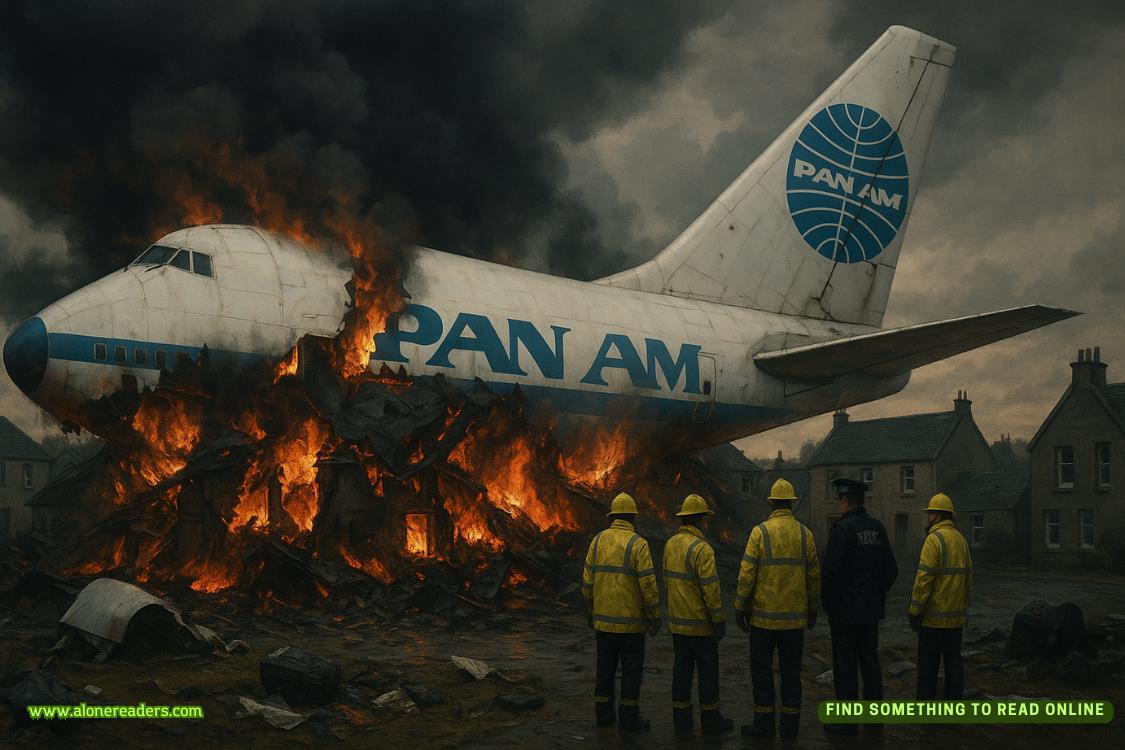
On December 21, 1988, the small Scottish town of Lockerbie became the site of one of the most devastating acts of terrorism in modern history. Pan Am Flight 103, a Boeing 747 traveling from London to New York, exploded in mid-air just 38 minutes after takeoff. The aircraft, carrying 259 passengers and crew, disintegrated over the quiet community of Lockerbie, scattering debris across several miles. Tragically, 11 residents on the ground were also killed when flaming wreckage tore through homes. In total, 270 people lost their lives, making the Lockerbie bombing the deadliest terrorist attack in the United Kingdom’s history and one of the most notorious aviation disasters of the twentieth century.
The scale of the destruction was unprecedented. Families in Lockerbie witnessed a nightmarish scene as pieces of the plane rained down on houses, fields, and roads. Rescue workers and local residents rushed to the scene, but there were no survivors among the passengers or crew. Many of the victims were Americans, including 35 Syracuse University students returning home from studying abroad, which gave the tragedy a profound international dimension. Within hours, the disaster was recognized not as an accident but as a deliberate attack, and one of the most complex criminal investigations in history was launched.
Initial suspicions pointed to terrorism, given the political climate of the late Cold War and the tensions between Western powers and certain Middle Eastern regimes. Investigators discovered that the explosion was caused by a bomb hidden inside a suitcase in the plane’s cargo hold. The bomb had been concealed within a Toshiba radio cassette player, which itself was hidden inside a Samsonite suitcase. Traces of Semtex, a powerful plastic explosive, confirmed that this was an intentional act of sabotage. The investigation, led by Scottish police with support from the FBI and intelligence agencies worldwide, soon became the largest and most expensive inquiry ever undertaken in Scotland.
Attention quickly turned to Libya, then ruled by Colonel Muammar Gaddafi, whose government had been accused of supporting international terrorism throughout the 1980s. After years of intelligence gathering, forensic work, and political maneuvering, two Libyan intelligence operatives, Abdelbaset al-Megrahi and Lamin Khalifa Fhimah, were indicted in 1991. Because of political complications, it took nearly a decade for the trial to be held. In 2001, after a special court was convened in the Netherlands under Scottish law, Megrahi was convicted of 270 counts of murder and sentenced to life imprisonment, while Fhimah was acquitted.
Megrahi’s conviction did not end the controversy. Questions about the fairness of the trial, the reliability of evidence, and possible alternative suspects have lingered for decades. Some argue that Iran or Palestinian groups may have been involved, pointing to geopolitical motivations related to earlier events in the Middle East, such as the U.S. Navy’s accidental downing of Iran Air Flight 655 in 1988. Others remain convinced that Libya was solely responsible, citing the weight of circumstantial evidence. The debate reflects both the complexities of international terrorism in that era and the immense challenges of achieving justice in such cases.
The political consequences of the Lockerbie bombing were far-reaching. For years, Libya faced international sanctions, isolation, and diplomatic pressure. Eventually, in 2003, the Libyan government formally accepted responsibility for the actions of its officials, though it denied direct involvement by Gaddafi himself. Libya also agreed to pay billions of dollars in compensation to the families of the victims. This gesture, while not absolving the regime of guilt, was a significant moment in Gaddafi’s gradual effort to reintegrate Libya into the international community. The Lockerbie case became a defining symbol of state-sponsored terrorism and the global response to it.
For the families of the victims, the bombing was a tragedy that time could never erase. Many relatives became vocal advocates for justice, pushing governments to keep the case alive and ensure accountability. Memorials were built in Lockerbie, at Syracuse University, and at Arlington National Cemetery to honor those lost. Every year, remembrance ceremonies are held, serving both as a tribute to the victims and as a reminder of the continuing need to confront terrorism. The personal grief of the families, many of whom lost young children or entire households, remains one of the most haunting aspects of this disaster.
The Lockerbie bombing also reshaped global aviation security. It highlighted vulnerabilities in baggage screening, cargo inspection, and international coordination. As a result, airports worldwide strengthened security procedures, introducing more stringent checks on luggage and enhancing intelligence sharing across borders. Many of the protocols that passengers today take for granted—rigorous screening, restrictions on items, and detailed passenger tracking—owe their origins to lessons learned from Lockerbie. The disaster thus had a transformative effect on how air travel safety is managed, underscoring the constant tension between convenience and security in modern aviation.
Megrahi’s later release on compassionate grounds in 2009 added another layer of controversy. Diagnosed with terminal cancer, he was freed from a Scottish prison and allowed to return to Libya, where he was welcomed as a hero by some. His release angered many families of victims, particularly in the United States, where it was seen as a miscarriage of justice. Megrahi lived for nearly three more years before dying in 2012, still maintaining his innocence. His release raised questions about politics, justice, and compassion, deepening the sense of unfinished business surrounding the Lockerbie case.
Even decades later, the Lockerbie bombing continues to resonate in international affairs and collective memory. In 2020, U.S. prosecutors charged another Libyan, Abu Agila Masud, with building the bomb, furthering the search for truth and accountability. This development underscored that, even after more than thirty years, the pursuit of justice for the victims of Pan Am Flight 103 remains ongoing. The case continues to serve as a chilling reminder of how acts of terrorism can leave scars that endure across generations, shaping foreign policy, security strategies, and the lives of countless families.
The Lockerbie bombing, in its brutality and impact, represents far more than a single tragic night in 1988. It stands as a symbol of the vulnerability of civilians to geopolitical conflicts, the devastating human cost of terrorism, and the challenges of achieving justice across borders and decades. For the people of Lockerbie, the event transformed their quiet town into the center of a global tragedy. For the families of the 270 victims, it remains a deeply personal loss that no court verdict, political agreement, or financial compensation could ever truly resolve. And for the world, it remains a stark lesson about the need for vigilance, justice, and compassion in the face of such inhuman acts.



 Top 10 Highest-Paid Professions in the United States (2025): Salaries, Roles, and Career Paths
 Top 10 Largest U.S. Companies by Revenue in 2025 (Fortune 500 Analysis)
 Top 10 Highest-Earning Global Tech Companies in 2025: Revenue, Strategy, and Market Power
 Top 10 Highest-Earning Mobile Apps in 2025: Revenue, Monetization, and Market Dominance
 ZombieAgent: Inside the Zero-Click AI Attack That Turns ChatGPT Agents into Persistent Data-Leaking Zombies
 China’s Urban Air Is a Hidden Plastic Reservoir: Inside the Microplastic Clouds Over Megacities