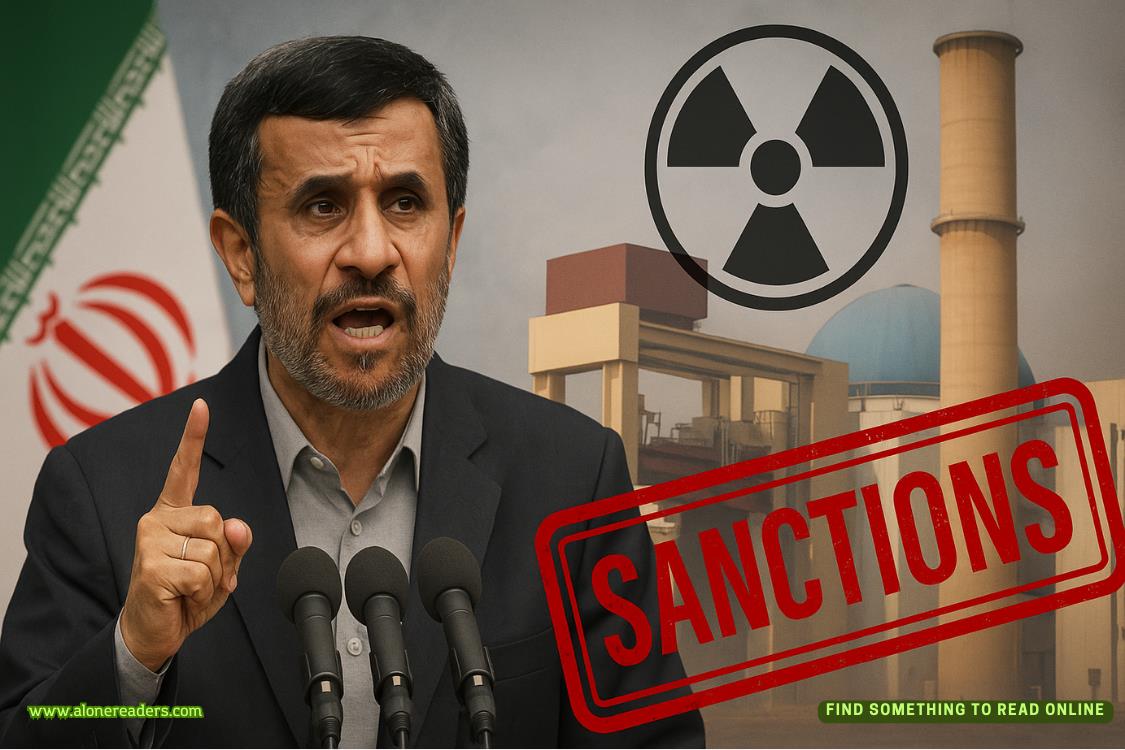
The years between 2005 and 2013 marked one of the most turbulent chapters in Iran’s modern history, dominated by the presidency of Mahmoud Ahmadinejad and his uncompromising stance on nuclear development. Ahmadinejad, a populist figure who rose from relative obscurity, came to symbolize Iranian defiance against Western pressure. His tenure coincided with the acceleration of Iran’s nuclear program, the tightening grip of international sanctions, and the transformation of Iran into a focal point of global diplomatic confrontation. To understand this period is to grasp the intersection of nationalism, ideology, and global power politics at their most combustible.
Ahmadinejad’s presidency began in 2005 with a message rooted in populist promises and ideological zeal. He was not merely a technocrat but a symbol of Iran’s revolutionary generation, deeply committed to the Islamic Republic’s ideals. Almost immediately after taking office, he injected new energy into Iran’s nuclear program, framing it as both a sovereign right and a matter of national pride. His rhetoric was defiant: uranium enrichment was a red line that Iran would not abandon under pressure. In domestic speeches, he presented the nuclear program as a way to restore Iran’s dignity on the world stage, appealing to nationalist sentiment in a country still haunted by memories of foreign interference and exploitation.
The nuclear program itself was not new. Iran’s pursuit of nuclear technology dated back to the 1950s under the Shah, and after the 1979 revolution, it became a more opaque project. By the early 2000s, revelations about undeclared enrichment facilities had already placed Tehran under suspicion. Ahmadinejad, however, escalated the conflict by taking a hardline approach. He not only defended enrichment but also refused to suspend activities despite repeated ultimatums from the International Atomic Energy Agency (IAEA) and the United Nations Security Council. This shift positioned Iran as openly confrontational rather than cautiously ambiguous.
Ahmadinejad’s defiance soon triggered international backlash. The United Nations imposed a series of resolutions aimed at curbing Iran’s nuclear activities, freezing assets, and restricting technological transfers. The United States and the European Union went further, layering unilateral sanctions that targeted Iran’s financial sector, energy exports, and banking systems. Oil, Iran’s economic lifeline, became the central point of pressure. By the early 2010s, Iran’s ability to sell oil was severely constrained, and its currency collapsed under inflation. Yet Ahmadinejad insisted that Iran would withstand these measures, presenting sanctions as proof of Western hostility and using them to rally nationalist solidarity.
The confrontation was not simply about technology; it was about trust and intentions. Western powers, particularly the United States, argued that Iran’s enrichment activities concealed a drive toward nuclear weapons capability. Ahmadinejad, meanwhile, rejected these accusations outright, insisting that Iran sought nuclear energy for peaceful purposes, including electricity generation and medical isotopes. His provocative rhetoric—such as fiery speeches at the United Nations in which he condemned Western hypocrisy—deepened mistrust and made compromise elusive. Negotiations initiated through the P5+1 framework (the five permanent members of the UN Security Council plus Germany) repeatedly stalled, as Iran demanded recognition of its enrichment rights while refusing intrusive inspections.
Inside Iran, Ahmadinejad’s nuclear defiance became both a rallying cry and a source of division. For many Iranians, the nuclear program symbolized resistance against imperialism, especially in light of the U.S. invasions of Afghanistan and Iraq. The narrative of standing tall against global powers resonated with a population accustomed to external pressure. Yet the costs were severe. Sanctions eroded the economy, fuel shortages became common, and unemployment soared. By the later years of Ahmadinejad’s presidency, discontent was widespread, with critics accusing him of sacrificing economic stability for ideological confrontation.
The nuclear standoff also intersected with Ahmadinejad’s broader political style. Known for his incendiary statements, he often blended domestic populism with international provocation. His denial of the Holocaust and hostile remarks toward Israel drew global condemnation, further isolating Iran. At home, his confrontational tone appealed to certain conservative factions, but his increasingly erratic policies alienated segments of the clerical establishment, leading to internal power struggles. Even within Iran’s political elite, there was debate over whether his approach to the nuclear issue was sustainable.
The climax of this era came as the sanctions regime reached unprecedented levels of intensity by 2011–2013. The European Union’s embargo on Iranian oil, combined with U.S. financial restrictions, effectively cut Iran off from global markets. Inflation spiraled, and the Iranian rial lost much of its value. The population bore the brunt of these measures, with rising poverty and shortages of essential goods. Ahmadinejad, however, remained unyielding, framing the crisis as proof of Western hostility and urging Iranians to endure for the sake of independence.
This period of confrontation ended not with Ahmadinejad, but with his successor, Hassan Rouhani, who was elected in 2013 on a platform of moderation and engagement. Rouhani’s government quickly sought to defuse tensions, reopening dialogue with the P5+1 and eventually leading to the 2015 Joint Comprehensive Plan of Action (JCPOA). The contrast between Ahmadinejad’s era and Rouhani’s diplomacy highlighted the depth of the rupture between Iran and the world during 2005–2013. Ahmadinejad’s defiance had entrenched Iran’s nuclear ambitions as a national symbol, but at immense economic and political cost.
Looking back, Ahmadinejad’s presidency represented both a challenge and a paradox. On one hand, he succeeded in embedding nuclear enrichment into Iran’s national identity, making it politically difficult for any leader to abandon. On the other, his uncompromising stance isolated Iran, deepened sanctions, and weakened the economy. The international community learned that pressure could hurt Iran but not necessarily break its will, while Iranians learned that resistance carried heavy domestic consequences. Ahmadinejad’s nuclear defiance was less about building a bomb than asserting sovereignty, but it left Iran more isolated than ever.
In sum, Ahmadinejad’s years in power defined a period of high-stakes confrontation in which nuclear ambition and national pride collided with global suspicion and economic strangulation. Between 2005 and 2013, Iran did not yield to international demands, and Ahmadinejad became the face of that resistance. His legacy is one of defiance against international sanctions, but also one of economic hardship and diplomatic stalemate. The story of this era serves as a cautionary tale about the costs of uncompromising policies, where symbolism often outweighed practical outcomes, leaving a nation both proud and isolated.

October 25, 2023

January 02, 2025



 Top 10 Highest-Paid Professions in the United States (2025): Salaries, Roles, and Career Paths
 Top 10 Largest U.S. Companies by Revenue in 2025 (Fortune 500 Analysis)
 Top 10 Highest-Earning Global Tech Companies in 2025: Revenue, Strategy, and Market Power
 Top 10 Highest-Earning Mobile Apps in 2025: Revenue, Monetization, and Market Dominance
 ZombieAgent: Inside the Zero-Click AI Attack That Turns ChatGPT Agents into Persistent Data-Leaking Zombies
 China’s Urban Air Is a Hidden Plastic Reservoir: Inside the Microplastic Clouds Over Megacities
 The Abu Ghraib Scandal, Iraq, 2004: A Human Rights Disaster That Shook the World
 The Disbanding of the CNRP, Cambodia, 2017: Hun Sen's Clampdown on Democracy and the Reshaping of Cambodian Politics
 The Firing of James Comey, United States, 2017: Trump's Controversial Decision Amid FBI Investigation
 The Rwandan Refugee Crisis, Central Africa, 1994: Aftermath of Genocide and the Humanitarian Catastrophe
 The Most Important Turning Points of the Battle of Hastings (1066)
 Why William Won the Battle of Hastings and Harold Lost: Strategy, Leadership and Fate in 1066
 How King Harold II Died: Facts, Myths, and Historical Debate
 The Battle of Hastings: A Complete Timeline of the Fighting
 High-End Talent Category A Work Permit China 2026: Complete Eligibility, Benefits, Application Process, and Expert Guide
 Cultural Activities Visa Japan 2026 Guide: Complete Eligibility, Requirements, Application Process, and Expert Tips