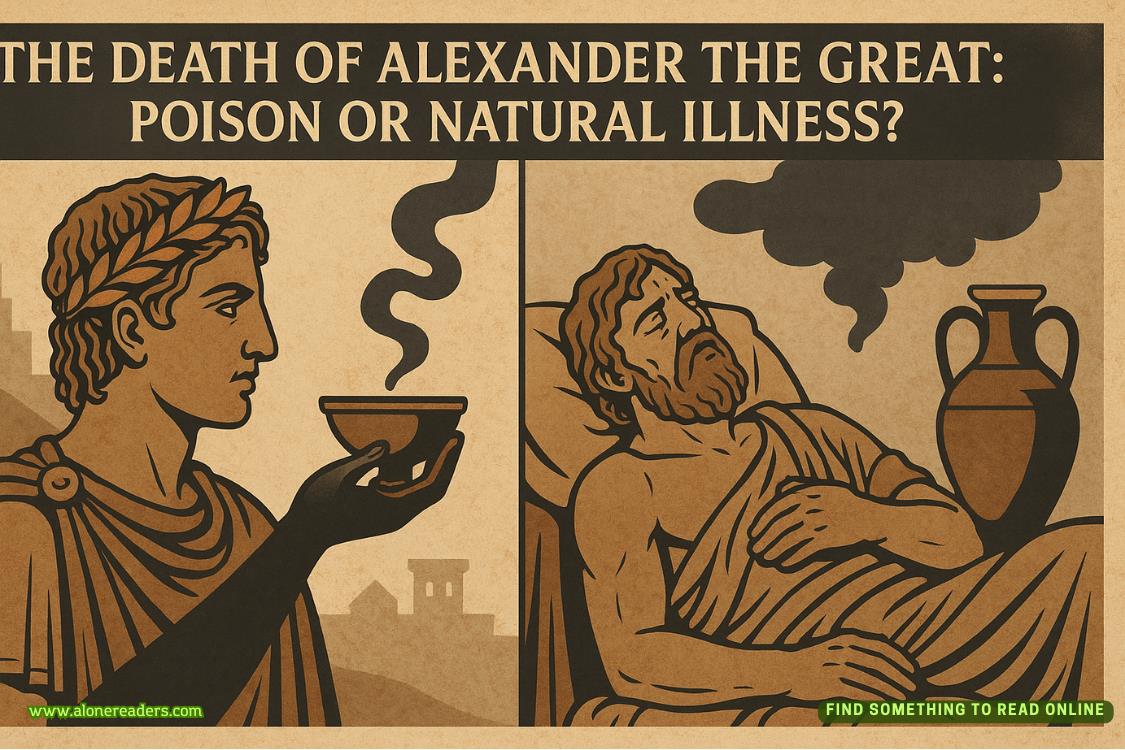
The death of Alexander the Great in June 323 BCE remains one of the most enduring mysteries of antiquity. At just 32 years old, the Macedonian king who had conquered much of the known world suddenly fell ill and died in Babylon. His death, coming at the height of his power, sparked not only political chaos but also centuries of speculation about what truly caused his demise. Was it a carefully orchestrated poisoning, or did Alexander succumb to a natural illness that overwhelmed even his legendary resilience? Historians, physicians, and archaeologists continue to wrestle with these questions, and while no definitive answer exists, the competing theories provide a fascinating glimpse into the medical, political, and cultural worlds of ancient history.
Alexander had spent the better part of thirteen years in continuous military campaigns, pushing his armies from Greece through Persia and into India before turning back west. By the time he returned to Babylon, his empire stretched from the Mediterranean to the Indus River, and he was preparing for further campaigns, including possible conquests of Arabia. Yet his relentless lifestyle had also taken a toll on his body. Ancient sources such as Plutarch, Arrian, and Diodorus describe a man who often drank heavily, endured exhausting marches, and suffered old battle wounds. When he fell ill after a banquet in Babylon, some accounts note fever, weakness, and inability to speak, while others describe prolonged agony lasting nearly two weeks. These details form the foundation of competing theories about the cause of death.
One of the most enduring ideas is that Alexander was poisoned. The notion of poisoning is appealing not only because of its dramatic nature but also because of the political stakes surrounding his death. Alexander left behind no clear successor, and his generals—the Diadochi—quickly descended into wars of succession. If anyone had a motive, it was these ambitious companions who stood to gain from his absence. Ancient writers occasionally suggest that rivals such as Antipater or his sons may have been involved, with poison allegedly slipped into Alexander’s wine during a feast. However, this theory faces significant problems. Most poisons known to the ancient world would have killed quickly, within hours or a day at most. The accounts of Alexander’s final illness suggest a more gradual decline over ten to twelve days, which makes deliberate poisoning less likely unless an extremely slow-acting substance was used. Some modern scholars have pointed to plant-based toxins, like hellebore, that could produce prolonged illness, but the evidence remains circumstantial.
The alternative explanation is that Alexander died of natural illness, an idea that has gained more support among modern historians and medical researchers. The ancient world was rife with diseases that could strike suddenly and fatally, especially in the hot, swampy climate of Mesopotamia. Malaria is a leading candidate, as Babylon lay in an area where the disease was endemic. The symptoms described in ancient accounts—fever, chills, and eventual collapse—are consistent with a severe case of malaria, perhaps worsened by exhaustion and a weakened immune system. Typhoid fever is another possibility. This bacterial infection, spread through contaminated food and water, was common in ancient cities, and its symptoms include prolonged fever, abdominal pain, and delirium. A perforated bowel caused by typhoid could explain Alexander’s lingering decline and eventual death.
Modern medical theories have also suggested other natural causes. Some researchers propose that Alexander may have suffered from West Nile virus, a mosquito-borne illness that can cause encephalitis and paralysis. Others argue that his history of wounds, combined with stress and alcohol use, may have led to acute pancreatitis or other organ failure. An intriguing hypothesis even suggests that Alexander may have had Guillain-Barré syndrome, a rare autoimmune disorder that causes progressive paralysis. According to this theory, his body may have shut down gradually, and his apparent lack of decomposition after death—recorded in ancient sources—could be explained by the slowed biological processes of the disease.
The debate is further complicated by the reliability of ancient sources. None of the surviving accounts of Alexander’s death were written by eyewitnesses. The earliest versions were compiled decades later, often colored by political agendas or storytelling traditions. Plutarch, writing centuries afterward, emphasizes moral lessons, while Arrian attempts to present a more military-focused narrative. This lack of direct evidence leaves room for speculation, and over time the story of Alexander’s death became fertile ground for mythmaking. The idea that such a powerful conqueror could be undone by something as ordinary as disease seemed almost unworthy, whereas poisoning offered a more dramatic and politically satisfying explanation.
The political consequences of Alexander’s death underscore why the circumstances matter so much. His sudden absence left a vacuum at the heart of the empire, with generals carving up territories and fighting for dominance in what became known as the Wars of the Diadochi. The suspicion of foul play may have been fueled by these conflicts, with rivals eager to cast blame on one another. The uncertainty also contributed to the enduring legend of Alexander as a near-divine figure. Some later traditions claimed he did not truly die but would return, much like myths surrounding other great leaders. This blending of history and legend makes disentangling fact from fiction even harder.
Ultimately, the question of whether Alexander died from poison or natural illness may never be answered definitively. Poison remains an attractive theory, particularly given the political stakes and ancient storytelling tendencies, but the medical evidence leans more strongly toward natural causes such as malaria, typhoid, or another infectious disease. What is certain is that his death marked a turning point in world history. An empire that had been held together by his charisma and military genius fragmented almost immediately, shaping the political landscape of the Mediterranean and Near East for centuries to come. The mystery surrounding his end ensures that Alexander remains not only one of history’s greatest conquerors but also one of its most enigmatic figures.
In weighing the possibilities, perhaps the most important point is that Alexander’s death illustrates the fragility of even the greatest human achievements. Whether brought down by poison, fever, or autoimmune collapse, his story reminds us that no amount of power or glory can shield one from mortality. The fascination with his final days reflects both the extraordinary life he lived and the enduring human urge to seek meaning in the untimely fall of a hero. Until new evidence emerges, the death of Alexander the Great will remain an open question—one that bridges the gap between history, medicine, and legend, keeping alive the debate over whether he was murdered by rivals or simply felled by the natural hazards of his world.



 The Hundred Days Offensive: How the Allies Defeated Germany in World War I
 The Second Battle of the Marne: The Turning Point of World War I in 1918
 The Spring Offensive of 1918: Germany's Final Gamble to Win World War I
 The Treaty of Brest-Litovsk: How Russia Left World War I
 The Russian Revolution and World War I: How War Brought Down the Tsar
 The Zimmermann Telegram Explained: Germany's Secret Offer to Mexico in World War I