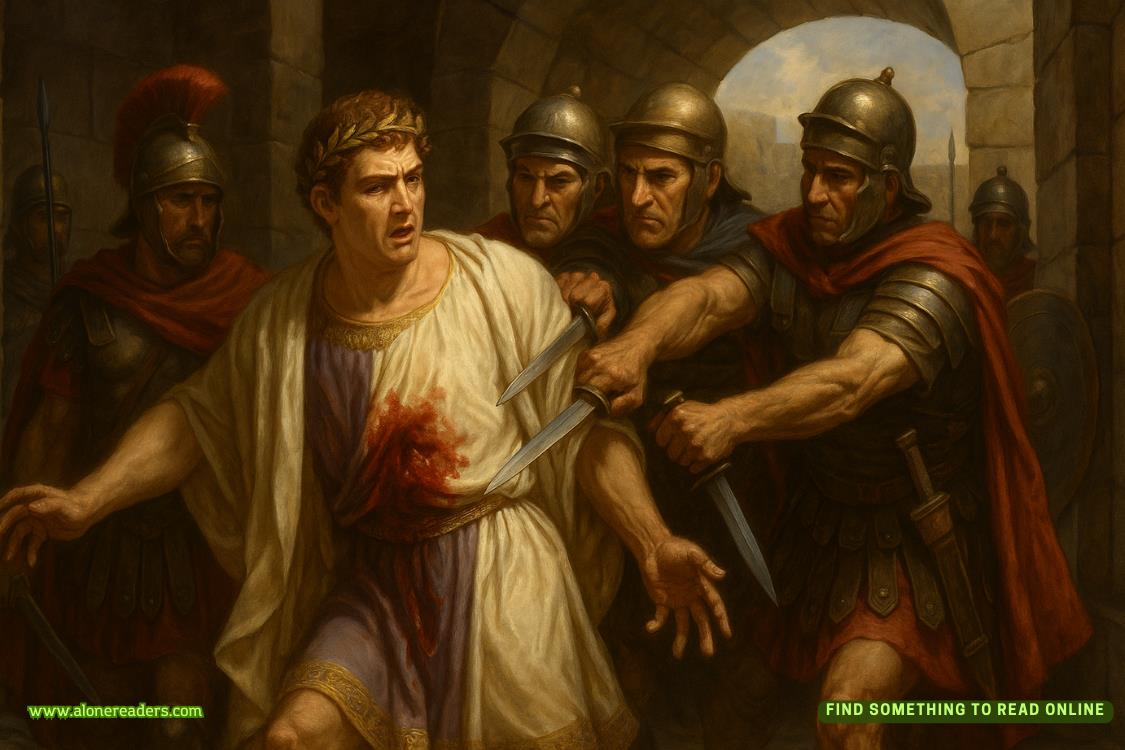
The assassination of Emperor Caligula by the Praetorian Guard in 41 CE remains one of the most dramatic and consequential events in the history of Imperial Rome. Caligula, born Gaius Julius Caesar Augustus Germanicus, was the third emperor of Rome and the great-grandson of Augustus. His rise was accompanied by high hopes, for he was the son of the beloved general Germanicus, and his early reign seemed to promise stability after the long, often paranoid rule of Tiberius. Yet within just a few years, the optimism gave way to fear, resentment, and ultimately, conspiracy. Caligula’s assassination was not merely the removal of a tyrant; it was a turning point that revealed the dangerous balance of power between emperors, the Senate, and the soldiers sworn to protect them.
Caligula’s accession in 37 CE was greeted with joy. After years of Tiberius’ oppressive governance, the Roman people longed for a young, vibrant, and seemingly benevolent leader. At first, Caligula presented himself as generous and attentive, granting bonuses to the Praetorian Guard, organizing lavish games, and restoring certain civic liberties curtailed by his predecessor. However, his reign quickly descended into chaos. Ancient sources describe Caligula as arrogant, erratic, and cruel. While modern historians debate the accuracy of these accounts—since many sources came from hostile senators or later historians with political motives—there is little doubt that his behavior alienated key factions in Roman society.
One of the most striking features of Caligula’s rule was his strained relationship with the Senate. He frequently humiliated senators, reducing their status in public ceremonies and mocking their impotence in comparison to his own power. He also enacted policies that seemed designed to provoke outrage, such as appointing his horse, Incitatus, to priesthood and allegedly planning to make him a consul. Whether this was a genuine intention or a satirical insult remains debated, but the symbolism was clear: Caligula saw himself as supreme, and traditional institutions as irrelevant. For an elite class that had long prided itself on being guardians of Roman dignity and order, such treatment was intolerable.
Equally significant was Caligula’s relationship with the Praetorian Guard, the elite unit of soldiers responsible for protecting the emperor. While he had initially rewarded them handsomely, over time his actions eroded their loyalty. He demanded excessive obedience, sometimes ordering executions without trial, and treated even his protectors as disposable. In addition, his reckless spending on games, monuments, and personal luxuries strained the treasury, putting pressure on all who served him. The Praetorians, like the senators, began to see him as a liability rather than a leader.
The immediate cause of Caligula’s downfall was his increasingly paranoid behavior and tendency to insult those closest to him. By 41 CE, discontent had spread among the Praetorians. The central figure in the conspiracy was Cassius Chaerea, a commander of the Guard. Caligula had mocked Chaerea relentlessly, ridiculing him with demeaning nicknames and questioning his masculinity. For a soldier tasked with upholding Rome’s most prestigious military post, such humiliation was unbearable. Chaerea found allies among other officers and senators who also saw an opportunity to rid themselves of a volatile ruler. Together, they hatched a plan to strike during a festival when the emperor would be vulnerable.
On January 24, 41 CE, Caligula was assassinated in a passageway beneath the Palatine Games. Chaerea and his co-conspirators ambushed him, striking him repeatedly with swords. Ancient accounts describe a brutal scene, with the emperor stabbed dozens of times. His wife, Caesonia, and their infant daughter, Julia Drusilla, were also killed shortly after. The conspirators intended to eliminate not just the emperor but his entire bloodline, preventing any claimants from rallying support.
The aftermath of the assassination was chaotic. The Senate attempted to seize the opportunity to restore the Republic, but they underestimated the loyalty of the Praetorian Guard to the institution of monarchy itself. While some Praetorians had betrayed Caligula, the Guard as a whole had no interest in surrendering their elevated position in imperial politics. In a dramatic twist, they discovered Caligula’s uncle, Claudius, hiding in the palace and declared him emperor. Claudius rewarded them with generous donatives, cementing their role as kingmakers in Roman politics. The assassination of Caligula thus underscored a crucial lesson: emperors ruled not simply by right of succession or Senate approval, but by the support of the army and, most critically, the Praetorian Guard.
The legacy of Caligula’s assassination is one of both relief and unease. To his enemies, his death was justice, an end to tyranny and madness. To his supporters, who had enjoyed his extravagant games and public spending, it was a shocking betrayal. For Rome itself, the assassination was another demonstration of the precariousness of imperial power. No emperor could feel secure if he alienated both the Senate and his guards. The balance of terror and patronage that defined the relationship between ruler and soldier would continue to shape Roman politics for centuries, leading to further assassinations and civil wars.
Modern historians continue to debate the true nature of Caligula’s rule. Some suggest that his supposed insanity was exaggerated by senatorial authors seeking to vilify him after his death, pointing to his ambitious building projects and religious innovations as evidence of vision rather than madness. Others argue that the sheer volume of hostile testimony cannot be ignored, and that Caligula’s behavior, whether calculated or pathological, was deeply destabilizing. Regardless of where the truth lies, his assassination demonstrates how fragile the Roman imperial system was in its early decades.
The story of Caligula’s downfall is not only about the death of one man but about the forces that defined Roman governance. The Praetorian Guard, designed to protect emperors, became a political actor with the power to make and unmake rulers. The Senate, once the heart of Roman authority, found itself sidelined, struggling to assert relevance in an age when military might determined legitimacy. And the Roman people, whose cheers once carried Caligula to power, were reminded of how little influence they held in the violent arena of imperial politics.
In the end, the assassination of Caligula by the Praetorian Guard was both an ending and a beginning. It ended the short and turbulent reign of a controversial emperor, but it also set a precedent for military involvement in imperial succession. Rome would see many more rulers rise and fall at the hands of their supposed protectors. Caligula’s death was not simply the fall of a man—it was the stark revelation of the dangerous currents that lay beneath the façade of Roman order.





 The Hundred Days Offensive: How the Allies Defeated Germany in World War I
 The Second Battle of the Marne: The Turning Point of World War I in 1918
 The Spring Offensive of 1918: Germany's Final Gamble to Win World War I
 The Treaty of Brest-Litovsk: How Russia Left World War I
 The Russian Revolution and World War I: How War Brought Down the Tsar
 The Zimmermann Telegram Explained: Germany's Secret Offer to Mexico in World War I








