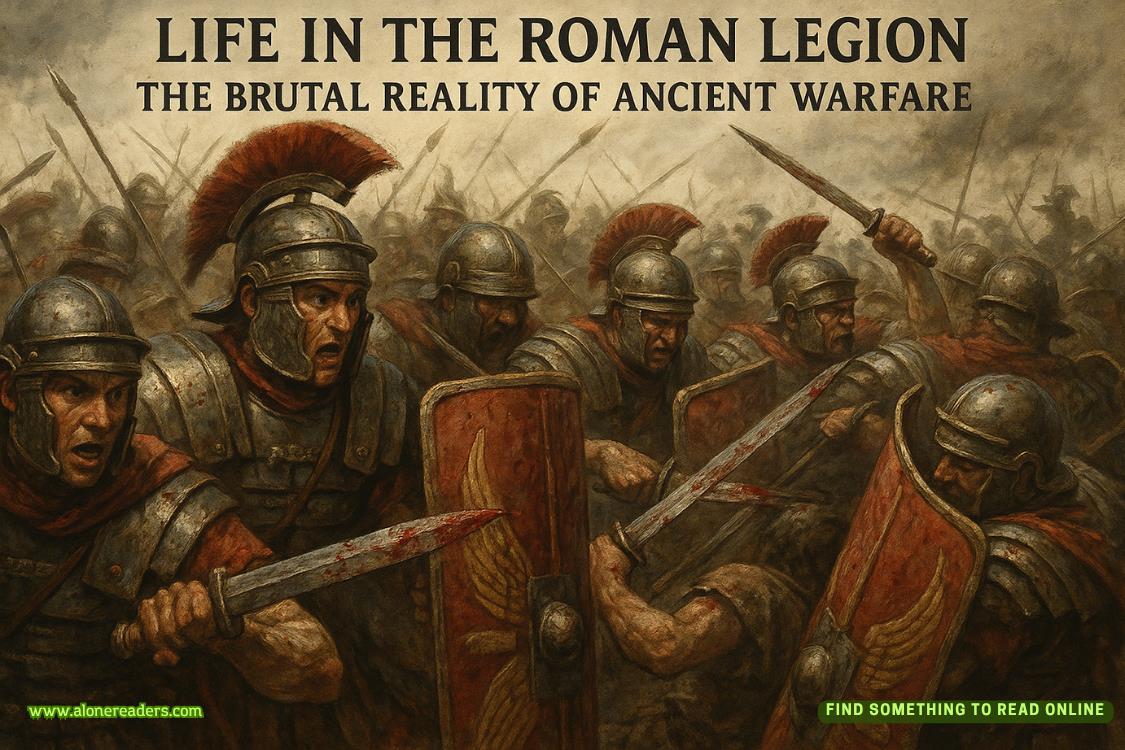
The Roman Legion was the beating heart of the most formidable military machine the ancient world ever knew. Its disciplined soldiers, called legionaries, were not only warriors but engineers, builders, and symbols of Roman order. To live in the legion was to surrender individuality for the sake of empire—a life of relentless discipline, brutal warfare, and unwavering loyalty to Rome. The reality of life in the Roman Legion was far removed from glory; it was a daily struggle for survival, honor, and endurance.
A young Roman citizen who wished to join the legion would begin his journey with a strict recruitment process. In the late Republic and early Empire, only Roman citizens between the ages of 17 and 46 could enlist. The physical standards were unforgiving: candidates were required to demonstrate strength, endurance, and mental resilience. Once accepted, a new recruit—known as a tiro—underwent months of rigorous training. Recruits learned to march over 20 miles in full gear, build fortified camps, and perform complex battle formations with precision. The Roman army valued discipline over individual heroism, and every man was trained to act as part of a larger, efficient machine.
Training in the legion was unrelenting. Wooden swords heavier than real ones were used to build muscle, and soldiers drilled constantly in formations such as the testudo (tortoise formation), which offered near-impenetrable protection from missiles. They practiced spear-throwing, hand-to-hand combat, and siege operations. Military tribunes and centurions ensured no man faltered in discipline or courage, and punishment for disobedience was swift. Flogging was common, while desertion or cowardice could result in death—sometimes through the terrifying practice of decimation, where one in every ten men was executed to punish a unit’s failure.
A legionary’s daily life revolved around strict routines. Soldiers woke before sunrise, performed roll calls, and received orders from their centurions. Duties varied from weapon maintenance to construction work, as legions were as much engineering corps as they were combat units. They built bridges, roads, fortifications, and even entire towns. Their craftsmanship was essential to Rome’s expansion; every road laid by legionaries helped project Roman power deeper into Europe, Africa, and Asia. After duty, soldiers cleaned their armor, repaired tents, and trained again. Leisure time was minimal and closely monitored to prevent idleness and drunkenness.
The living conditions of a Roman soldier were harsh and austere. In permanent camps known as castra, soldiers slept in small contubernia—tents or wooden huts shared by eight men. Each group shared basic cooking tools and food rations, which consisted mainly of grain, salted pork, and vinegar-water called posca. Fresh meat and vegetables were rare luxuries. Soldiers had to grind their own grain into flour, bake their bread, and maintain their own equipment. Cleanliness was strictly enforced, not for comfort but to prevent disease. Despite primitive sanitation, the legion’s discipline and organization made it far healthier and more efficient than most ancient armies.
The Roman military machine functioned through a precise chain of command. At the top of a legion was the legatus, often a senator or noble appointed by the emperor. Below him were the tribunes, administrative officers, and the centurions, the backbone of the army. Centurions were battle-hardened veterans responsible for maintaining order, discipline, and tactical execution. Their distinctive helmets, adorned with transverse crests, symbolized authority and leadership. A legion was typically divided into cohorts and centuries, allowing flexible movement and coordination on the battlefield—a revolutionary organization that helped Rome dominate opponents who relied on massed charges or loose formations.
In battle, the life of a legionary was a mix of terror and precision. Unlike the romanticized image of chaotic melee, Roman warfare was structured and methodical. Soldiers advanced in tight ranks, shields locked, and followed their centurions’ commands with mechanical obedience. The first line hurled their pilum (heavy javelin) to disrupt the enemy, then closed ranks with their short swords, the gladius, designed for stabbing rather than slashing. Discipline and formation were key; a single soldier breaking rank could endanger the entire unit. Once victory was achieved, the legion’s efficiency turned to ruthlessness—defeated enemies were often slaughtered or enslaved, and rebellious territories were burned as warnings to others.
When not fighting, the legion marched endlessly across the empire. The Roman army was a traveling city—every soldier carried his own gear, including weapons, armor, tools, and supplies weighing up to 30 kilograms. The legions constructed fortified camps every night, no matter how temporary their stop. These camps, complete with ditches, palisades, and gates, were designed according to precise blueprints. The speed with which the legions could establish and dismantle such camps astonished Rome’s enemies and symbolized the empire’s unmatched organization.
Pay in the legion was steady but modest. During the reign of Augustus, a typical soldier earned 225 denarii per year, with deductions for food, equipment, and clothing. Bonuses, spoils of war, and donatives from emperors added occasional wealth. After 25 years of service, a legionary could retire with a substantial pension or a grant of land—rewards that encouraged unwavering loyalty. However, few lived to see retirement; disease, battle wounds, and exhaustion took countless lives before their term ended. Still, the promise of honor, steady income, and Roman citizenship for non-citizen auxiliaries drove many to enlist despite the dangers.
Life in the Roman Legion was also deeply tied to ritual and belief. Soldiers worshipped gods of war like Mars and Jupiter, and every legion had its standards (signa)—sacred symbols carried into battle. Losing a standard was the gravest dishonor imaginable. Omens, sacrifices, and auguries preceded major campaigns, as divine favor was believed to decide victory. Legionaries often wore charms or inscribed inscriptions on their armor invoking protection from the gods. Despite Rome’s practical mindset, superstition and religion intertwined with military discipline, creating a unique warrior culture that mixed faith with ferocity.
The camaraderie among soldiers was strong yet built on shared suffering rather than comfort. Friendships forged through years of battle and hardship created unbreakable bonds. Soldiers trusted their comrades with their lives, and such loyalty often extended beyond service. However, the same discipline that united them also isolated them from civilian life. Many veterans found it difficult to reintegrate after years of obedience and violence. The Roman state often settled them in colonies to keep their martial skills within reach and their loyalty bound to Rome.
The legacy of the Roman Legion extends far beyond its battlefield victories. It shaped the concept of professional armies, logistics, engineering, and command structures that modern militaries still emulate. The legions were more than soldiers—they were the architects of empire, spreading Roman law, infrastructure, and culture across continents. Yet beneath this glory lay human endurance tested to its limits. To live and fight as a Roman legionary was to exist between order and brutality, between civilization and war. The empire’s triumphs were written not only in marble and law but in the sweat, blood, and discipline of those who marched under the eagle standards.
In truth, life in the Roman Legion was both a privilege and a curse. It offered adventure, identity, and the promise of Rome’s eternal glory, but at the cost of individuality and peace. Each legionary was a cog in the greatest military machine of antiquity, a man forged in discipline and destined for hardship. Their story is not merely of conquest but of resilience—proof that empires rise not through kings or senators, but through the iron will of the soldiers who built and defended them.





 The Hundred Days Offensive: How the Allies Defeated Germany in World War I
 The Second Battle of the Marne: The Turning Point of World War I in 1918
 The Spring Offensive of 1918: Germany's Final Gamble to Win World War I
 The Treaty of Brest-Litovsk: How Russia Left World War I
 The Russian Revolution and World War I: How War Brought Down the Tsar
 The Zimmermann Telegram Explained: Germany's Secret Offer to Mexico in World War I








