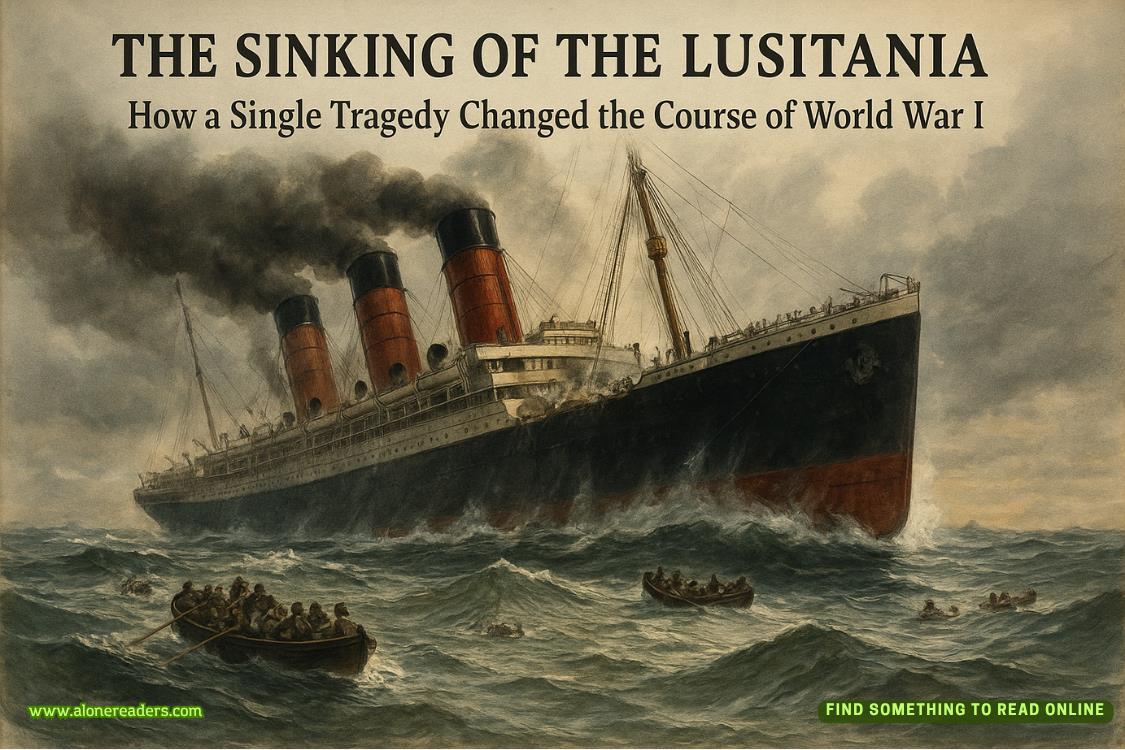
The sinking of the RMS Lusitania on May 7, 1915, stands as one of the most pivotal maritime disasters in modern history, not merely for its human cost but for the geopolitical tremors it caused. When the British ocean liner was torpedoed by a German U-boat off the coast of Ireland, killing nearly 1,200 civilians, it shocked the world and began a chain of events that shifted global sentiment and accelerated the march toward total war. The tragedy encapsulated the ruthless nature of modern warfare, where technological progress in weaponry collided with outdated notions of civilian safety at sea.
The RMS Lusitania, launched in 1906, was one of the most luxurious and advanced ships of its era. Built by the Cunard Line, it symbolized Britain’s maritime supremacy and technological prowess. Measuring 787 feet in length and capable of speeds exceeding 25 knots, it was not only a passenger liner but also a demonstration of British industrial might. Though designed for comfort and elegance, the Lusitania had been constructed with the possibility of wartime service in mind—its high speed and cargo capacity meant it could be converted into an armed auxiliary cruiser if needed. This dual-purpose design would later fuel debates over whether the ship was a legitimate military target.
At the outbreak of World War I in 1914, the North Atlantic became a dangerous place for civilian vessels. Britain’s naval blockade sought to starve Germany of vital resources, and in retaliation, Germany unleashed its U-boat fleet to sink enemy ships. However, the German policy of unrestricted submarine warfare soon became a moral and diplomatic nightmare. Submarines could not easily warn or evacuate passengers before striking, and the destruction of civilian ships risked international outrage—particularly from neutral nations like the United States.
The Lusitania’s final voyage began on May 1, 1915, when it departed from New York City bound for Liverpool. On board were 1,959 people, including 139 Americans, as well as a substantial amount of cargo—some of which, Germany claimed, consisted of war materials destined for Britain. Before departure, the German embassy in Washington had even published newspaper warnings, cautioning passengers that sailing into a declared war zone could be perilous. Many travelers dismissed the threat, believing that no civilized nation would attack an unarmed passenger ship. The Lusitania’s reputation for speed and the perceived rules of warfare gave them confidence that they would reach Europe safely.
Tragically, that belief was misplaced. On May 7, as the Lusitania approached the southern coast of Ireland, German submarine U-20, commanded by Captain Walther Schwieger, spotted the liner. At 2:10 p.m., Schwieger ordered a single torpedo fired. It struck the ship’s starboard side beneath the bridge, followed by a secondary internal explosion that remains a source of controversy. Within just 18 minutes, the Lusitania sank beneath the waves. Of the 1,959 souls aboard, only 761 survived. Among the dead were 128 Americans, including prominent figures such as Alfred Vanderbilt, heir to one of America’s most famous fortunes. The loss of so many civilians, including women and children, sent shockwaves across the globe.
The immediate aftermath was chaos and horror. Survivors described desperate scenes of panic as lifeboats capsized and people leapt into the cold Atlantic waters. Rescue vessels from Ireland arrived as quickly as possible, but the speed of the sinking left little time to act. Bodies washed ashore for days afterward, a haunting reminder of the catastrophe. The British government and press quickly condemned Germany for committing an atrocity, calling the attack an act of piracy and barbarism. In Germany, on the other hand, the event was justified as a legitimate act of war against a ship carrying contraband. German officials claimed that the Lusitania had been secretly transporting ammunition, a claim later supported by evidence of small arms cartridges found in the wreckage, though the extent of its military cargo remains debated.
Politically, the sinking of the Lusitania changed everything. In the United States, public opinion, which had been strongly divided over involvement in the European conflict, began to shift. President Woodrow Wilson initially responded with restraint, demanding an apology and reparations but avoiding direct military action. He famously declared, “There is such a thing as a man being too proud to fight.” Yet behind the scenes, the U.S. government began to prepare for the possibility that neutrality might not last. Anti-German sentiment grew, and the press fueled public outrage with graphic descriptions and patriotic appeals. While the Lusitania disaster did not immediately bring America into the war, it marked the beginning of the end for U.S. neutrality.
For Germany, the incident became a diplomatic nightmare. The outrage it provoked forced the Kaiser’s government to temporarily curb its policy of unrestricted submarine warfare in an effort to avoid drawing the United States into the conflict. However, by 1917, as Germany faced increasing desperation and saw unrestricted submarine warfare as its only chance to break the British blockade, the policy was reinstated. This decision, coupled with the infamous Zimmermann Telegram—Germany’s proposal to ally with Mexico against the United States—finally pushed America into the war. The Lusitania, therefore, was not just a maritime tragedy but a turning point that laid the emotional and moral groundwork for America’s eventual entry into World War I.
In the years that followed, the sinking of the Lusitania became a powerful symbol of wartime cruelty and propaganda. British recruitment posters used images of drowning women and children to encourage enlistment, with slogans like “Remember the Lusitania.” The event was invoked as a moral justification for fighting the Central Powers and as proof of German brutality. Yet, historians have since debated the fairness of this portrayal. Evidence suggests that the British Admiralty may have used the Lusitania to provoke U.S. anger, knowing that its dual-purpose cargo and route through dangerous waters made it vulnerable. The ship’s second explosion, once attributed to a second torpedo, is now believed by some experts to have been caused by detonating ammunition stored below deck, raising questions about whether passengers were unwittingly used as human shields in a broader strategy of information warfare.
The legacy of the Lusitania endures as a cautionary tale about the blurred lines between civilian and military targets in modern conflict. Its sinking exposed the vulnerability of civilians in industrialized warfare and foreshadowed the total wars of the 20th century, where the home front became as much a target as the battlefield. The tragedy also reshaped international law, contributing to later conventions that sought to protect non-combatants at sea—though such ideals would be repeatedly tested in future wars.
In 1982, the wreck of the Lusitania was discovered off the coast of Ireland, resting at a depth of about 300 feet. Subsequent dives and research confirmed parts of Germany’s claims: there was indeed war materiel aboard, though it remains uncertain whether it justified the sinking. The discovery reignited debates about wartime ethics, propaganda, and truth. Over a century later, the Lusitania continues to captivate historians, maritime archaeologists, and the public alike, representing both human tragedy and political manipulation.
Ultimately, the sinking of the Lusitania was more than just a maritime disaster—it was a global turning point. It shattered illusions of safety, inflamed moral outrage, and helped tilt the balance of world opinion against Germany. It revealed the horrifying consequences of modern warfare and the fragility of neutrality in an interconnected world. In the cold Atlantic waters off Ireland, the Lusitania carried not only passengers but also the weight of an entire era’s innocence, which sank with it, marking a dark milestone on the road to the First World War’s total destruction.



 The Hundred Days Offensive: How the Allies Defeated Germany in World War I
 The Second Battle of the Marne: The Turning Point of World War I in 1918
 The Spring Offensive of 1918: Germany's Final Gamble to Win World War I
 The Treaty of Brest-Litovsk: How Russia Left World War I
 The Russian Revolution and World War I: How War Brought Down the Tsar
 The Zimmermann Telegram Explained: Germany's Secret Offer to Mexico in World War I