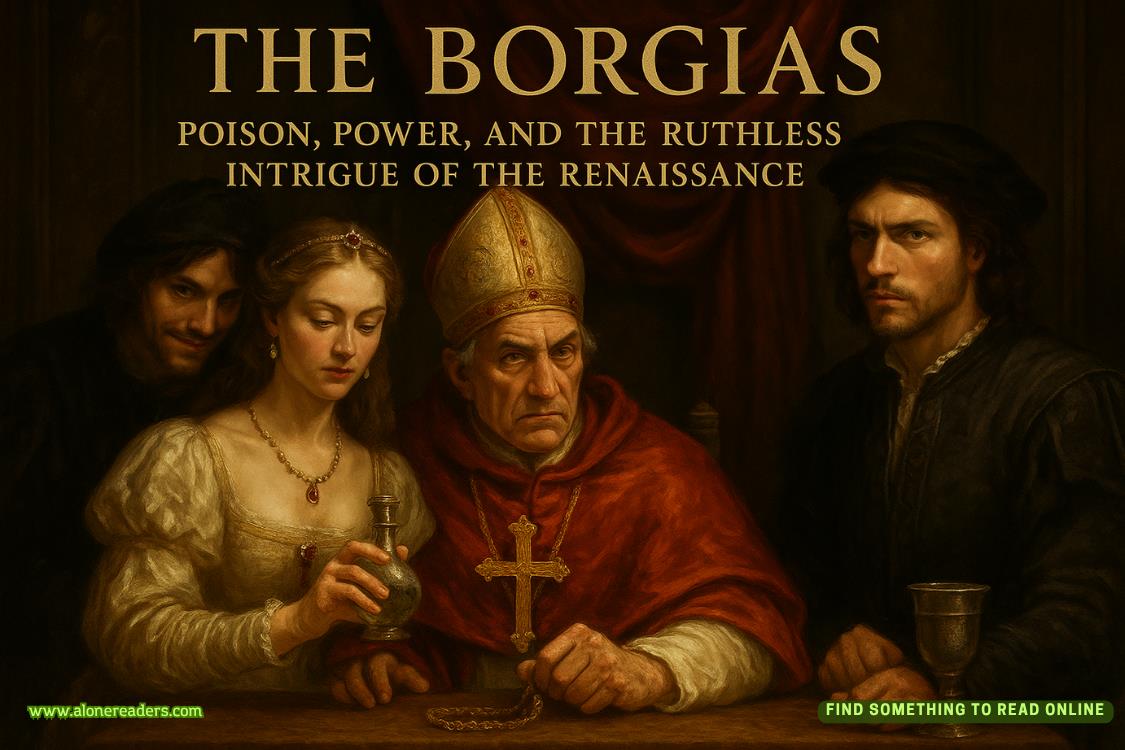
The story of the Borgias is one of the most scandalous chapters in the history of Renaissance Italy. Rising from Spanish roots to dominate the papacy and Italian politics in the late 15th and early 16th centuries, the Borgia family became synonymous with corruption, ambition, and the deadly marriage of power and intrigue. Their name still evokes whispers of poison, assassination, and political manipulation, yet the truth about them is as fascinating as it is complex—a blend of undeniable ruthlessness and genuine brilliance.
At the center of this notorious dynasty stood Rodrigo Borgia, a man of cunning intellect and insatiable ambition. Born in Spain as Roderic Llançol i de Borja, he was brought to Rome by his uncle, Pope Calixtus III, who opened doors for his ecclesiastical advancement. Rodrigo’s charisma, administrative genius, and deep understanding of power led him to the College of Cardinals and eventually, in 1492, to the papal throne as Pope Alexander VI. His election was shrouded in accusations of bribery and corruption—a fitting omen for a pontificate that would come to symbolize the height of Renaissance decadence. Alexander VI ruled not as a humble servant of God, but as a Renaissance prince. His reign was characterized by nepotism, as he appointed his illegitimate children to positions of immense influence, and by relentless pursuit of political dominance.
Two of Rodrigo’s children—Cesare and Lucrezia Borgia—became the most infamous symbols of the family’s legacy. Cesare, the Duke of Valentinois, embodied the ruthless ambition that defined the family’s reputation. Initially groomed for the Church, Cesare renounced his cardinal’s robes to become a soldier and statesman. With his father’s support and the backing of the papal armies, he embarked on a campaign to unite the fractious city-states of central Italy under Borgia control. Cesare’s military brilliance was matched only by his cruelty; he was feared for his cunning strategies and his willingness to betray allies when convenient. His rise inspired Niccolò Machiavelli’s seminal work The Prince, which took Cesare as an example of effective—if immoral—leadership. Machiavelli admired his pragmatism, describing him as the perfect Renaissance ruler: decisive, ruthless, and unburdened by morality when power was at stake.
Lucrezia Borgia, on the other hand, became one of history’s most maligned women—depicted by centuries of rumor as a seductress, poisoner, and tool of her father and brother’s ambitions. Yet historical evidence paints a more nuanced portrait. Married off repeatedly to secure political alliances, Lucrezia was a victim of her family’s relentless quest for dominance. Her marriages to Giovanni Sforza, Alfonso of Aragon, and Alfonso d’Este each served strategic ends. The stories of her keeping poison hidden in a ring or presiding over lavish banquets that ended in murder are likely exaggerated by her family’s enemies, particularly rival noble houses like the Medici and Orsini. Nonetheless, Lucrezia was not merely a passive pawn; she demonstrated intelligence, diplomacy, and even compassion. In Ferrara, as Duchess, she gained genuine respect for her governance, artistic patronage, and piety, transforming her image in later years into that of a capable Renaissance woman.
The Borgias’ reign was one of unrestrained excess and political machination. Rome under Alexander VI was a city of pageantry and vice. The pope’s court was notorious for its opulent feasts, secret affairs, and whispered murders. Diplomacy was often conducted through bribery, marriage alliances, and assassination. The infamous “Banquet of Chestnuts,” allegedly organized by Cesare and Lucrezia, was said to be an orgy of sexual debauchery and moral decay—though historians debate whether it ever truly occurred or was another smear from the family’s rivals. Still, the Borgias’ reputation for moral corruption was enough to shock even the morally flexible standards of Renaissance Italy.
Poison became the family’s most enduring symbol, whether or not it was actually their favored weapon. Their enemies accused them of using arsenic and cantarella—a mysterious, slow-acting poison said to cause death without trace—to eliminate political rivals and uncooperative allies. Contemporary accounts claimed that Alexander VI and Cesare kept a supply of poison to rid themselves of inconvenient figures. Ironically, both father and son may have fallen victim to their own methods. In 1503, after attending a banquet in the gardens of Cardinal Adriano da Corneto, both Alexander and Cesare fell violently ill. The pope died shortly after, while Cesare barely survived. Many believed they had accidentally poisoned themselves while intending to kill others. Whether truth or coincidence, this poetic justice sealed their legend in the public imagination.
The fall of the Borgias was as dramatic as their rise. Without the power of the papacy, Cesare’s political empire quickly unraveled. His enemies—chief among them the French, the Spanish, and rival Italian families—moved swiftly to reclaim territories he had conquered. Cesare was eventually captured, imprisoned, and later killed in battle in Navarre in 1507, dying as he had lived: a warrior seeking dominance until the end. Lucrezia’s later years in Ferrara, meanwhile, were marked by tragedy and redemption. She withdrew increasingly from politics after the deaths of her children and her husband, turning to religion and charity before dying in 1519.
The Borgias’ influence extended far beyond their lifetimes. They epitomized the paradox of the Renaissance—an age of enlightenment and cruelty, beauty and corruption. Under Alexander VI, Rome flourished as a cultural hub. The pope was a patron of artists, scholars, and architects. He commissioned works that helped shape the artistic rebirth of the city. Yet the moral rot of his court contributed to widespread calls for Church reform, paving the way for the Protestant Reformation. The image of the corrupt, worldly pope—so vividly embodied by Alexander VI—was instrumental in fueling Martin Luther’s denunciations of the Church decades later.
In modern times, the Borgias have been reinterpreted through countless books, operas, and television series. They have become symbols of ambition and excess, immortalized in literature and drama as archetypes of corruption. Yet beneath the legends lies a family that exemplified both the grandeur and the depravity of Renaissance Italy. They were brilliant statesmen, patrons of art, and architects of power who operated in a world where moral boundaries were fluid and survival demanded ruthless cunning.
Ultimately, the story of the Borgias is not just a tale of poison and power—it is a reflection of human nature at its most ambitious and dangerous. Their legacy is inseparable from the era they helped define: an age where faith and politics intertwined, beauty and bloodshed coexisted, and the pursuit of glory often ended in ruin. The Borgias may have died centuries ago, but their legend endures as a timeless warning about the cost of unrestrained ambition and the seductive dangers of power.



 The Hundred Days Offensive: How the Allies Defeated Germany in World War I
 The Second Battle of the Marne: The Turning Point of World War I in 1918
 The Spring Offensive of 1918: Germany's Final Gamble to Win World War I
 The Treaty of Brest-Litovsk: How Russia Left World War I
 The Russian Revolution and World War I: How War Brought Down the Tsar
 The Zimmermann Telegram Explained: Germany's Secret Offer to Mexico in World War I










