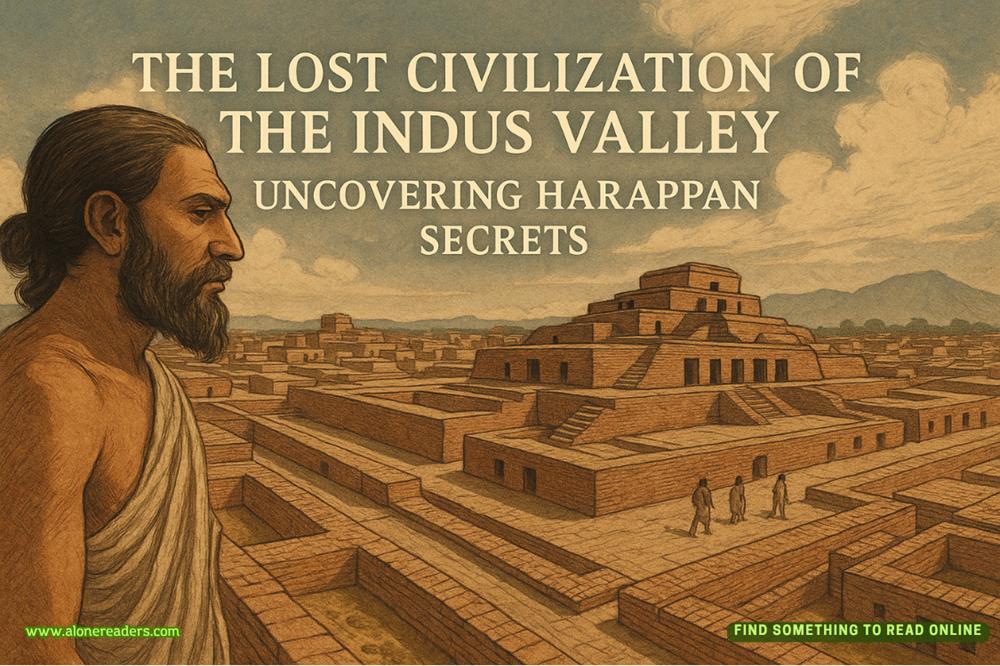
The Indus Valley Civilization, often referred to as the Harappan Civilization, stands as one of the most remarkable yet enigmatic cultures in human history. Flourishing approximately between 2600 BCE and 1900 BCE, it thrived across a vast region of South Asia, encompassing what is now modern-day Pakistan, northwest India, and parts of Afghanistan. While contemporary to ancient Egypt and Mesopotamia, the Indus Valley civilization remains shrouded in mystery, largely due to the undeciphered script left behind on seals and tablets. This lack of readable written records has caused the culture to become a puzzle, inviting scholars, historians, and archaeologists to piece together its legacy from ruins, artifacts, and reconstructed insights. The civilization’s impressive urban planning, sophisticated architecture, and complex societal systems reveal a society far ahead of its time, raising questions about how such remarkable innovation could vanish so mysteriously.
Archaeological discoveries from sites such as Harappa, Mohenjo-daro, Dholavira, and Lothal provide glimpses into daily life and organization. Streets were arranged on a grid pattern, a feature that stands out as a hallmark of advanced civic planning. Homes were built from standardized baked bricks, indicating a well-regulated construction industry. The Great Bath of Mohenjo-daro, a massive public water tank, suggests ritualized bathing practices and communal activities, hinting at sophisticated religious or cultural traditions. Further evidence, including wells, reservoirs, and drainage channels, points to an astonishing level of engineering skill. These innovations showcase how the civilization prioritized hygiene, sustainability, and public health, values that modern societies continue to strive for. The presence of granaries, warehouses, and large platforms also suggests centralized control and the capability to store surplus goods, ensuring stability during lean seasons.
Trade played a significant role in shaping the Harappan economy. Archaeological research indicates extensive domestic and international commercial links, supported by the discovery of Harappan seals and goods in regions as far as Mesopotamia. Items such as beads, pottery, textiles, and metal tools formed the core of the export economy. The civilization also boasted well-developed craft industries, producing objects notable for their precision and quality. Stone beads, for instance, were drilled using techniques requiring incredible skill, while pottery displayed geometric patterns and polished surfaces. The Harappans cultivated crops such as wheat, barley, and sesame, and evidence of irrigation channels suggests water management strategies essential for sustaining agriculture. Livestock such as cattle, water buffalo, and goats were integral to daily life, while extensive fishing practices thrived along riverbanks.
One of the most fascinating aspects of Harappan culture lies in its undeciphered script, found inscribed on seals made from steatite. These seals typically depict short strings of symbols accompanied by animal figures, possibly representing religious motifs or clan identities. Despite decades of research, no consensus exists on how to read these inscriptions. Without translations, scholars must rely on indirect evidence to understand administrative structures, religious beliefs, and political hierarchies. Interestingly, the absence of overtly royal monuments, statues of kings, or records of military conquest suggests a society without centralized authoritarian rule, a rarity among ancient civilizations. Instead, power may have been distributed across city councils, merchants, and priestly groups, fostering a system built on cooperation rather than coercion.
Religious practices, gleaned from figurines, seals, and architectural layouts, present another layer of intrigue. Many seals feature animals such as bulls, elephants, and tigers, possibly linked to worship or symbolic representation of a balanced natural world. Terracotta figurines often portray a female deity, leading some scholars to propose the prominence of fertility worship. Other theorized concepts include proto-yoga practices and sacred tree symbolism, themes echoed later in South Asian cultural traditions. Large public bathing structures point to rituals centered on water purification, suggesting that cleanliness held both spiritual and practical significance. While surviving artifacts offer hints, the full scope of Harappan religion remains elusive.
The artistic culture of the Indus Valley reflects refined craftsmanship. Beads made from semi-precious stones, intricately carved seals, pottery adorned with painted motifs, and metal objects cast using complex techniques all demonstrate creative mastery. Harappan artisans frequently used materials such as lapis lazuli, agate, copper, and bronze. Miniature figures depict animals with precise anatomical detail, while terracotta toys with movable wheels indicate both artistic creativity and a child-centered understanding of play. These artistic traditions highlight not only advanced manufacturing capability but also the cultural importance placed on aesthetics and symbolism.
Urban architecture was another defining feature of the civilization. Houses typically consisted of multiple rooms arranged around a central courtyard, emphasizing privacy, ventilation, and social interaction among family members. Many homes contained private wells, bathing areas, and toilets connected to municipal drainage systems, revealing a commitment to sanitation unparalleled in contemporary civilizations. The drainage system itself was revolutionary, incorporating covered channels, inspection chambers, and standardized piping. This extensive infrastructure displays engineering foresight and illustrates a civilization that deeply understood urban challenges.
Economically, the Harappans used standardized weights and measures, a crucial component of regulated trade. Cubical stone weights found across settlements indicate a shared economic framework, possibly managed through merchant guilds or administrative centers. The uniformity suggests strong inter-city links and a structured economy. Dockyards discovered at Lothal further reveal maritime capabilities. These facilities allowed ships to load goods without being hindered by tidal shifts, marking a significant advancement in harbor construction.
Despite all these achievements, the civilization declined around 1900 BCE. Scholars propose several theories to explain the collapse. One prominent hypothesis suggests environmental change, particularly the shifting of river systems that once nourished agricultural lands. The drying of the Ghaggar-Hakra River, often associated with the legendary Saraswati, may have forced populations to migrate. Another possibility is catastrophic flooding, evidenced by silt deposits found in certain ruins. Climate changes may have disrupted monsoon patterns, causing droughts and reduced agricultural output, putting strain on food supplies. Disease outbreaks or epidemics are also possible, given the dense urban environments. Furthermore, tectonic activity could have altered the course of major rivers, effectively dismantling the infrastructure upon which cities relied.
External invasions have been proposed in earlier scholarship, particularly involving nomadic pastoral groups. However, lack of definitive evidence, such as widespread destruction or weapon-related trauma on skeletal remains, weakens this argument. Instead, the decline may have been gradual, leading to de-urbanization, where populations dispersed into smaller settlements focused on rural subsistence. Even after the main cities had fallen silent, cultural traditions survived, influencing later societies and contributing to South Asian cultural evolution.
Modern technology has breathed new life into Indus Valley research. Advanced tools such as satellite imaging, chemical residue analysis, 3D mapping, and DNA sequencing have helped reconstruct aspects of lifestyle, diet, and genetic lineage. For example, isotopic analysis of skeletal remains has revealed that movement between cities was common, indicating mobility and trade networks. DNA research has suggested connections within the subcontinent but limited contact with contemporary Iranian steppe pastoralists, refining historical narratives of population migration. Drone surveys have helped identify previously unknown settlements, expanding the known geographical scope of Harappan influence.
Today, the Indus Valley civilization continues to captivate historians and archaeologists. It challenges assumptions that ancient societies must be hierarchical, militaristic, or monumental to achieve greatness. Instead, it offers a model of complex urbanism anchored by cooperation, sanitation, regulated trade, and standardized civic systems. The lack of identifiable royal tombs or palaces may even suggest a proto-democratic administrative system. Its achievements in water management, urban planning, craftsmanship, and trade position it as a cornerstone in the history of civilization.
The enduring mystery of the undeciphered script remains a tantalizing frontier. Should scholars succeed in breaking the code, the world might gain profound insights into legal practices, economic transactions, mythology, and interpersonal relationships of the Harappans. Unlocking this script could reshape global historical narratives, placing the Indus Valley civilization even more prominently among ancient world powers. Researchers continue to explore correlations between symbols, pottery marks, and seal patterns, hoping to uncover linguistic breakthroughs.
Preserving Harappan heritage poses modern challenges. Urban expansion, river erosion, industrial development, and looting threaten archaeological sites. Governments, historians, and international organizations have worked together to secure excavation zones, promote museum collections, and fund technological research. Public awareness campaigns and school curriculum integration aim to highlight the civilization’s importance. However, many sites remain buried or at risk, requiring continued protection.
The legacy of the Indus Valley can be seen in the cultural continuity of the region. Practices related to bathing rituals, animal symbolism, jewelry craftsmanship, city planning concepts, and agricultural patterns resonate in later South Asian cultures. While not direct continuations, these echoes affirm that civilizations do not entirely disappear; they transform and imprint themselves on future generations. The Harappans may not have left behind decipherable texts, but they carved their identity into architecture, tools, and continuing traditions.
In recent decades, scholars have increasingly emphasized the civilization’s peaceful character. The absence of large quantities of weapons or military fortifications suggests that conflict was not central to governance. Economic cooperation, trade partnerships, and shared cultural values appear to have held the society together. This challenges the notion that ancient cities required defensive warfare to survive. Instead, it paints a picture of collaborative urban development, where innovation and shared prosperity were key drivers of societal stability.
The great unanswered question remains: why did such a flourishing civilization vanish? While environmental change is the leading theory, it is likely that multiple factors converged. The loss of river systems would have destabilized agriculture, leading to food shortages. Economic networks could have collapsed as merchants lost trade routes. Religious centers may have lost significance, fracturing social unity. Over time, these cumulative pressures might have caused towns to shrink, populations to migrate, and traditions to evolve into new forms.
Ultimately, the story of the Indus Valley Civilization is more than just a tale of lost cities and forgotten scripts. It is an exploration of human potential, ingenuity, and resilience. It reveals how ancient societies experimented with urban life, created intricate social systems, and interacted with the natural world. It encourages modern societies to reflect on the fragility of civilization and the consequences of environmental change. At the same time, it inspires awe at the enduring achievements of a people who mastered water management, sanitation, and urban planning thousands of years ago. The Indus Valley’s quiet disappearance leaves behind unanswered questions, but its archaeological and cultural footprints ensure that its memory endures.
As research continues, archaeologists remain hopeful that new discoveries will emerge. Every excavated artifact brings humanity a step closer to understanding this extraordinary civilization. Perhaps one day, the symbols carved into ancient seals will speak again, unlocking stories of governance, love, artistry, trade, and belief. Until then, the mystery of Harappan secrets invites endless fascination, reminding us that the sands of history still guard many untold truths.



 The Hundred Days Offensive: How the Allies Defeated Germany in World War I
 The Second Battle of the Marne: The Turning Point of World War I in 1918
 The Spring Offensive of 1918: Germany's Final Gamble to Win World War I
 The Treaty of Brest-Litovsk: How Russia Left World War I
 The Russian Revolution and World War I: How War Brought Down the Tsar
 The Zimmermann Telegram Explained: Germany's Secret Offer to Mexico in World War I