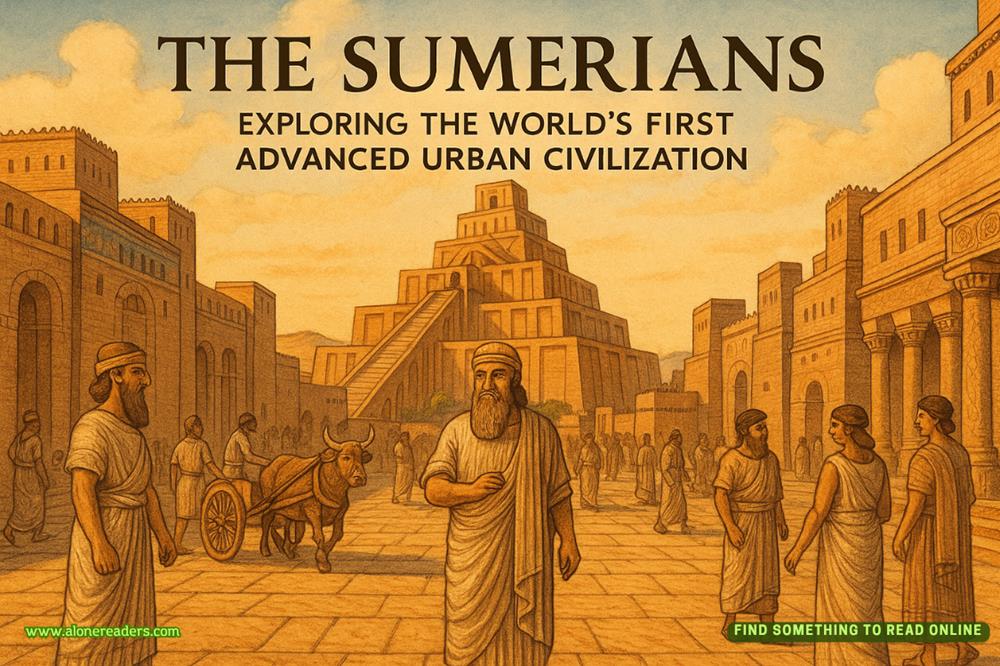
The Sumerians, who emerged in ancient Mesopotamia around 4500 BCE, are widely regarded as the architects of humanity’s first urban civilization. Settled in the fertile region between the Tigris and Euphrates rivers, their society laid the foundation for many aspects of modern life. Their innovations in government, writing, agriculture, architecture, science, and law were revolutionary, shaping the trajectory of human history. While fragments of their culture survive through archaeological findings and ancient tablets, much of the Sumerian world was buried under the sands of time, leaving scholars to reconstruct the story of a complex and vibrant civilization that significantly influenced societies that followed. Their legacy is particularly impressive considering the harsh environmental conditions they faced in southern Mesopotamia, an area where flooding, drought, and limited resources posed constant challenges. Yet through innovation and determination, they built one of the world’s earliest and most sophisticated civilizations.
Sumerian culture was urban in nature, with population centers evolving into some of the earliest recorded cities in human history. Cities such as Uruk, Ur, Lagash, Eridu, and Nippur became bustling hubs of commerce, religion, and administration. These settlements were not merely clusters of dwellings; they were large, highly organized urban landscapes with monumental architecture, central temples, specialized labor systems, and administrative districts. Among the most iconic architectural contributions of the Sumerians were the ziggurats, massive multi-tiered temple structures built as homes for the gods. Rising above the flat plains, they symbolized spiritual and political power. The largest of these temples became the focal points around which city life revolved, serving not only as religious sanctuaries but also as storage facilities, administrative offices, and community gathering spaces. The existence of these monumental structures so early in human development demonstrates sophisticated engineering knowledge, extensive labor coordination, and a unified religious ideology.
One of the most groundbreaking contributions of the Sumerians was the invention of cuneiform writing, among the earliest known written scripts in the world. Originally developed around 3200 BCE as a form of pictographic accounting to keep track of grain, livestock, and goods, cuneiform evolved into a complex system capable of conveying literature, laws, myths, and administrative records. Scribes used sharpened reeds to press wedge-shaped marks into clay tablets that hardened when baked by the sun. Thousands of these tablets have been discovered, providing firsthand insight into Sumerian life. Through these writings, historians have reconstructed economic transactions, business agreements, marriage contracts, hymns, proverbs, scientific observations, and royal decrees. The emergence of writing revolutionized administration, literacy, communication, and historical preservation. Without cuneiform, much of what we know about early civilizations would be lost.
At the heart of Sumerian society was a complex religious structure. The Sumerians were polytheistic, believing in a vast pantheon of gods who governed all aspects of natural and human existence. Each major city-state had a patron deity believed to protect the community in exchange for worship, offerings, and temple maintenance. Life was governed by the unpredictable will of these gods, shaping festivals, rituals, and social norms. Earthly rulers, often referred to as ensi or lugal, claimed divine support, using religion as both a political tool and a means of legitimizing authority. Priests played critical roles in daily life, overseeing ceremonies, interpreting omens, storing harvests, and managing temple estates. Religion not only influenced governance but also formed the backbone of law, education, and cultural expression.
The political landscape of Sumer consisted of independent city-states, each ruled by its own king. These city-states often competed with one another for control of fertile lands, irrigation networks, and trade routes. Warfare was frequent but also helped stimulate advancements in military technology, including bronze weaponry, organized infantry formations, and chariots pulled by equids. Though independent, the Sumerian city-states shared a common culture, language, artistic style, and religious beliefs. Alliances shifted constantly as rival powers rose and fell. Over time, some cities gained dominance, only to lose it again during economic troubles or foreign invasions. This turbulent political history eventually culminated in the rise of the Akkadian Empire under Sargon of Akkad, who brought unity to Mesopotamia and spread Sumerian culture beyond its original borders.
Agriculture was the economic foundation of Sumerian civilization. The region’s fertile soil allowed for high yields, but its climate demanded innovation. To overcome inconsistent rainfall and seasonal flooding, the Sumerians engineered intricate irrigation systems consisting of canals, levees, ditches, and reservoirs. These systems ensured that crops such as barley, wheat, dates, onions, cucumbers, and legumes thrived throughout the year. The management of irrigation networks required communal labor, irrigation officials, and careful record keeping. The agricultural surplus supported urban population growth and freed many individuals to pursue specialized professions such as pottery, metalworking, woodworking, and textile production. Trade flourished as merchants exchanged surplus goods for materials scarce in Mesopotamia, including timber from Lebanon, copper from Oman, and precious stones from regions as distant as the Indus Valley.
Sumerian society was highly stratified, with clear social hierarchies. At the top were the ruling elites, followed by priests, scribes, and wealthy landowners. Skilled artisans formed the middle layers, producing everything from intricate jewelry to detailed cylinder seals used for administrative purposes. Farmers, laborers, and fishermen represented the majority of the population. Slaves, often obtained through war or debt, existed at the bottom of the social structure. Education was reserved primarily for the elite, and lengthy training was required to become a scribe. The existence of these defined social tiers illustrates the complexity of Sumerian governance, economics, and labor organization.
Sumerian law also reflects this complexity. Although the famous Code of Hammurabi arrived later, early Sumerian law codes have been discovered on tablets, revealing regulations regarding property rights, marriage, inheritance, and business contracts. These laws demonstrate the early development of legal accountability, fairness, and administrative order. Punishments varied depending on social status, reflecting the hierarchical nature of their society. Yet their legal structure offered predictability, helping reduce conflicts and ensure stability within densely populated urban environments.
Art, architecture, and craftsmanship flourished in Sumer. Artists worked in many mediums, including bronze, gold, lapis lazuli, clay, and stone. Decorative objects such as statues, jewelry, and ceremonial helmets illustrate extensive trade networks as well as an appreciation for beauty and symbolism. Sumerian art frequently depicted gods, rulers, mythological creatures, and scenes of worship. Music also held a prominent place in cultural life. Archaeologists have unearthed ancient lyres, harps, and percussion instruments, suggesting vibrant ceremonies and community celebrations.
Sumerian mythologies reveal much about their worldview. Epic stories such as the Epic of Gilgamesh explore themes of kingship, mortality, friendship, and humanity’s relationship with nature and the divine. These narratives are some of the earliest literary works in human history. They influenced later mythologies in the region, including those of the Babylonians, Assyrians, and Hebrews. Their myths offered explanations for natural events, social structure, and cosmology. Through storytelling, they preserved memories of ancestral heroes, legendary kings, and catastrophic floods.
The decline of Sumer originated from multiple factors. Environmental degradation played a significant role. Centuries of irrigation led to soil salinization, reducing crop yields and weakening agricultural output. Internal conflicts further destabilized the region, making it vulnerable to foreign powers such as the Akkadians, Gutians, and Amorites. Additionally, changing trade networks diminished the economic advantages once enjoyed by Sumerian city-states. By 2000 BCE, political power had shifted north toward Babylon, though Sumerian language and traditions persisted for centuries within religious and scholarly contexts. The eventual disappearance of this civilization did not erase its contributions; instead, its ideas were absorbed into the cultures that succeeded it, forming the roots of broader Mesopotamian history.
The enduring legacy of the Sumerians is impossible to overstate. They pioneered urban planning, record keeping, monumental architecture, religious institutions, and codified law. Their innovations in math, including early forms of geometry and a base-60 counting system, are still reflected in how we measure time and angles today. Their astronomical observations influenced early calendars, agricultural cycles, and religious festivals. Even modern governance draws inspiration from administrative structures first developed in Sumerian temple complexes.
Modern archaeological discoveries continue to shed light on this remarkable civilization. Excavations, linguistic analysis, and advances in scientific dating techniques allow historians to reconstruct daily life with increased accuracy. Clay tablets, once discarded as debris, now serve as windows into ancient economies, personal correspondence, and literary achievements. As technology evolves, researchers expect to uncover even more about this ancient culture. New discoveries have the potential to reshape our understanding of the origins of urban life and human civilization.
The story of the Sumerians is one of innovation, resilience, and adaptation. They transformed a harsh environment into a thriving cultural center, developed the first known writing system, built monumental structures, and established social and political frameworks that influenced the ancient world. Though eventually overshadowed by empires such as Babylon and Assyria, the world’s first advanced urban civilization laid the intellectual and cultural groundwork for millennia to come. By studying their achievements, modern societies can better understand the evolution of human organization, creativity, and ingenuity. The legacy of the Sumerians lives on not only in history books but in the very foundations of modern civilization, reminding us that even the earliest chapters of human history contain remarkable feats worth remembering and exploring.





 The Hundred Days Offensive: How the Allies Defeated Germany in World War I
 The Second Battle of the Marne: The Turning Point of World War I in 1918
 The Spring Offensive of 1918: Germany's Final Gamble to Win World War I
 The Treaty of Brest-Litovsk: How Russia Left World War I
 The Russian Revolution and World War I: How War Brought Down the Tsar
 The Zimmermann Telegram Explained: Germany's Secret Offer to Mexico in World War I








