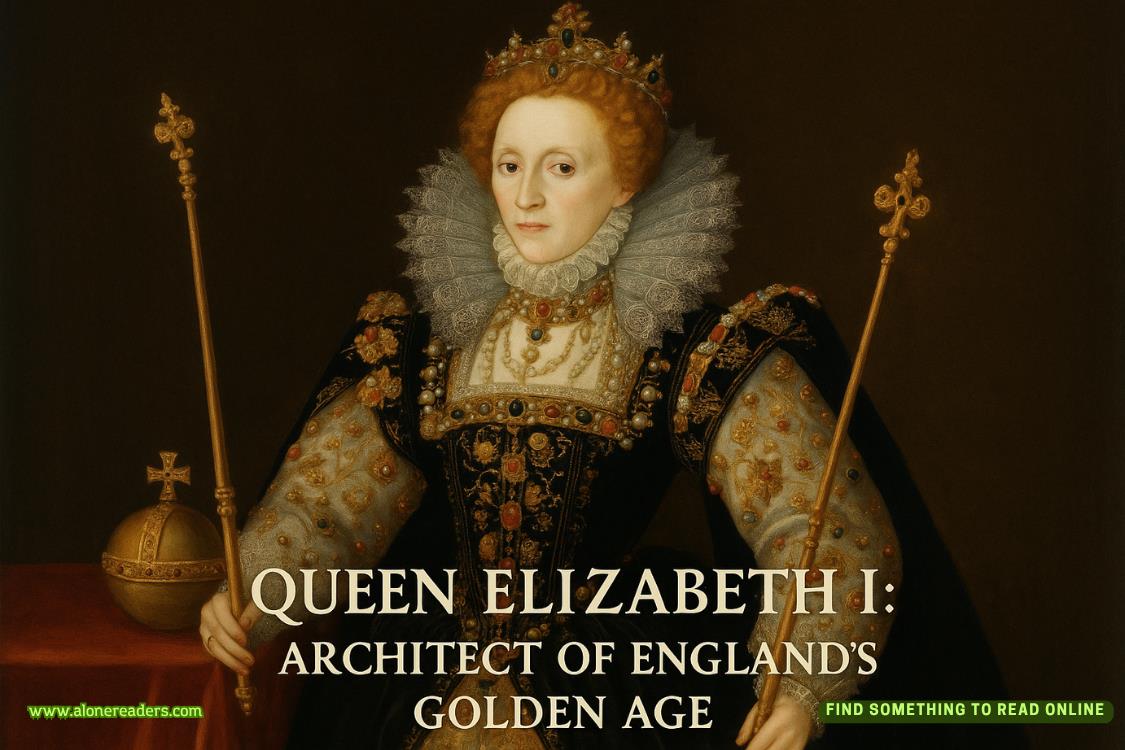
The legacy of Queen Elizabeth I, often referred to as the Virgin Queen, stands as one of the most influential chapters in English history. Born on September 7, 1533, she ascended to the throne in 1558 after the tumultuous reigns of her half-siblings Edward VI and Mary I. Her nearly forty-five years as monarch transformed England from a politically fractured and economically strained kingdom into a confident European power. Her rule ushered in advancements in culture, exploration, diplomacy, military stability, and religious compromise. Few monarchs have commanded history’s admiration like Elizabeth I, whose charisma, intellect, and political mastery earned her an almost mythical status. She became an enduring symbol of national pride during a period that would later be known as England’s Golden Age.
Elizabeth’s early years were marked by significant instability. Her mother, Anne Boleyn, was executed when Elizabeth was just two years old, leaving her declared illegitimate and removed from succession. Despite this stigma, Elizabeth received an exceptional education, becoming fluent in French, Italian, Latin, and Greek while studying philosophy, rhetoric, theology, and history. Her sharp intellect would later become a defining asset of her reign. As a political mind, she was deliberate and cautious, understanding the treacherous dynamics of court politics. Her experiences under the rule of her half-sister Mary I, who imprisoned her due to suspected involvement in Protestant uprisings, further shaped her cautious, strategic approach to leadership.
When Elizabeth assumed the throne at twenty-five, England faced religious division, financial difficulty, and diplomatic isolation. The country was deeply divided between Catholics and Protestants, and European powers questioned its stability. One of Elizabeth’s most notable achievements was establishing the Elizabethan Religious Settlement, which restored the Protestant Church of England while allowing a degree of religious flexibility. This compromise diffused decades of unrest and provided England with enough internal stability to focus on broader ambitions. Her stance on religion demonstrated political prudence rather than ideological zeal, anchoring the nation through moderation rather than extremism.
Elizabeth’s diplomatic strategy was equally masterful. Instead of engaging in costly wars or aggressive expansion, she strengthened English influence through calculated alliances and treaties. She used her unmarried status as a diplomatic tool, entertaining marriage proposals from European princes and nobles to maintain leverage. Her reluctance to marry was a defining characteristic of her reign. By remaining single, she kept England free from potential foreign dominance and maintained complete authority over her kingdom. Her image as the Virgin Queen became a symbol of national purity and unity, elevating her persona beyond mere royalty.
In matters of defense, Elizabeth showed remarkable resolve. Perhaps the most celebrated military event of her reign was the defeat of the Spanish Armada in 1588. Spain, led by Philip II, launched a massive naval fleet aiming to conquer England. The English navy, under the leadership of commanders such as Sir Francis Drake and Lord Howard of Effingham, employed innovative strategies and utilized more maneuverable ships. However, Elizabeth’s inspirational leadership was equally crucial. Her speech at Tilbury, where she declared she had “the heart and stomach of a king,” galvanized her troops and became a defining moment in English courage. The Armada’s defeat secured England as a rising maritime power and weakened Spanish dominance in Europe, altering the balance of global power.
The Elizabethan era was distinguished not merely by political and military triumphs but also by extraordinary cultural innovation. Elizabeth, an avid lover of the arts, patronized poets, playwrights, scholars, and musicians. Under her influence, England experienced a renaissance in literature and theater. This era produced some of the most enduring figures in Western literature, including William Shakespeare, Christopher Marlowe, Edmund Spenser, and Ben Jonson. London’s theaters thrived, becoming the backbone of cultural life. The arts flourished because Elizabeth’s relatively tolerant government allowed creativity, fantasy, and intellectual exploration to thrive. Her court became a hub of poetic and dramatic brilliance, solidifying England’s cultural legacy for centuries to come.
Beyond culture, Elizabeth’s reign saw the birth of English imperial ambition. She encouraged voyages of discovery that would lay the foundations of England’s overseas expansion. Explorers such as Sir Walter Raleigh and Sir Francis Drake ventured into the Americas and around the globe, seeking new lands, resources, and trade routes. Although many of these ventures were risky and costly, they established England’s presence in the global maritime arena. This period marked the beginning of English colonial aspirations, sowing the seeds of a future empire that would span continents.
Economically, Elizabeth’s policies strengthened trade and encouraged domestic production. She supported the growth of industries such as wool, mining, shipbuilding, and textiles. The stabilization of currency and reduction of debt under her leadership restored confidence to merchants and investors. By balancing the interests of nobility, merchants, and the common populace, she created a more unified economic framework. Her reign witnessed the rise of a middle class empowered by trade and urbanization, reshaping English society and broadening pathways to wealth beyond inherited status.
Elizabeth’s court was a model of sophisticated political maneuvering. Unlike rulers who relied solely on militaristic dominance, she understood the value of image, symbolism, and pageantry. Her carefully curated persona reinforced her authority. Portraits showed her as timeless, ageless, and radiant, embodying power and purity. Facing a patriarchal system that questioned female rule, Elizabeth crafted a gendered narrative that emphasized her dual identity: strict and commanding like a king, nurturing and graceful like a queen. She famously referred to herself as having the body of a woman but the heart of a king. This rhetorical mastery allowed her to command loyalty and respect from nobles skeptical of female sovereignty.
At home, Elizabeth navigated internal threats with astute caution. Catholic conspiracies, including plots supported by foreign powers, repeatedly targeted her sovereignty. One of the most significant challenges was the presence of Mary, Queen of Scots, Elizabeth’s Catholic cousin who had a legitimate claim to the English throne. After years of political tension and plots allegedly orchestrated in Mary’s name, Elizabeth reluctantly ordered her execution in 1587. This decision weighed heavily on her conscience, but it eliminated a formidable threat and strengthened her government’s security.
Despite her political success, Elizabeth’s personal life was filled with sacrifice. She endured the pressure of producing an heir in an age where dynastic continuity defined stability. By refusing marriage and motherhood, she took a path that isolated her emotionally but ensured England’s autonomy. The end of her reign marked the conclusion of the Tudor dynasty, passing the crown to James VI of Scotland, who united the kingdoms under the Stuart banner. Though she died childless in 1603, the nation mourned her deeply. People spoke of her reign as a time of peace, prosperity, and pride unmatched in recent memory.
Elizabeth’s golden reputation did not come without challenges. Famine, inflation, social inequality, and religious persecution continued to affect the population. Her government maintained strict censorship, particularly on matters of religion and politics. Yet her ability to mediate these tensions and prevent large-scale civil conflict is considered one of her greatest achievements. She navigated the complexities of early modern statecraft with remarkable subtlety.
The Queen’s inner circle consisted of loyal advisors like William Cecil and Francis Walsingham, whose counsel helped shape domestic and foreign strategies. Walsingham developed an extensive intelligence network, foreshadowing modern espionage tactics. Under Elizabeth, England became adept at cryptography, surveillance, and counterintelligence. These tools helped dismantle numerous assassination attempts and political conspiracies. Her reliance on councilors illustrates her pragmatic leadership style: although she held supreme authority, she valued informed deliberation and collective wisdom.
Elizabeth’s reign symbolized the transition from medieval power structures to early modern governance. The growth of parliamentary influence, expansion of education, and flourishing print culture helped shape public consciousness. Schools and universities benefited from increased support, fueling intellectual and scientific curiosity. Literacy rates gradually improved, allowing ideas to spread more widely across social classes. Her era laid foundations for the later Enlightenment and scientific revolutions.
One of the most enduring aspects of Elizabeth’s legacy is her profound impact on national identity. She cultivated a spirit of patriotism, encouraging the notion that English culture, language, and sovereignty were unique and worthy of pride. Her portraits, medals, and public appearances were designed to reinforce this narrative. Her refusal to submit to foreign authority reinforced England’s independence, especially in relation to Catholic Spain and France. The sense of unity generated under her leadership shaped English nationalism for generations.
Elizabeth’s death in 1603 marked the end of an era, but her influence endured. Historians often describe her reign as a balance of practicality and visionary ambition. She prevented England from being dominated by foreign powers, fostered domestic stability, encouraged cultural brilliance, and expanded the nation’s global horizons. Her leadership style, marked by caution, intelligence, and charisma, distinguished her from monarchs who ruled through fear or aggression. She demonstrated that a monarch could command loyalty without subjugating individuality and inspire pride without enforcing conformity.
Today, Queen Elizabeth I remains a global icon. She appears in literature, film, theater, and art, continually reimagined and reinterpreted through modern lenses. Scholars study her speeches, decisions, and court culture to understand the evolution of political communication. Her life offers insights into power dynamics, gender politics, diplomacy, and cultural patronage. She defied expectations placed on women of her era, proving that leadership transcends gender and that resilience can emerge from adversity.
Her reign stands as testimony to the transformative power of calculated reform, artistic encouragement, and controlled diplomacy. By the time she left the world, England had evolved from a fractured, uncertain kingdom into a confident nation poised for global influence. The legacy of the Elizabethan Golden Age echoes through centuries of literature, governance, exploration, and national pride. In shaping the ideals of her people, she established foundations that would guide England into the modern age.
In the end, Queen Elizabeth I’s story is one of triumph over personal pain, strategic mastery of politics, and unwavering dedication to her nation. She embodied the complexities of monarchy while elevating her country beyond expectation. Her brilliance, caution, symbolism, and charisma forged a legacy that remains unparalleled. She demonstrated that great leadership does not lie solely in conquest but in nurturing culture, balancing conflict, and inspiring identity. It is for these reasons that history remembers her not merely as a monarch, but as the architect of England’s Golden Age.




 The Hundred Days Offensive: How the Allies Defeated Germany in World War I
 The Second Battle of the Marne: The Turning Point of World War I in 1918
 The Spring Offensive of 1918: Germany's Final Gamble to Win World War I
 The Treaty of Brest-Litovsk: How Russia Left World War I
 The Russian Revolution and World War I: How War Brought Down the Tsar
 The Zimmermann Telegram Explained: Germany's Secret Offer to Mexico in World War I










