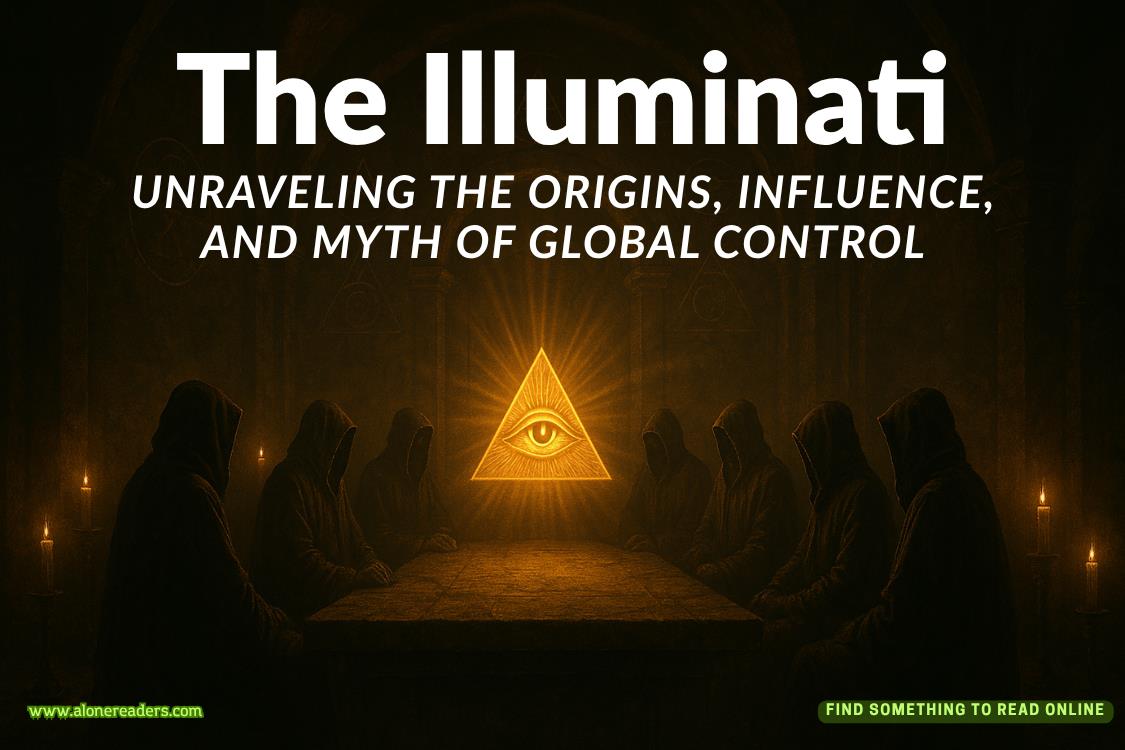
The Illuminati has long stood at the crossroads of history, myth, and paranoia. To some, it represents an ancient secret society quietly pulling the strings of global power. To others, it is a fabrication—an elaborate conspiracy theory that thrives in the shadows of public imagination. Understanding the Illuminati requires untangling historical fact from centuries of speculation. The real Illuminati emerged from Enlightenment-era Europe, yet over time, it evolved into one of the most enduring myths of hidden global control in modern culture.
The historical Illuminati was founded in 1776 by Adam Weishaupt, a German law professor at the University of Ingolstadt. At that time, Bavaria was a deeply religious state under strict Catholic influence, where the Church and monarchy controlled education and intellectual discourse. Weishaupt, inspired by the Enlightenment’s ideals of reason, freedom, and secular governance, created a secret society known as the Order of the Illuminati. Its goal was not world domination but rather the promotion of knowledge, rational thought, and moral improvement among its members. The Illuminati sought to challenge superstition, religious dogma, and political tyranny through intellectual enlightenment.
Weishaupt’s order began with just a handful of trusted associates but quickly expanded through secret recruitment networks, adopting rituals inspired by the Freemasons. Members used aliases, structured hierarchies, and covert correspondence to maintain secrecy. The Illuminati’s influence spread through Bavarian academic and intellectual circles, eventually including noblemen, government officials, and professors. However, its rapid growth also drew attention and suspicion. By the late 1780s, Bavarian authorities, alarmed by rumors of subversion and sedition, outlawed all secret societies, including the Illuminati. The order was officially disbanded in 1785, and Weishaupt fled the region. From that point, the historical Illuminati ceased to exist—but its legend was only beginning.
After its dissolution, rumors of the Illuminati’s survival began to circulate across Europe. The French Revolution in 1789 became a fertile ground for conspiracy theories. Monarchists, clergy, and conservative thinkers accused secret Enlightenment groups—particularly the Illuminati—of orchestrating the revolution to overthrow traditional hierarchies. Writers like Augustin Barruel and John Robison published works alleging that the Illuminati had infiltrated Freemasonry and other organizations to ignite revolutionary chaos across Europe. Though these claims lacked evidence, they captured the imagination of those seeking explanations for the radical social upheaval of the era.
By the 19th century, the Illuminati had evolved from a small Bavarian order into a symbol of hidden power and manipulation. The term began appearing in political and religious tracts, often used to accuse opponents of secret plots. In the United States, the early 1800s saw a wave of anti-Masonic and anti-Illuminati sentiment, as Americans feared that secret societies threatened democracy and religious morality. This paranoia eventually merged with broader cultural fears of infiltration and elite control, embedding the Illuminati myth deeply in Western consciousness.
The 20th century saw the myth expand into global dimensions. The idea of an all-powerful Illuminati controlling governments, economies, and media began to appear in pulp literature, political propaganda, and later, digital subcultures. Conspiracy theorists linked the Illuminati to nearly every major event—from the establishment of the Federal Reserve to the assassination of world leaders. The notion of a “New World Order”—a unified global regime allegedly guided by the Illuminati—became a recurring theme in political conspiracies. The image of a pyramid with an all-seeing eye, which appears on the U.S. dollar bill, further fueled public suspicion, even though it had no connection to Weishaupt’s original order. Symbols once tied to Enlightenment ideals of knowledge and vision became twisted into emblems of alleged tyranny and control.
In modern popular culture, the Illuminati’s image has been continuously reinvented. Books, films, and music videos frequently reference it as a hidden network manipulating world events from behind the scenes. Dan Brown’s Angels & Demons, for example, revived the Illuminati myth for a global audience, blending history, religion, and mystery into a gripping narrative. Musicians and celebrities are often accused of being members, with triangle hand gestures, lyrics, or stage designs cited as “proof” of affiliation. What began as a small philosophical society in Bavaria has, in the digital age, become a sprawling metaphor for power, secrecy, and mistrust in authority.
Yet, examining the Illuminati through a historical lens reveals how such myths persist. Human societies have always sought hidden explanations for complex or threatening realities. When power feels distant, the idea of an invisible elite orchestrating global events provides a comforting sense of order—an illusion that chaos has a mastermind. The Illuminati myth thrives on this tension between power and perception. Governments fall, leaders change, technologies evolve, but the human appetite for secret explanations remains constant. The Illuminati, real or imagined, embodies that eternal fascination with what lies behind the curtain of authority.
Today, the Illuminati occupies a unique position in modern culture—half historical fact, half digital-age fantasy. Its name surfaces in discussions about globalization, corporate influence, surveillance, and the erosion of privacy. Online forums, social media, and video platforms amplify these ideas, creating communities that treat conspiracy as both entertainment and identity. The blurred boundaries between fact, fiction, and viral storytelling allow the Illuminati myth to evolve endlessly. It becomes not only a story about secret power but a reflection of modern anxieties about control, transparency, and truth.
Psychologists studying conspiracy theories suggest that belief in such myths often correlates with feelings of powerlessness and distrust in institutions. When political or social systems appear opaque, conspiracy narratives offer emotional resolution—a sense that events, however troubling, have purpose. The Illuminati thus functions as a psychological mirror: its existence tells us more about our fears than about any real secret society. Whether imagined as bankers, politicians, or cultural elites, the Illuminati represents the shadow cast by our uncertainty about who truly governs the world.
Despite centuries of speculation, there remains no verifiable evidence that the Illuminati ever survived beyond Weishaupt’s time. Modern organizations claiming descent from the order are either symbolic, satirical, or entirely fabricated. Yet their persistence underscores the Illuminati’s cultural power. It has become an enduring metaphor for hidden influence—an idea more potent than any actual organization could ever be. In this way, the Illuminati transcends history to become a universal myth of control, secrecy, and enlightenment.
Ultimately, the Illuminati’s greatest influence lies not in covert world domination but in its capacity to shape imagination. It fuses Enlightenment ideals with Gothic intrigue, political fear with spiritual symbolism. From 18th-century Bavaria to 21st-century social media, the name “Illuminati” has shifted from representing a small band of reformist thinkers to symbolizing the ultimate secret power. Whether one views it as a historical curiosity, a metaphor for hidden systems, or a myth that reflects collective insecurity, the Illuminati endures because it taps into something fundamentally human: the belief that behind the visible world lies an unseen hand guiding destiny.
In truth, the Illuminati is both a relic of Enlightenment idealism and a creation of the modern imagination. Its transformation from a secret society into a global myth reveals as much about society’s evolving fears as it does about power itself. What began as a pursuit of reason and progress has become a timeless narrative of control and conspiracy—a mirror reflecting the tension between enlightenment and ignorance, between truth and myth. The Illuminati, whether as fact or fiction, continues to illuminate the human need to find order in the chaos of history.




 The Hundred Days Offensive: How the Allies Defeated Germany in World War I
 The Second Battle of the Marne: The Turning Point of World War I in 1918
 The Spring Offensive of 1918: Germany's Final Gamble to Win World War I
 The Treaty of Brest-Litovsk: How Russia Left World War I
 The Russian Revolution and World War I: How War Brought Down the Tsar
 The Zimmermann Telegram Explained: Germany's Secret Offer to Mexico in World War I