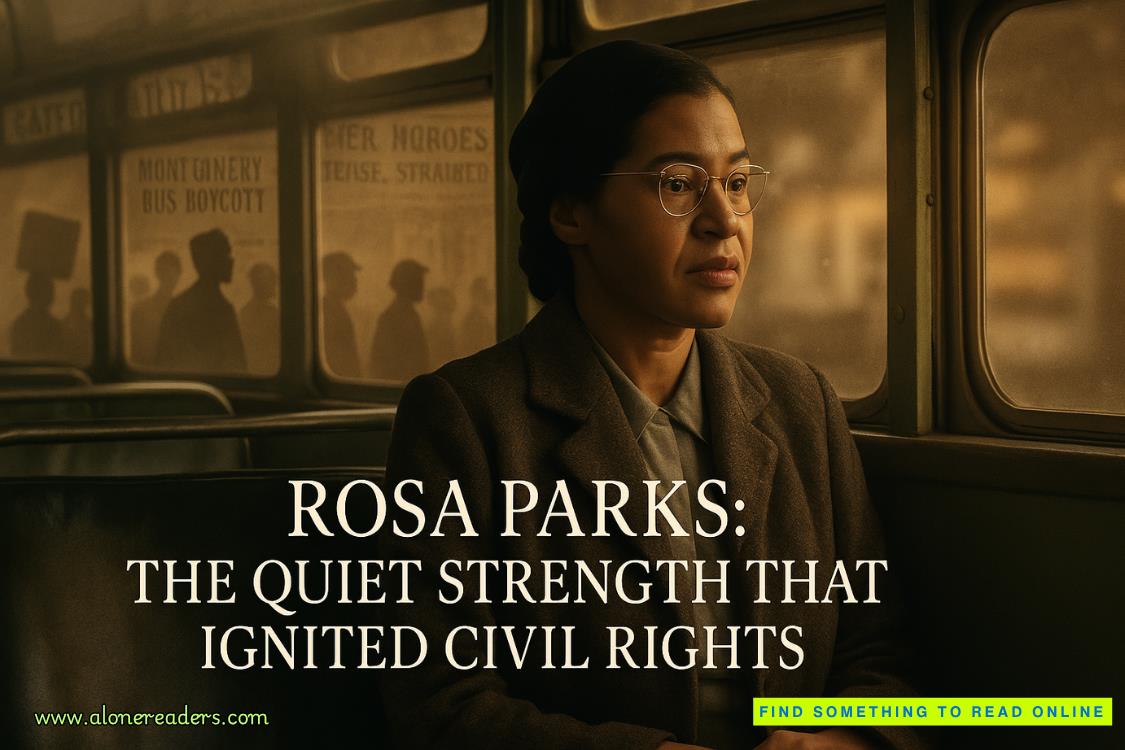
Rosa Parks remains one of the most recognizable figures in American history, not because she sought fame, nor because she used loud rhetoric or public grandstanding, but because her quiet, immovable act of resistance became the spark that ignited one of the most transformative movements of the twentieth century. When she refused to surrender her seat to a white passenger on a Montgomery city bus in December 1955, her action did more than violate an unjust law—it challenged an entire system built on racial hierarchy, humiliation, and the daily degradation of Black Americans. The story of Rosa Parks is often simplified into a single moment of defiance, yet the truth is far richer, deeper, and far more powerful than the commonly repeated legend. Her life was not defined by one refusal but by a lifelong commitment to dignity, justice, and equality.
What made Rosa Parks so influential was not merely the act itself, but the character that shaped the act. She was not tired from a long day at work, as the myth sometimes suggests; instead, she was tired of giving in, tired of a world that demanded compliance with oppression. Her refusal was an expression of inner resilience, the kind of strength that is quiet enough to be overlooked but powerful enough to change the course of a nation. In that moment, Parks demonstrated that everyday individuals, through small but courageous decisions, could challenge the machinery of injustice.
Rosa Parks was shaped by a childhood surrounded by the hard realities of the Jim Crow South. She grew up in a society where segregation was not just a set of rules but a system designed to reinforce inferiority and fear. Yet her family instilled in her a sense of self-worth, discipline, and moral clarity. Her grandfather, who kept a shotgun by the door to protect his family from white supremacist threats, taught her the value of quiet defiance. Her mother, a teacher, nurtured her belief in education, dignity, and personal agency. These early experiences planted the seeds of the courage that she would later express so decisively.
By the time she became an icon of civil rights, Rosa Parks had already spent years involved in activism. She worked with civil rights organizations, investigated cases of racial violence, and sought justice for victims of discrimination. One particularly revealing chapter of her activism came before her famous bus arrest, when she worked to expose the brutal assaults committed against Black women in the South. She collected testimonies, interviewed survivors, and pressed local officials to act. These experiences hardened her resolve and made her deeply aware that the fight for justice was not abstract—it was personal, painful, and necessary.
Her commitment to civil rights was not the work of a single day, nor was it spontaneous. When she boarded the bus that December evening, she knew what the consequences could be. She knew the law, she knew the risks, and she knew the legacy of violence that the South inflicted on those who stood up. And yet she chose to resist. Her decision was a declaration that she would no longer be an instrument of her own oppression, and her resolve became the rallying cry for millions.
Her arrest triggered the Montgomery Bus Boycott, an unprecedented 381-day mass protest that fundamentally reshaped the civil rights movement. For the first time, an entire Black community collectively withdrew its participation in a segregated system, refusing to support institutions that denied them dignity. The boycott’s scale and endurance demonstrated that organized economic resistance could become a powerful weapon in the struggle for justice. Thousands of people walked miles every day, shared rides, and endured threats, arrests, and harassment. Their collective sacrifice transformed Rosa Parks from a local seamstress and activist into a national symbol of silent courage.
Yet beneath this national recognition, Rosa Parks remained a deeply human figure. She lost her job. Her husband faced immense pressure and retaliation. Their finances collapsed. Far from being celebrated during the boycott, Parks was punished socially and economically. She and her husband eventually moved to Detroit, where she continued her activism with relentless determination. Despite the hardships, she refused to compromise her beliefs. Her life illustrates that courage often comes with a cost, and the heroes who shape history do not always enjoy the luxury of witnessing their own victories.
In Detroit, Parks did not retreat from activism—she expanded it. She confronted segregation in the North, fought housing discrimination, worked for congress members, and remained a steadfast advocate for social justice. She became a mentor to the young, a guide for activists, and a constant reminder that the civil rights struggle extended beyond the South. Even decades after her famous stand, she continued to challenge injustice wherever she saw it, advocating for prison reform, economic equality, women’s rights, and racial justice. Her activism was not confined to buses or boycotts; it spanned generations and issues.
Parks also understood the nuances of leadership. She never claimed the spotlight, never sought public glory, and rarely centered herself in narratives about the movement. Her humility was a form of strength, reflecting a deep belief that the movement was bigger than any one person. Yet her calm presence empowered others. Young students, community leaders, and ordinary workers saw in her a model of how to resist without hatred, how to stand firm without violence, and how to keep one’s dignity intact in the face of systemic cruelty. Her quiet strength became one of the most powerful forms of leadership in modern history.
Her influence also stretched into cultural memory. Generations later, her act of defiance continues to be taught in schools, referenced in political speeches, and memorialized in art. Rosa Parks became an enduring symbol not just for civil rights but for any struggle against injustice, anywhere in the world. Her life teaches that change often begins not with grand gestures but with small acts grounded in principle. That ordinary people, when driven by conscience, can reshape nations. And that the greatest revolutions sometimes begin with a single word: no.
Her story carries a profound message about the nature of courage. Many imagine courage as something loud, explosive, or dramatic. Rosa Parks showed the world a different kind of bravery—still, determined, and unwavering. Her strength came not from aggression but from self-respect. Her defiance was not fueled by anger but by an unshakeable belief in human dignity. This moral clarity gave her the ability to endure what others could not, to persevere even when her stand brought hardship, and to inspire others to join a movement that would reshape America.
Rosa Parks also personified the intersection of gender and racial oppression. As a Black woman in the mid-20th century South, she lived in a society that imposed layers of discrimination. Her activism required navigating not only racism but sexism—both within the oppressive systems she challenged and, at times, within the civil rights organizations she served. Yet she persisted with grace and firmness, asserting her place not as a secondary participant but as a central architect of change. Her life demonstrates that the fight for justice is often carried on the shoulders of those who endure multiple forms of oppression, and their contributions must never be overshadowed.
In today’s world, Rosa Parks’ legacy continues to resonate. Her life offers lessons for movements around the globe: the importance of collective action, the need for moral clarity, and the enduring power of peaceful resistance. She reminds us that justice is not achieved through sudden miracles but through persistent pressure, resilience, and the unwavering belief that change is possible. Her story encourages modern activists to continue pushing forward even when progress feels slow or incomplete.
She also challenges us to rethink the narratives we tell about history. Too often, history elevates loud voices and overlooks the quiet ones. Rosa Parks demonstrated that history can be reshaped by someone who speaks softly but acts boldly, someone who refuses to accept injustice even when the world expects compliance. Her life urges us to recognize the influence of those whose courage manifests not in speeches but in steadfastness, not in force but in moral conviction.
Rosa Parks passed away in 2005, but her story lives on as a cornerstone of civil rights history. Her journey from a young girl in segregated Alabama to a global symbol of justice represents the transformation that occurs when ordinary individuals refuse to be silent. Her quiet strength ignited a movement that reshaped America, inspired the world, and continues to guide the conscience of future generations.
The true legacy of Rosa Parks lies not only in her famous act of defiance, but in the spirit of dignity, courage, and unwavering resolve that defined her life. She teaches that justice begins with a single decision to resist, that change grows from everyday bravery, and that the human spirit, when determined and principled, can overcome even the most entrenched systems of oppression. Rosa Parks’ story stands as a testament to the transformative power of quiet courage—a reminder that sometimes the most powerful movements in history begin not with thunder but with stillness.
Her life remains an enduring example of what it means to fight for justice without hatred, to resist oppression without violence, and to stand firm without losing one’s humanity. Rosa Parks was more than a symbol—she was a woman of overwhelming moral force, whose influence continues to shape the world. Her quiet strength did not simply spark a boycott; it ignited a revolution.




 The Hundred Days Offensive: How the Allies Defeated Germany in World War I
 The Second Battle of the Marne: The Turning Point of World War I in 1918
 The Spring Offensive of 1918: Germany's Final Gamble to Win World War I
 The Treaty of Brest-Litovsk: How Russia Left World War I
 The Russian Revolution and World War I: How War Brought Down the Tsar
 The Zimmermann Telegram Explained: Germany's Secret Offer to Mexico in World War I