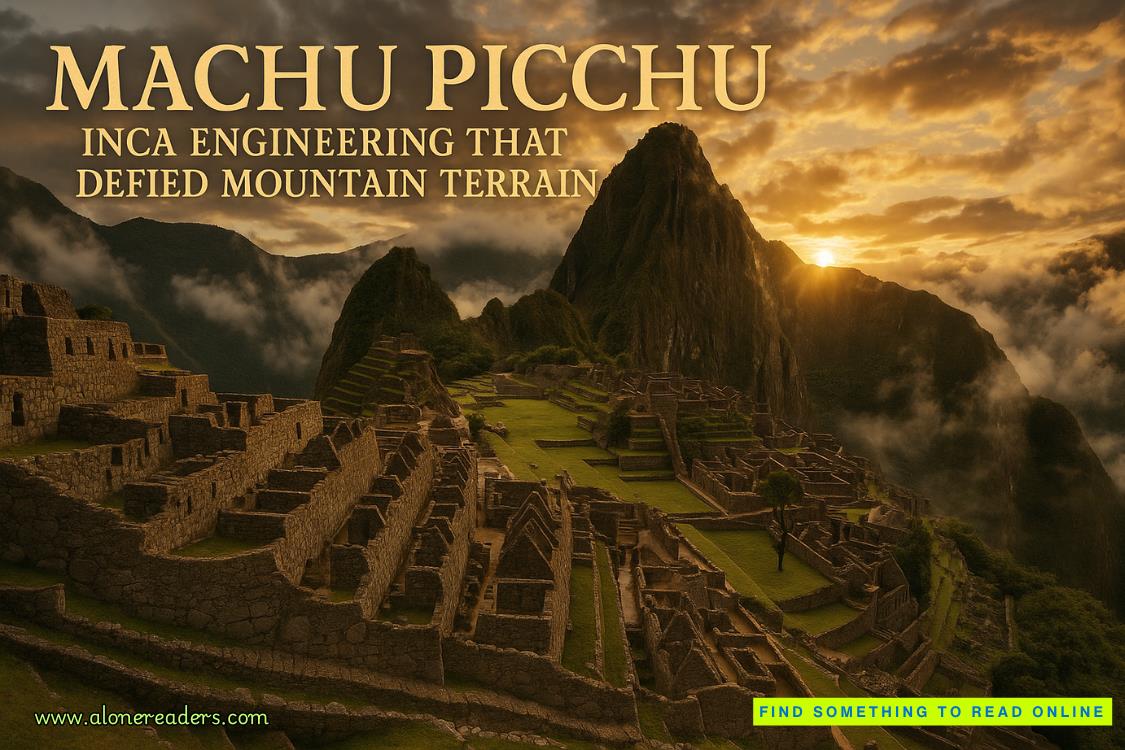
The misty peaks of the Andes cradle one of humanity’s most astonishing achievements: Machu Picchu, the Inca citadel that remains an enduring symbol of engineering genius. Perched approximately 2,430 meters above sea level, this mountain-top city was not merely a settlement—it was a masterclass in adapting to and dominating one of the most unforgiving terrains on Earth. What makes Machu Picchu extraordinary is not just its remote location, but how it was built. The Incas crafted a city that defied steep slopes, earthquakes, heavy rainfall, and limited resources—yet stands today with a resilience that modern architecture often struggles to match.
The Incas had no iron tools, no wheels, and no beasts of burden capable of hauling heavy stones to high altitudes. Despite such limitations, they created a sophisticated city using complex technology and deep environmental knowledge. This was engineering without modern machinery—only intellect, experimentation, and raw human labor. Machu Picchu’s survival across centuries is not accidental—it is the direct result of remarkably advanced planning, resource utilization, and environmental adaptation.
One of the first marvels of Machu Picchu is its terracing system. The Incas faced a brutal slope that threatened landslides, erosion, and structural instability. Instead of fighting the mountain, they reshaped it. Agricultural terraces cascaded down the hillsides like giant steps, each carefully constructed with multiple layers: gravel for drainage, sand for filtration, topsoil for cultivation. These terraces stabilized the earth while producing enough crops to support the population. The design was both agricultural technology and soil engineering, preventing waterlogging while maximizing arable land. Many researchers believe the terraces functioned like a massive retaining wall system, holding the entire city in place against gravity.
The Incas used ashlar masonry, a technique where stones were precisely cut and fitted together without mortar. This method created structures capable of resisting earthquakes—a necessity in such a seismic region. Instead of rigid walls, the stones were designed to move slightly during tremors, allowing the structures to absorb vibrations rather than collapse. Stones were locked together like puzzle pieces, creating earthquake-resistant architecture centuries ahead of modern engineering. Some stones weigh over 50 tons, yet their placement is so precise that even a knife blade cannot pass between them. This level of craftsmanship required extraordinary planning and manpower—but more importantly—it required scientific understanding of materials and movement.
Water management was another defining triumph. On a steep mountain with heavy rainfall, water could be both a lifeline and a threat. The Incas managed it flawlessly. They built a hydraulic engineering system that included stone canals, fountains, drainage channels, and gravity-fed distribution networks. A spring located hundreds of meters away supplied the entire city through a carefully sloped canal system. Every part of Machu Picchu—temples, living quarters, farmland—was served by a reliable and sustainable water source. Excess rainwater was guided through underground drainage layers, preventing flooding or erosion. Modern engineers studying Machu Picchu have found that nearly 60 percent of the city lies below ground in form of drainage foundations, proving that what we see above is only the surface of its engineering brilliance.
Perhaps the greatest achievement was how the Incas created stability without destroying the natural environment. Instead of flattening the mountain, they shaped their city around it, respecting its contours and working with its geological structure. The site was chosen carefully—a natural ridge between two peaks provided both defense and a panoramic field of view. Many of the structures appear to emerge directly from the rock itself, carved from the mountain rather than imposed upon it. This philosophy of integration rather than domination allowed Machu Picchu to endure centuries of rain, erosion, seismic activity, and abandonment.
The Incas also demonstrated an impressive understanding of foundation engineering. Beneath every major building lies a complex base layer composed of crushed stone, sand, and gravel. These materials were chosen intentionally to allow water to pass through and reduce pressure during heavy rainfall. The result was a flexible yet durable foundation—light enough to drain, strong enough to hold stone walls that weighed thousands of kilograms. The strategic positioning of buildings across the site ensured that soil pressure was evenly distributed and that landslides were minimized. In some areas, the foundations are deeper than the walls themselves, revealing the priority placed on long-term stability.
The location of Machu Picchu was also chosen with intelligence. Many believe it was not merely a royal estate but also a research lab for agricultural experimentation. The presence of multiple microclimates enabled the Incas to test various crops and adapt them for wider use in the empire. Some terraces receive different amounts of sunlight, creating “testing zones.” This indicates a deep understanding that food security required scientific exploration as well as engineering agility. In a world without laboratories, the mountains themselves became experimental grounds.
Beyond engineering, Machu Picchu was designed for sustainability and self-sufficiency. The city was divided into functional zones: agricultural, residential, religious, and ceremonial. Housing areas were separated from temple complexes, and the water system ensured prioritization of essential use. Storage rooms were positioned strategically to exploit natural cooling provided by altitude and stone insulation. Even waste disposal was engineered—natural slopes directed waste away from living areas, reducing disease risk. Every decision made by the city’s planners reflects deliberate thinking and anticipation of environmental challenges.
The positioning of doors, windows, and walls suggests astronomical alignment. Many structures are aligned with solstices and equinoxes, and one building—the famous Intihuatana stone—may have functioned as a solar observatory. The Incas studied the sky with precision, not for superstition but for agricultural timing and seasonal prediction. Sunlight angles informed crop cycles, religious festivals, and calendar systems. This combination of engineering, astronomy, and agriculture shows how deeply integrated Inca knowledge systems were—nothing was isolated, and every element served multiple purposes.
What makes Machu Picchu even more extraordinary is that it was not a failure hidden in history—it succeeded and survived. Despite centuries of abandonment after the fall of the Inca Empire, its structures remain remarkably intact, aging more gracefully than many modern buildings. Its terraces still drain water efficiently. Its walls still resist earthquakes. Its steps still climb steep slopes without crumbling. Machu Picchu is not only a site of beauty—it is living evidence that ancient civilizations possessed profound scientific knowledge, applied with innovation and responsibility.
In modern architectural terms, Machu Picchu represents the concept of resilient design—a system built to handle change, stress, and disaster without collapse. Today, as we face climate challenges, erosion, unsustainable construction practices, and seismic threats in many cities across the world, Machu Picchu stands as a silent teacher. It proves that environmentally integrated engineering is not merely ancient wisdom—it is future-ready technology hidden in plain sight.
When we examine its terraces, stone joints, canals, and foundations, we see a civilization that understood that true engineering is not about conquering nature but collaborating with it. This is the difference between survival and collapse. This is why Machu Picchu still stands while many modern structures have already fallen. Its lessons go far beyond tourism. They speak to sustainability, precision, resilience, and humility before the natural world. The Incas were not just builders—they were scientists, architects, geologists, astronomers, ecologists, and philosophers combined into one society.
Machu Picchu: Inca Engineering That Defied Mountain Terrain is not just a title—it is a testament to what the human mind can achieve when intelligence meets respect for nature. High above the clouds, surrounded by silence and stone, the city still whispers its knowledge to those willing to listen. And perhaps its greatest message is this: technology is temporary, but true wisdom endures the test of time.




 The Hundred Days Offensive: How the Allies Defeated Germany in World War I
 The Second Battle of the Marne: The Turning Point of World War I in 1918
 The Spring Offensive of 1918: Germany's Final Gamble to Win World War I
 The Treaty of Brest-Litovsk: How Russia Left World War I
 The Russian Revolution and World War I: How War Brought Down the Tsar
 The Zimmermann Telegram Explained: Germany's Secret Offer to Mexico in World War I