The death of Henry Darnley was not only a shocking royal tragedy but also a defining moment in the political future of Scotland and the fate of Mary Queen of Scots. It united themes of love, betrayal, power, ambition and conspiracy; and centuries later it remains one of the most debated unsolved crimes in British history. The circumstances surrounding his death at Kirk o’Field in Edinburgh in 1567 were so complex that historians still struggle to separate fact from political manipulation. The death of a king consort could have sparked national mourning, but instead it unleashed suspicion, fueled rebellion and ultimately led to Mary’s downfall. Understanding the events that led to his murder reveals not only the fragility of royal power but also the dangerous game of political survival in the 16th century.
Henry Stuart, Lord Darnley, entered Mary Queen of Scots’ life as a handsome and promising nobleman who possessed both royal blood and personal ambition. His lineage made him a contender for influence: he carried Tudor blood through his mother and had claims to both the Scottish and English thrones. For Mary, this marriage initially appeared to be both romantic and strategically beneficial. Yet, his arrogance, immaturity and hunger for authority quickly deteriorated the relationship. Darnley expected more power than she was willing to grant, and his constant demands irritated both the queen and the nobility. Political ambition turned into marital hostility as Darnley began to undermine Mary’s rule, seeking authority as co-sovereign rather than consort. Jealousy, mistrust and manipulation began to dominate the royal household, and soon his presence became a liability rather than an asset.
The breaking point came with the murder of Mary’s trusted secretary, David Rizzio, in 1566. Rizzio was seen by many nobles as an outsider who exerted too much influence over the queen. Darnley, struggling for relevance, joined enemies of the crown and helped orchestrate the brutal assassination of Rizzio in Mary’s presence while she was pregnant. This act irreversibly damaged their marriage and destroyed any sense of loyalty between them. Although Mary initially pretended to forgive him for political stability, her trust was shattered. Rumors began circulating that she considered him dangerous and unstable. The nobility grew equally wary of his erratic decisions and feared the possibility of him asserting control over their interests. From this point forward, Darnley was politically isolated and increasingly vulnerable.
His isolation forced him into a desperate attempt to regain Mary’s favor. In late 1566, he contracted a mysterious illness while in Glasgow. Debate still continues over whether it was syphilis or poisoning, but it left him weak and dependent. Mary, to maintain appearances, arranged for him to be moved to Edinburgh, lodging him at a house near Kirk o’Field rather than in the royal palace. This location would later become crucial evidence in the investigation of his death. She treated him courteously in public, raising hopes that reconciliation might be possible, but privately, the trust between them had disintegrated beyond repair. Many nobles saw him as a threat to their interests, and Mary herself viewed him as a reckless liability capable of destabilizing her reign.
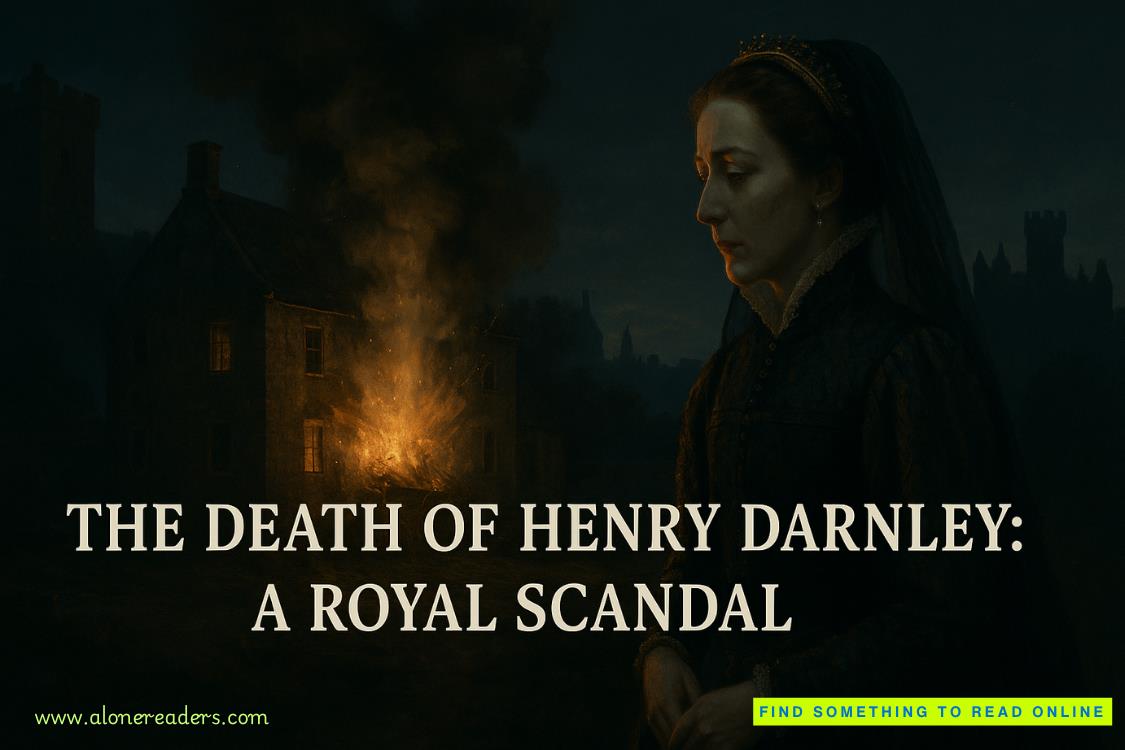
On the night of February 9, 1567, the house where Darnley lodged was destroyed by a violent explosion. What makes the case so mysterious is that Darnley’s body was found outside, not within the wreckage, suggesting he may have attempted to escape or was killed before the explosion. His body showed no signs of blast injuries but appeared to have been strangled or suffocated. This detail instantly turned the incident into a murder investigation rather than an accident. Suspicion spread rapidly, and Scotland was flooded with accusations. The question was not whether he was murdered but rather who stood to benefit the most from his death.
Mary’s political enemies wasted no time in blaming her. However, what remains unclear is whether Mary was truly involved or merely ensnared by political machinations. Her subsequent actions, particularly her swift association with the Earl of Bothwell—who was widely suspected of orchestrating the plot—worsened her reputation. Bothwell was openly ambitious, and his marriage to Mary, only months after Darnley’s death, fueled public outrage. Whether this relationship began before or after Darnley’s death remains debated, but the timing raised suspicions of collusion. Many nobles believed that Bothwell wanted to eliminate Darnley to rise in power and that Mary either supported the plan or turned a blind eye. The marriage united them politically but divided the realm, leading to widespread rebellion against the queen.
The fallout from Darnley’s death was swift and brutal. The Scottish nobility rebelled against Mary, accusing her of complicity and threatening the stability of the monarchy. They forced her to abdicate in favor of her infant son, James VI. She was imprisoned, then escaped, but failed to regain control. Ultimately, she fled to England seeking protection from her cousin, Elizabeth I, unaware that this move would seal her fate. Instead of receiving support, she was placed under house arrest for nearly two decades. Suspicion followed Mary everywhere, and Elizabeth used her presence as a political tool against Catholic factions. Mary never regained her throne, and Darnley’s death remained a permanent stain on her legacy.
In many ways, the murder of Henry Darnley was more than just a criminal act; it was a political turning point. It shifted Scotland’s monarchy, introduced an era of instability and paved the way for James VI to eventually unite Scotland and England under one crown. For Mary, it marked the beginning of her downfall and the transformation of her image from monarch to captive. Her subsequent execution in 1587 ended her life but not the controversy surrounding her involvement in Darnley’s death. Whether she was guilty, naïve or manipulated by powerful nobles remains unclear. What is certain is that her decisions following his death allowed her enemies to shape the narrative of her guilt more effectively than any court could.
The death of Henry Darnley remains unsolved, not because evidence is lacking but because political agendas obscured every layer of truth. Each faction shaped the narrative to benefit its interests, creating conflicting accounts that historians still struggle to untangle. Darnley’s ambition made him enemies, but his marriage to Mary made him a target. His assassination combined personal vengeance with political strategy, and his death was a calculated act rather than an impulsive one. The explosion at Kirk o’Field was not merely a cover-up—it was a dramatic spectacle intended to make a statement to the kingdom: power could shift at any moment, even in royal chambers.
The legacy of this royal scandal continues to intrigue historians, writers and filmmakers because it embodies the core elements of historical drama—betrayal, ambition and the consequences of power. Mary Queen of Scots and Henry Darnley were not simply spouses; they were symbols of political opportunity and danger. Their story speaks to the fragility of monarchy and the unpredictable nature of loyalty. The house at Kirk o’Field no longer stands, yet the questions about that night continue to echo across time. Was Darnley the victim of a political conspiracy? Did Mary participate, or was she used as a scapegoat? These questions remain unanswered, and perhaps that uncertainty is what keeps the story alive. The death of Henry Darnley was not just the end of a man—it was a turning point in British history, a moment where personal relationships intersected dangerously with political survival.



 The Hundred Days Offensive: How the Allies Defeated Germany in World War I
 The Second Battle of the Marne: The Turning Point of World War I in 1918
 The Spring Offensive of 1918: Germany's Final Gamble to Win World War I
 The Treaty of Brest-Litovsk: How Russia Left World War I
 The Russian Revolution and World War I: How War Brought Down the Tsar
 The Zimmermann Telegram Explained: Germany's Secret Offer to Mexico in World War I