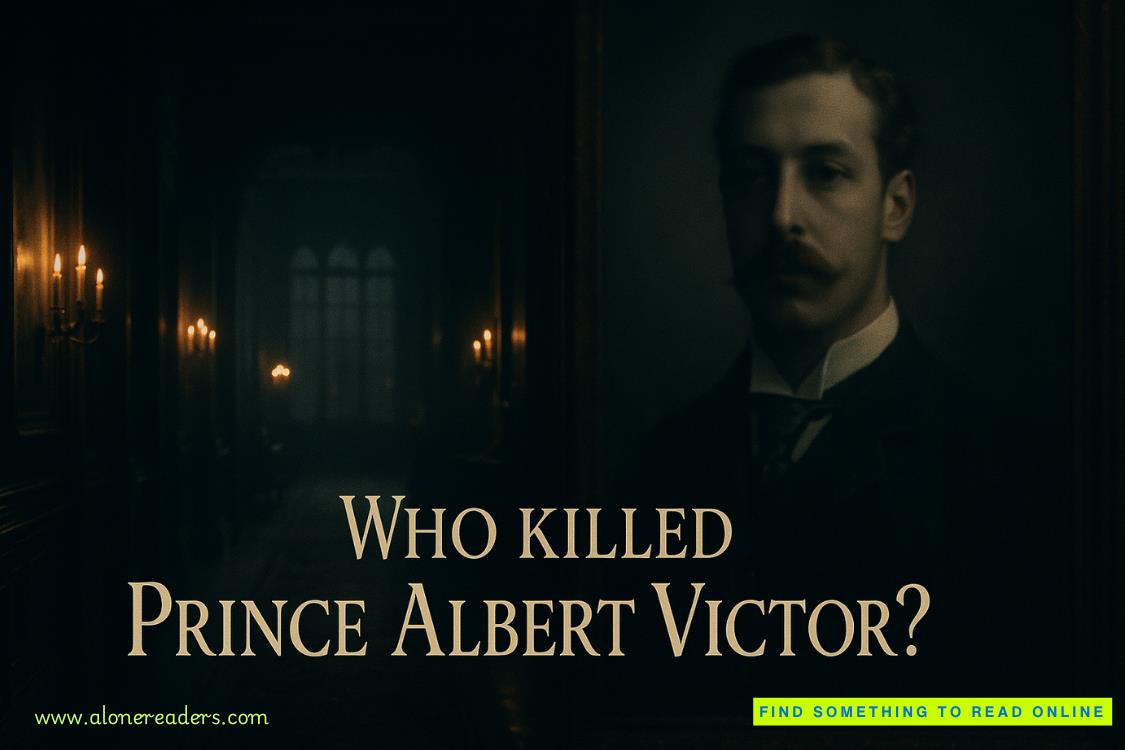
Prince Albert Victor, Duke of Clarence and Avondale, was born into the highest tier of British royalty. As the eldest son of the future King Edward VII and the grandson of Queen Victoria, he stood second in line to the British throne. His sudden death in 1892, reportedly from influenza, ended a life filled with controversy, speculation, and enduring mystery. The question “Who killed Prince Albert Victor?” has circulated for more than a century, not always implying murder—but pointing to the possibility that his death might not have been as simple or natural as official records claimed. Understanding his death requires looking beyond headlines and examining the circumstances surrounding his troubled life, medical condition, and potential involvement in one of Britain’s most notorious criminal investigations.
Prince Albert Victor was never known for intellectual brilliance or political aptitude. Private letters written by tutors and family members often described him as pleasant but unremarkable, lacking clear direction. This naturally raised concerns within the royal family about his suitability to rule. Throughout his adolescence, he struggled with identity, purpose, and health. Despite his position, he never appeared comfortable in it. He was often sickly, withdrawn, and overshadowed by his more capable younger brother, George—who would eventually ascend the throne as King George V. This background matters because his health was not simply an issue of genetics—it may have played a crucial role in his death, and may have influenced decisions made by those around him about his future.
One of the turning points in Albert Victor’s life was his alleged connection to the Cleveland Street Scandal of 1889. This scandal involved a clandestine male brothel in London, and several aristocrats were rumored to be among its clientele. Although the prince was never officially charged or publicly named, private whispers circulated rapidly through political circles. The government allegedly intervened to protect him, and evidence may have been suppressed to avoid destroying the monarchy’s reputation. Whether he actively participated or was a victim of rumor remains unclear—but the scandal left a stain on his image. Some historians have suggested that if a true investigation had taken place, his suitability for the throne would have been permanently destroyed. In this context, his untimely death—occurring just three years after the scandal—appears far more than an unfortunate coincidence.
Prince Albert Victor became engaged to Princess Mary of Teck in late 1891. This engagement was perceived as an attempt to stabilize his reputation and restore public confidence. Yet only weeks after the engagement, he reportedly fell ill with influenza during the winter epidemic of 1892. At 28 years old, he died at Sandringham House. The official cause of death was declared pneumonia resulting from influenza, and his passing was treated as a tragic case of poor health and misfortune during a nationwide epidemic. But doubts soon emerged. Why was a high-ranking royal unable to receive the best medical treatment available? Why were certain details about his final days kept private? Why was access to his medical records restricted long after his death?
The key theory surrounding his death is that he simply succumbed to influenza, as many others did during the severe epidemic sweeping Britain that year. However, others argue that his health had already been declining due to undisclosed medical issues. Some sources point to syphilis or tuberculosis—both taboo illnesses in royal circles. Treatment for such conditions was unreliable in the late 19th century, and public discovery would have been catastrophic for the monarchy. If a debilitating illness was present, it might have influenced the royal family’s decision regarding his future—and may even have shaped how his death was handled.
Another darker theory suggests that Prince Albert Victor was quietly eliminated due to scandal, blackmail, or political risk. As second in line to the throne, any proven wrongdoing or moral failing would have shaken public confidence in the British monarchy—possibly destabilizing the nation’s political structure. Some speculate that his death, though officially natural, may have been orchestrated to remove him from succession gently and permanently. Supporters of this theory highlight that after his death, national mourning was widely publicized while personal documents, letters, and medical evidence were controlled and selectively archived. His brother George immediately became a more acceptable heir—disciplined, sober, and respected. The line of succession immediately strengthened, and scandal quickly subsided.
Some researchers have speculated—though with no definitive evidence—that Prince Albert Victor was linked to the Jack the Ripper murders. These theories often revolve around his presence in London during the period of the killings or his alleged relationships with individuals connected to the victims. However, professional historians generally reject this theory as sensationalist. Still, the fact that it exists—and continues to be discussed—proves that his life left enough questions unanswered to make speculation irresistible. The Jack the Ripper theory may not be credible, but it cements Albert Victor’s status as one of the most mysterious figures in British royal history.
The royal family’s behavior after his death also raises questions. Princess Mary of Teck, who was engaged to him, later married his brother George and became Queen Mary. This rapid shift suggests that the royal family prioritized stability over romance, shaping the monarchy’s future with calculated precision. Over time, public discussion about Albert Victor faded, and history gradually turned its focus to King George V. The royal archives kept many of Albert Victor’s documents sealed, and certain medical records remain confidential. This secrecy may not prove foul play—but it certainly invites speculation.
In evaluating the question “Who killed Prince Albert Victor?”, one must accept that the answer may not involve a single person. Perhaps no one actively killed him. Perhaps illness truly was the cause. Yet one could reasonably argue that his life was shaped—and possibly shortened—by the pressures of duty, the burden of scandal, and the fear of disgrace. If the royal family did intervene, it may have been to preserve the monarchy at a time when its position was vulnerable. In the strict world of 19th-century politics, the death of one man—even a prince—could prevent the collapse of an entire institution.
Today, Prince Albert Victor remains one of the great “what-if” figures of British history. Would he have ruled successfully? Would scandal have destroyed the monarchy under his reign? Would history have remembered him differently if he had lived longer? The mystery of his death endures because it lies at the intersection of illness, monarchy, morality, and power. Whether he died of influenza or was quietly removed from the line of succession, his legacy shaped the future of the British crown. In that sense, his death may not have been an assassination—but it might have been a deliberate turning point in royal strategy.
It is possible that no single person killed Prince Albert Victor. Instead, his downfall may have been the result of accumulated pressures—medical, political, and moral—that shaped the course of his life and ultimately determined its end. His death remains unsolved not because evidence is missing, but because the true cause might lie beyond medicine or conspiracy. It may simply lie in the silent machinery of royal survival, where decisions are made not for individuals—but for history itself.



 The Hundred Days Offensive: How the Allies Defeated Germany in World War I
 The Second Battle of the Marne: The Turning Point of World War I in 1918
 The Spring Offensive of 1918: Germany's Final Gamble to Win World War I
 The Treaty of Brest-Litovsk: How Russia Left World War I
 The Russian Revolution and World War I: How War Brought Down the Tsar
 The Zimmermann Telegram Explained: Germany's Secret Offer to Mexico in World War I