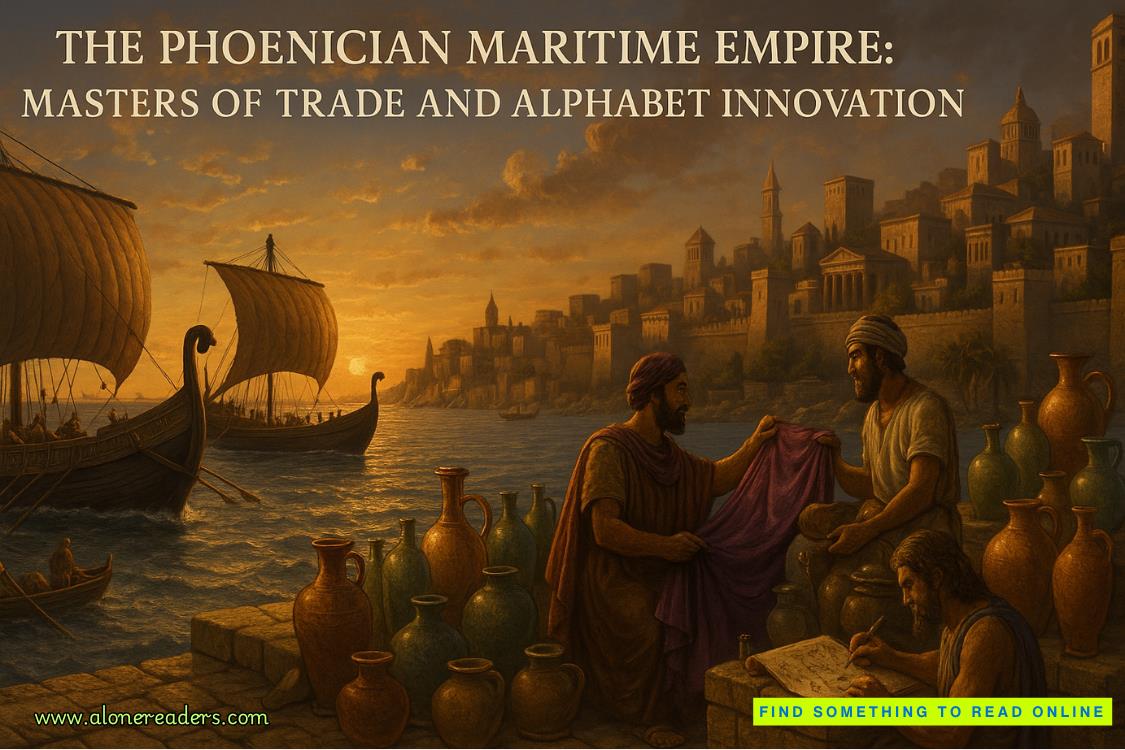
The Phoenician Maritime Empire was not a centralized kingdom, nor a colossal military force like Egypt or Rome, but rather an interconnected network of coastal city-states whose influence spread across the Mediterranean through trade, navigation, and cultural transmission. Often overshadowed in mainstream history, the Phoenicians were the silent architects of economic connectivity, bridging civilizations in a way few ancient societies had ever achieved. They were pioneers of maritime commerce, the inventors of the world’s first practical alphabet, and expert shipbuilders whose designs shaped naval engineering for centuries. Understanding the Phoenicians is key to understanding how ancient societies were connected long before globalization became a modern concept.
The heart of the Phoenician world lay in modern-day Lebanon, where powerful cities such as Tyre, Sidon, Byblos, and later Carthage dominated coastal trade. Each city-state operated independently, ruled by its own elite merchant dynasties. Their geography shaped their destiny: with narrow strips of land between mountains and the sea, agriculture was limited but maritime opportunities were abundant. Instead of competing with land empires, they learned to navigate the sea as their domain, transforming it into a commercial highway of cultural exchange. Their ships carried not only goods but ideas, technologies, and languages—allowing them to influence civilizations far beyond their borders.
At the core of Phoenician power was trade specialization. They mastered the production of Tyrian purple dye, an extraordinarily expensive color extracted from the murex sea snail. This dye became a symbol of royalty and authority, worn exclusively by kings and emperors across ancient empires. The Phoenicians also produced advanced glassware, fine craftsmanship, timber from the Lebanese cedar forests, high-value bronze goods, pottery, and jewelry. Their craftsmen were highly respected, often sought after by foreign rulers. Instead of waging war, the Phoenicians made themselves indispensable, creating an economic dependency so strong that empires tolerated—and even protected—their trading routes.
Their maritime skills were unmatched. They were the first true blue-water sailors, venturing beyond the sight of land and mapping coastlines using the North Star for navigation. Their ships—especially the gaulos merchant vessels and the bireme warship—were technological marvels that influenced Greek and Roman ship design. Historical evidence suggests Phoenician sailors possibly circumnavigated Africa centuries before the Portuguese, a remarkable achievement for ancient maritime exploration. They built trade ports, warehouses, lookout posts, and colonies across the Mediterranean, including in Cyprus, Sardinia, Malta, Sicily, Spain, and North Africa, laying the foundation for international commerce. Their colonies were rarely military in nature—most were commercial stations meant to secure trade flows and local alliances.
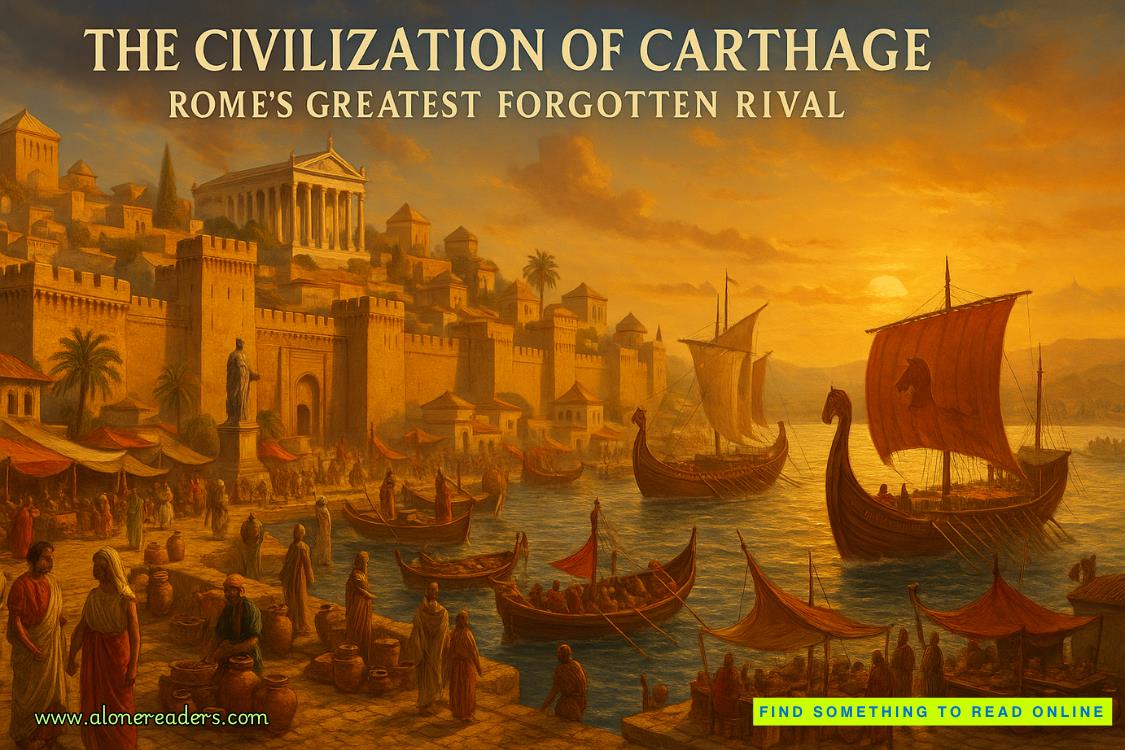
Among their colonies, Carthage in modern Tunisia became the crown jewel. Founded by settlers from Tyre, Carthage evolved into a powerful maritime empire of its own, eventually rivaling Rome in power and wealth. It dominated trade in the western Mediterranean and maintained strong diplomatic and economic ties with other Phoenician cities. It was a symbol of how Phoenician culture could adapt, survive, and evolve independently when transplanted abroad. Carthage even developed its own warships and tactics, becoming a geopolitical force that challenged Rome in the Punic Wars, leaving a deep imprint on Mediterranean history.
However, the most revolutionary Phoenician contribution to humanity was the creation of a practical, phonetic alphabet. Earlier writing systems like Egyptian hieroglyphs and Mesopotamian cuneiform were complex and difficult to learn. The Phoenicians simplified writing into 22 symbols representing sounds, rather than entire words or syllables. This alphabetic breakthrough allowed traders, scribes, and even common citizens to record transactions quickly, send messages, and communicate across cultures. The alphabet was later adopted and adapted by the Greeks and Romans, ultimately becoming the foundation of modern-day writing systems, including English. This innovation was not merely linguistic—it was a catalyst for literacy, administration, trade, and intellectual development across civilizations. The Phoenicians gave the world a system of writing that democratized communication, making it the backbone of modern education, governance, and documentation.
The Phoenicians operated differently from most empires—they preferred economic influence over political domination. Their strength lay in their fluid identities, seamlessly adapting to different cultural environments. They traded with Egyptians, cooperated with Assyrians, sold timber to Israelites for temple construction, and exchanged goods with Greeks. In each region, they adapted to local cultures while preserving their own identity. They did not try to impose their worldview on others; instead, they built networks of mutual benefit, ensuring they remained vital to every society they encountered. This strategic flexibility made them resilient, allowing their influence to persist even when some city-states fell.
Religiously, they worshipped a pantheon led by Baal, Melqart, Astarte, and Eshmun. Their temples were often built near the coast to bless voyages and trade expeditions. Religious offerings were tied to commercial activities, reflecting how deeply economic survival was linked to maritime success. Spiritual rituals were frequently performed before long-distance voyages, underscoring sailors’ dependence on divine protection. Their deities were also adapted across regions—Melqart, for instance, became associated with Hercules in Greek culture, showing how the Phoenicians could culturally integrate their beliefs into foreign lands.
Ultimately, the Phoenicians declined due to external pressures. Assyrians and Babylonians invaded their coastal cities, forcing them to accept political submission and pay tribute. Over time, internal divisions weakened them, as each city-state prioritized its own wealth rather than collective defense. The rise of Greek naval power and later Roman expansion gradually diminished their autonomy. Carthage, their strongest colony, became the last major Phoenician power—until Rome destroyed it following the Punic Wars. Yet even after physical destruction, their linguistic, economic, and nautical legacy endured. Roman trade routes mirrored those of the Phoenicians, their ship designs influenced future maritime engineering, and their alphabet became the foundation of Western literacy.
The Phoenicians remind us that civilization does not always advance through conquest. Sometimes, it progresses through ideas, technologies, and connectivity. They were architects of maritime commerce, inventors of modern writing, and bridges between distant cultures long before the world was globalized. Their history proves that influence is not simply measured by armies or conquests—it can be measured by the long-lasting impact of innovation, communication, and adaptability. The Phoenicians may have faded from political history, but they live on in every written word we use today, in every maritime route Europeans later explored, and in the concept of international trade that drives modern economies.
In recognizing the Phoenicians, we rediscover a civilization that shaped the world not through dominance but through ingenuity and connectivity. Their ships carried more than cargo—they carried the seeds of global interaction, and their alphabet carried the power of recorded thought, marking them as one of the most influential yet forgotten civilizations of human history.
Their story is a reminder that sometimes, the most powerful legacies are those engraved not on stone monuments—but in the evolution of language, trade, and human connection.



 The Hundred Days Offensive: How the Allies Defeated Germany in World War I
 The Second Battle of the Marne: The Turning Point of World War I in 1918
 The Spring Offensive of 1918: Germany's Final Gamble to Win World War I
 The Treaty of Brest-Litovsk: How Russia Left World War I
 The Russian Revolution and World War I: How War Brought Down the Tsar
 The Zimmermann Telegram Explained: Germany's Secret Offer to Mexico in World War I