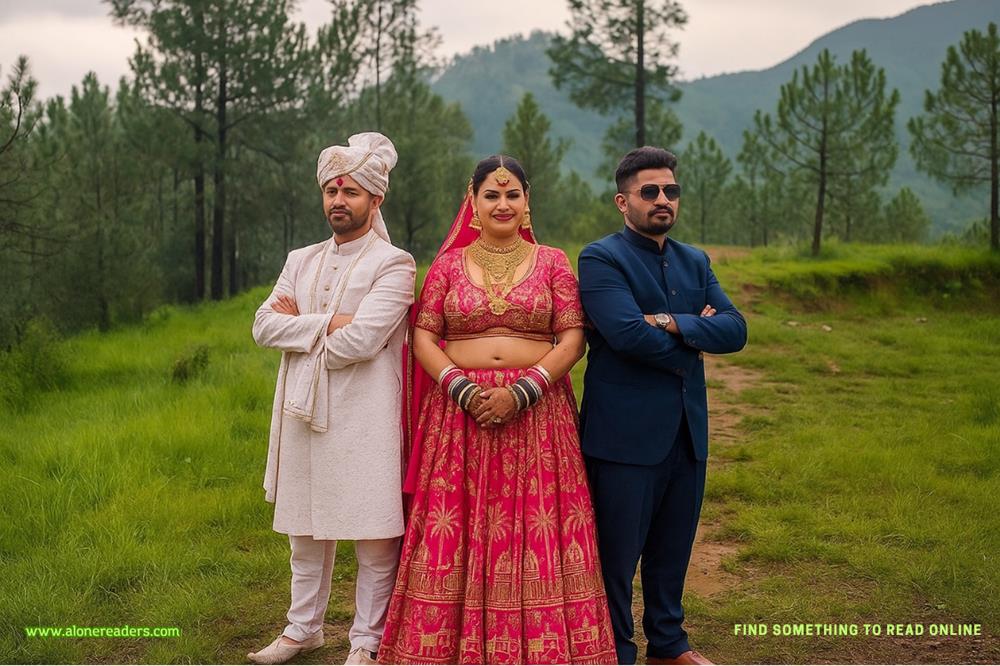
In a remote village in Himachal Pradesh’s Shillai area, two brothers, Pradeep Negi and Kapil Negi, married the same woman, Sunita Chauhan, in a ceremony that lasted three days. The wedding, held in Sirmaur district’s Trans-Giri region from July 12, sparked intense discussion across India—both on social media and in mainstream news outlets. While many criticized the marriage, the brothers have stood their ground, insisting that their union is part of the centuries-old Joridaar tradition practiced by their Hatti community.
The Joridaar custom allows a woman to marry more than one brother within the same family. Deeply rooted in the history of the Hatti tribe, this form of polyandry is not an act of rebellion against modern norms but rather a deliberate continuation of an age-old cultural practice. The tradition is also observed in neighboring regions, such as Uttarakhand’s Jaunsar-Bawar area.
In these weddings, both grooms exchange garlands with the same bride, symbolizing equal marital bonds. According to the community’s unwritten rules, the elder brother is considered the legal father of any children born from the marriage, ensuring a streamlined inheritance structure.
Polyandry in the Hatti community has long been tied to the preservation of family land. In mountainous agricultural societies, dividing farmland among heirs can make it economically unviable. By sharing one wife, brothers maintain the land as a single inheritance, preventing fragmentation and sustaining the family’s livelihood.
Beyond economics, the tradition is seen as a way to strengthen family unity. All parties—husbands, wife, and extended family—share the responsibilities of household and agricultural work.
In a Facebook video, Pradeep Negi addressed the wave of public criticism, stating:
“In the Hatti community, this tradition has existed for generations and will continue. Social media insults don’t affect me.”
Kapil Negi reinforced that their marriage was completely consensual:
“We married out of choice, with the consent of both families. There was no pressure.”
The brothers stressed that they have no desire for fame and no hidden agenda behind the marriage. Their primary motivation, they said, was love, unity, and cultural preservation.
The marriage celebrations reflected the rich cultural heritage of the region. Over three days, guests enjoyed folk dances, traditional Himachali music, and village feasts. The event was not merely a family occasion but a communal gathering where the community actively participated—signifying their acceptance and support of the marriage.
Both brothers admitted that their family’s financial situation influenced the decision. They own very little land, and sharing a wife helps avoid economic strain while keeping family assets intact. However, they emphasized that the choice was rooted in tradition rather than necessity alone.
Pradeep said:
“People who do not understand our customs are quick to judge. But our family and our community support us. That’s what matters.”
Polyandry is rare in modern India, but it is not entirely absent. While there is no blanket legal recognition for such marriages under Indian law, customary practices often continue in certain rural or tribal areas. Authorities tend to avoid interference when these unions are entered into consensually and have community approval.
In the case of the Joridaar tradition, community norms take precedence over formal legal structures. Disputes, if any, are usually resolved internally by community elders.
The Hatti tribe, recognized for its distinct cultural identity, recently gained Scheduled Tribe status in Himachal Pradesh, giving them certain constitutional protections. With modernization and migration affecting rural communities, practices like Joridaar marriage are declining, but the Negi brothers’ wedding is a rare reaffirmation of this heritage.
Older generations in the Hatti community see such marriages as a way to maintain social cohesion and economic stability. For them, this is not a controversial act but a respected cultural choice.
Social media reactions have been sharply divided. Some see the wedding as regressive and incompatible with modern gender norms, while others defend it as an expression of cultural freedom. Critics often focus on the perceived inequality or moral implications, while supporters argue that consent and cultural preservation make the practice legitimate.
For the Negi brothers and Sunita, the opinions of strangers carry little weight. As Pradeep put it, “We are happy, and that is what matters.”
While the Joridaar tradition continues in pockets of Himachal Pradesh and Uttarakhand, its future is uncertain. Younger generations, exposed to urban lifestyles and different cultural influences, may be less inclined to follow such customs. Legal complexities and changing social attitudes could further diminish the practice.
However, the Negi brothers’ wedding has reignited discussion about the relevance of ancient traditions in a modern India—especially in communities where such practices are not just symbolic but also serve practical social and economic purposes.
This marriage between two brothers and one bride is more than just a headline-grabbing story—it is a window into a living tradition that challenges conventional ideas about marriage, love, and family. For the Hatti community, it remains a proud cultural statement. For the rest of India, it is a reminder that diversity in relationships extends far beyond the boundaries of urban norms.



 Top 10 Highest-Paid Professions in the United States (2025): Salaries, Roles, and Career Paths
 Top 10 Largest U.S. Companies by Revenue in 2025 (Fortune 500 Analysis)
 Top 10 Highest-Earning Global Tech Companies in 2025: Revenue, Strategy, and Market Power
 Top 10 Highest-Earning Mobile Apps in 2025: Revenue, Monetization, and Market Dominance
 ZombieAgent: Inside the Zero-Click AI Attack That Turns ChatGPT Agents into Persistent Data-Leaking Zombies
 China’s Urban Air Is a Hidden Plastic Reservoir: Inside the Microplastic Clouds Over Megacities