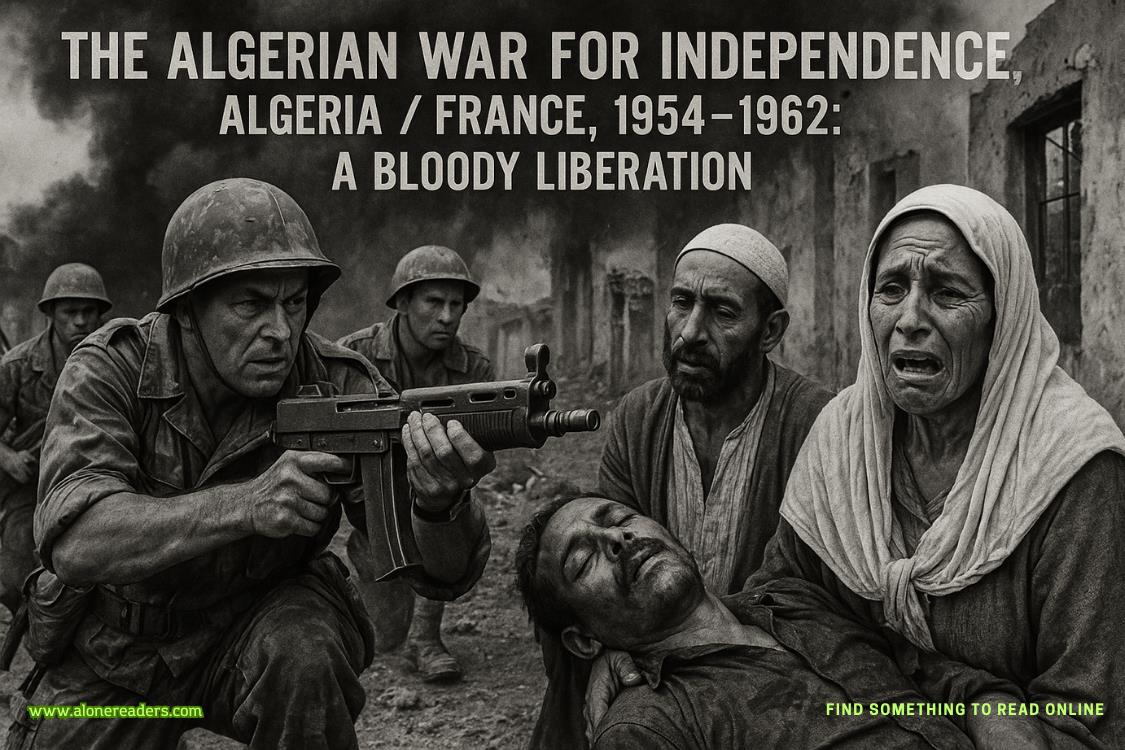
The Algerian War for Independence, fought from 1954 to 1962, was one of the most brutal and transformative anti-colonial wars of the twentieth century. It was a conflict not only for sovereignty but also for identity, culture, and dignity. At its heart was the struggle of the Algerian people, led by the National Liberation Front (Front de Libération Nationale, FLN), to break free from more than a century of French colonial rule. The war, marked by guerrilla warfare, terrorism, torture, and mass reprisals, reshaped both Algeria and France, leaving deep scars that persist to this day.
The roots of the conflict stretched back to 1830 when France invaded and annexed Algeria, turning it into an integral part of its national territory rather than a simple colony. Over the decades, settlers known as pieds-noirs established themselves as the dominant political and economic class, benefiting from fertile land, urban privileges, and the full rights of French citizens. Meanwhile, the indigenous Muslim Algerian population—making up the vast majority—was subjected to systemic discrimination, denied equal political representation, and left in poverty. These inequalities bred resentment that simmered for generations, eventually erupting into open revolt.
By the mid-twentieth century, the winds of decolonization were sweeping across Africa and Asia. Inspired by other independence movements and emboldened by the weakening of European colonial powers after World War II, Algerian nationalists saw their chance. On November 1, 1954, the FLN launched coordinated attacks across the country, targeting police posts, military installations, and colonial infrastructure. Known as Toussaint Rouge (“Red All Saints’ Day”), these attacks signaled the beginning of the war. France responded with overwhelming military force, deploying hundreds of thousands of soldiers to crush the insurgency.
The war quickly devolved into a cycle of violence and reprisals. The FLN adopted guerrilla tactics, operating from rural strongholds in the mountains and crossing into neighboring Tunisia and Morocco for sanctuary. In urban areas, the Battle of Algiers (1956–1957) became infamous for its street-level bombings, assassinations, and the ruthless counterinsurgency methods employed by French paratroopers. Torture became a widespread tool of interrogation, while collective punishments, curfews, and mass arrests turned Algerian cities into tense war zones. The French government insisted that Algeria was part of France and could not be given independence, framing the conflict as a fight against terrorism rather than a colonial war.
International opinion, however, began to shift in favor of the Algerian cause. Reports of French military atrocities, combined with the growing moral weight of anti-colonial sentiment worldwide, pressured France diplomatically. The FLN skillfully used propaganda and diplomacy to rally support from newly independent nations and the United Nations. At the same time, the war deeply divided French society. The pieds-noirs and many in the French military saw withdrawal as a betrayal, while others—including a rising tide of intellectuals and politicians—argued that the war was morally indefensible and politically unsustainable.
The political crisis reached its peak in 1958 when the Fourth French Republic collapsed, leading to the return of Charles de Gaulle to power. Initially ambiguous about Algeria’s future, de Gaulle eventually recognized that continued war would only bleed France without resolving the conflict. Yet, as peace negotiations began, extremist factions like the Organisation armée secrète (OAS) emerged, determined to keep Algeria French through terror attacks and assassinations, even targeting de Gaulle himself. The war’s brutality intensified in its final years, with massacres, bombings, and retaliatory killings committed by both sides.
On March 18, 1962, the Evian Accords were signed, formally ending the war and granting Algeria independence after a referendum in which the vast majority voted in favor. But the transition was far from peaceful. Hundreds of thousands of pieds-noirs fled to France, abandoning homes and businesses, while pro-French Algerians, known as harkis, faced violent reprisals from the FLN and its supporters. By the war’s end, the human cost was staggering: estimates suggest between 300,000 and 500,000 Algerians were killed, alongside tens of thousands of French soldiers and civilians. The psychological trauma, displacement, and destruction left deep wounds that would haunt both nations.
For Algeria, independence was the culmination of a long-suppressed national aspiration, but it came at the price of immense suffering. The new nation embarked on the challenging task of nation-building, confronting political instability, economic hardship, and the need to forge unity from a population divided by war. For France, the loss of Algeria marked the end of an era—both the collapse of its colonial empire in North Africa and a painful reckoning with the violence it had committed in the name of maintaining control. The war also left a lasting impact on French politics, society, and military doctrine, influencing debates over human rights, counterinsurgency tactics, and immigration.
Today, the Algerian War for Independence remains a defining chapter in the histories of both Algeria and France. In Algeria, it is celebrated as a heroic liberation struggle, central to national identity. In France, it is remembered more ambivalently, a source of political controversy and moral reflection. The legacy of the war still echoes in the diplomatic relationship between the two countries, in the experiences of Algerian immigrants and their descendants in France, and in the enduring debates over colonialism, memory, and justice.
The story of the Algerian War for Independence is not simply one of battlefield victories and political treaties. It is the story of an oppressed people’s determination to reclaim their land, dignity, and future—no matter the cost. It is also a reminder of the devastating human consequences of colonialism and the bloody path that so often accompanies the quest for freedom. Though more than six decades have passed since Algeria won its independence, the lessons of this war remain deeply relevant in understanding the struggles for liberation, the ethics of resistance, and the enduring scars of empire.



 Top 10 Highest-Paid Professions in the United States (2025): Salaries, Roles, and Career Paths
 Top 10 Largest U.S. Companies by Revenue in 2025 (Fortune 500 Analysis)
 Top 10 Highest-Earning Global Tech Companies in 2025: Revenue, Strategy, and Market Power
 Top 10 Highest-Earning Mobile Apps in 2025: Revenue, Monetization, and Market Dominance
 ZombieAgent: Inside the Zero-Click AI Attack That Turns ChatGPT Agents into Persistent Data-Leaking Zombies
 China’s Urban Air Is a Hidden Plastic Reservoir: Inside the Microplastic Clouds Over Megacities










