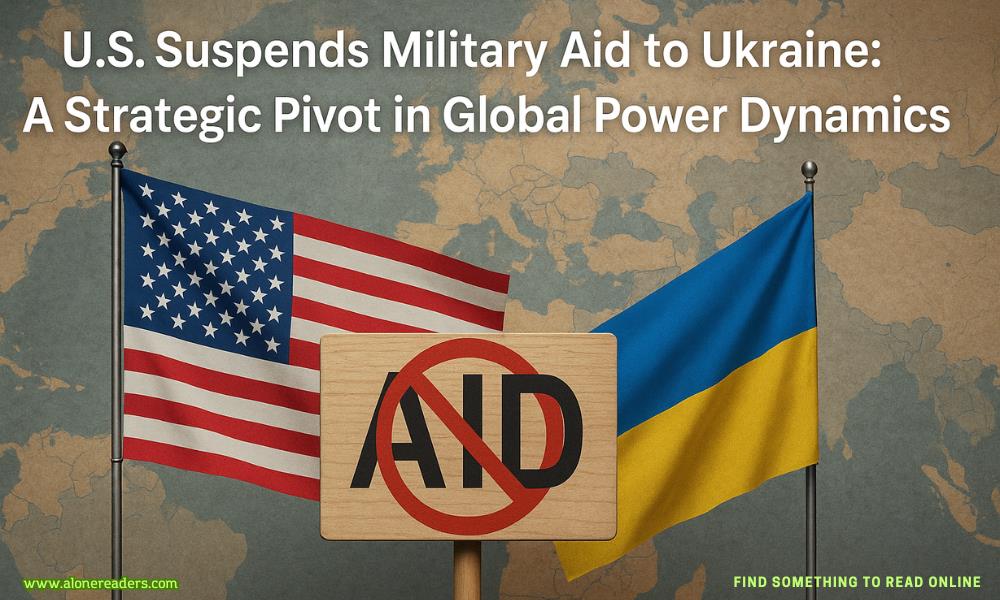
The United States' recent decision to suspend military aid to Ukraine has sent ripples through international diplomatic and defense communities. After more than two years of robust financial and military support, the abrupt halt raises significant questions about Washington’s long-term strategic objectives, the future of the Ukraine-Russia war, and the broader balance of power on the global stage. As speculation mounts over whether this move marks a tactical recalibration or a deeper policy reversal, many are analyzing the underlying motivations and the potential consequences this suspension could have.
The military aid program for Ukraine has been one of the most expansive foreign assistance efforts in recent U.S. history. Since Russia's full-scale invasion of Ukraine in February 2022, the United States has funneled more than $75 billion in aid to Kyiv, including advanced weapons systems such as HIMARS rocket launchers, Patriot missile systems, Abrams tanks, and an extensive supply of ammunition and training resources. This aid was not only crucial to Ukraine’s defense efforts but also symbolized the West’s collective stand against authoritarian aggression. The suspension of this aid now appears to undermine that narrative, at least temporarily.
The official reasons for the suspension vary depending on the source. Within Washington, some argue the decision is primarily budgetary. With increasing pressure from congressional Republicans and factions within the Democratic Party to reduce spending and redirect funds toward domestic priorities, foreign aid—especially military assistance—has become a point of contention. Critics of the Ukraine aid package cite ballooning U.S. debt, rising inflation, and a growing skepticism among constituents about America’s endless foreign engagements. Some lawmakers have demanded clearer accountability for how the money has been used and whether it is producing tangible results.
However, the issue seems to run deeper than fiscal constraints. Strategists suggest the Biden administration may be reassessing its global military commitments in light of emerging conflicts in other parts of the world. The crisis in the Middle East, particularly escalating tensions between Israel and Iran, has diverted attention and resources. Simultaneously, rising concerns about Chinese ambitions in the Indo-Pacific—especially around Taiwan—are pushing U.S. policymakers to reallocate military assets and strategic focus. From this perspective, the suspension of aid to Ukraine is not an abandonment, but a recalibration of priorities to prevent overextension.
International reactions have been swift and sharply divided. European allies, particularly those bordering Russia or historically dependent on U.S. security guarantees, have expressed concern. Ukraine’s President Volodymyr Zelenskyy has repeatedly warned that any reduction in U.S. support could embolden Moscow and destabilize the fragile equilibrium on the front lines. NATO officials worry that a pause in support, however temporary, could send the wrong message to Russian President Vladimir Putin, potentially encouraging further aggression or a renewed offensive. The timing is especially sensitive, as Ukraine braces for another harsh winter and struggles to recover territory in the south and east.
On the other hand, some European leaders argue this may be a necessary wake-up call for the EU to take greater responsibility for regional security. German and French officials have hinted that the continent must wean itself off dependency on Washington and begin investing more heavily in its own defense capabilities. The idea of a more self-sufficient Europe has long been discussed, but progress has been uneven. If U.S. aid remains suspended or significantly reduced, it could catalyze meaningful change in Europe’s defense architecture.
In Moscow, the news of the aid suspension was predictably welcomed. Russian state media portrayed it as evidence of waning Western unity and fatigue. Kremlin spokespersons have claimed that the Western alliance is fracturing under the weight of its own contradictions and that the tide of war is slowly turning in Russia’s favor. While these proclamations are largely propagandistic, they do underscore the psychological warfare aspect of the conflict. For Russia, even the perception of diminished U.S. resolve can be a strategic advantage, both on the battlefield and in diplomatic arenas.
Domestically, the suspension has intensified political polarization in the United States. President Biden finds himself caught between supporting a war that has become increasingly unpopular with some voter blocs and preserving America’s image as a reliable global leader. With the 2024 presidential election on the horizon, decisions regarding Ukraine carry enormous political weight. Former President Donald Trump and several Republican contenders have criticized the scale of U.S. involvement in Ukraine, arguing that the war is a distraction from more pressing domestic issues. Some have even floated the idea of pressuring Ukraine into negotiations with Russia, a stance that remains controversial and largely unpopular among bipartisan foreign policy experts.
Public opinion in the U.S. also appears to be shifting. Initial enthusiasm for aiding Ukraine has given way to growing skepticism. A recent survey indicated that while a majority still supports Ukraine, fewer Americans believe that the aid is making a decisive difference. As inflation and economic challenges persist, voters are asking tough questions about national priorities. Media coverage of Ukrainian corruption allegations and reports of misused aid have added fuel to the fire, even though such instances are often exaggerated or taken out of context.
Despite these challenges, some analysts believe the suspension of aid is not a permanent shift but a pause to reassess. There are calls within the Pentagon and the State Department to streamline aid mechanisms, ensure more transparent oversight, and redefine the objectives of U.S. involvement. Rather than offering unconditional support, Washington may now prefer a model that emphasizes accountability, sustainability, and a clearer path to conflict resolution. This would allow the U.S. to maintain influence while addressing concerns from both sides of the political aisle.
Still, the risk of miscalculation looms large. If Ukraine’s defensive capabilities are significantly weakened during this pause, Russia may attempt to exploit the gap with intensified military actions. Moreover, other adversaries—like China, North Korea, or Iran—could interpret the aid suspension as evidence of declining American commitment and test U.S. resolve in other regions. Maintaining credibility while shifting strategy is a delicate balancing act that requires clear messaging and coordinated diplomacy.
The suspension of military aid to Ukraine is more than a budgetary maneuver; it signals a complex intersection of domestic politics, strategic recalibration, and international signaling. Whether this move ultimately benefits U.S. interests depends on how Washington manages the fallout and recalibrates its global posture. The stakes are high—not just for Ukraine, but for the international order that has relied on American leadership for decades. As the world watches closely, the next few months will reveal whether this is a tactical pause or the beginning of a significant geopolitical transformation.



 Top 10 Highest-Paid Professions in the United States (2025): Salaries, Roles, and Career Paths
 Top 10 Largest U.S. Companies by Revenue in 2025 (Fortune 500 Analysis)
 Top 10 Highest-Earning Global Tech Companies in 2025: Revenue, Strategy, and Market Power
 Top 10 Highest-Earning Mobile Apps in 2025: Revenue, Monetization, and Market Dominance
 ZombieAgent: Inside the Zero-Click AI Attack That Turns ChatGPT Agents into Persistent Data-Leaking Zombies
 China’s Urban Air Is a Hidden Plastic Reservoir: Inside the Microplastic Clouds Over Megacities