The Prague Spring of 1968 remains one of the most significant and tragic moments in Cold War history, symbolizing the yearning for freedom and reform in a tightly controlled communist Eastern Europe. It was a brief period during which Czechoslovakia, under the leadership of Alexander Dubček, attempted to implement liberalizing reforms within the framework of socialism. These reforms aimed at creating "socialism with a human face," a vision that sought to decentralize the government, increase freedom of expression, and loosen the grip of the Soviet-style totalitarian regime. Despite its hopeful beginnings, the Prague Spring was abruptly crushed by a massive military invasion led by the Soviet Union and other Warsaw Pact allies, extinguishing the reform movement and reaffirming Soviet dominance over the region.
The roots of the Prague Spring lay in the dissatisfaction with the rigid communist regime that had ruled Czechoslovakia since the post-World War II Soviet-backed coup. By the 1960s, the country faced economic stagnation, bureaucratic inefficiency, and growing public disillusionment with the Communist Party’s strict control over politics and society. Intellectuals, students, and reform-minded politicians increasingly demanded changes that would allow more personal freedoms, economic innovation, and political participation. Alexander Dubček, a Slovak communist who rose to power as the First Secretary of the Communist Party of Czechoslovakia in January 1968, embodied this new wave of hope. His leadership promised reform rather than repression, encouraging open debate and introducing measures to reduce censorship and increase transparency.
Dubček’s reform agenda included significant political changes such as the abolition of censorship, greater freedom of the press, freedom of speech, and the right to travel abroad. The reforms also sought to decentralize the economy and grant more autonomy to individual enterprises, diverging from the rigid Soviet economic model. The Czechoslovak people greeted these changes with enthusiasm, and the country experienced a cultural and intellectual revival. For a short period, Prague became a symbol of hope for oppressed peoples behind the Iron Curtain who dreamed of political liberalization.
However, these reforms alarmed the Soviet Union and its Warsaw Pact allies, who viewed any deviation from orthodox communism as a threat to their control and to the fragile unity of the Eastern Bloc. The Soviet leadership feared that Czechoslovakia’s experiments with liberalization could inspire other satellite states to challenge Moscow’s authority, ultimately threatening the entire communist system in Eastern Europe. Negotiations and warnings followed, but Dubček insisted on continuing his reforms, emphasizing that Czechoslovakia would remain loyal to socialism, just in a more humane and democratic form.
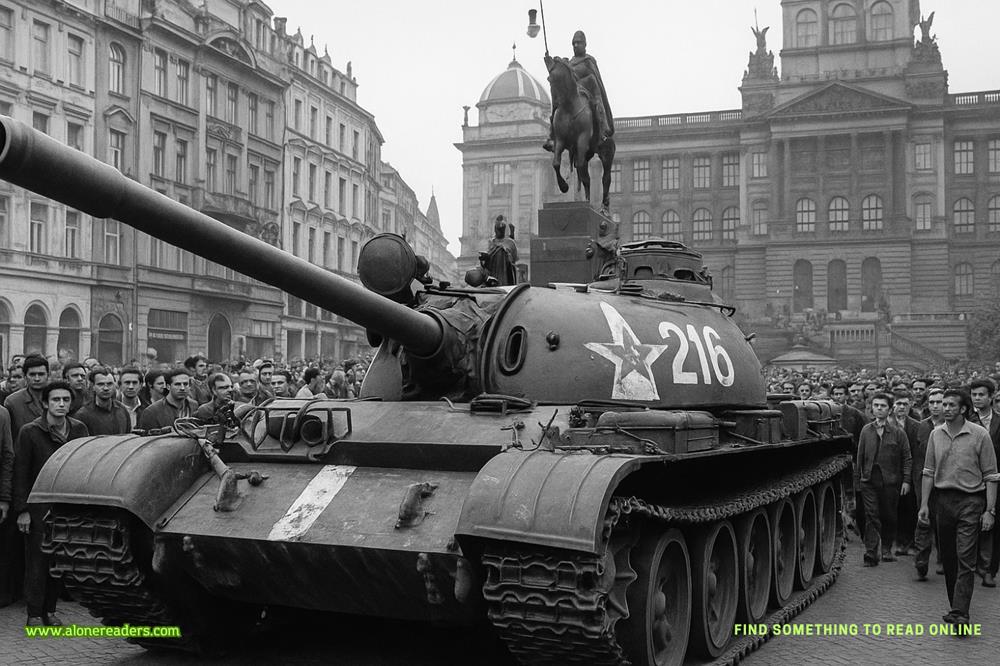
The situation reached a breaking point on the night of August 20-21, 1968, when nearly 200,000 troops from the Soviet Union, Poland, East Germany, Hungary, and Bulgaria invaded Czechoslovakia. The invasion was swift and overwhelming. Tanks rolled into Prague and other major cities, while Soviet forces occupied key government buildings and infrastructure. The Czechoslovak resistance was mostly peaceful; citizens gathered in the streets to protest, waving banners and singing patriotic songs, but they were powerless against the overwhelming military force. Dubček and other leaders were arrested and taken to Moscow, where they were pressured to reverse the reforms and submit to Soviet control.
The crushing of the Prague Spring had profound consequences. The Soviet Union reinstalled a hardline communist regime that rolled back all the liberalizing reforms. Dubček was eventually replaced by a more compliant leader, Gustáv Husák, who reinstated strict censorship and political repression. The invasion shattered the hopes of Czechoslovakia’s reformers and left a legacy of bitterness and disillusionment among its citizens. Internationally, the event exposed the brutal limits of Soviet tolerance for independence within its sphere of influence and reinforced the image of the USSR as a repressive superpower.
Despite its failure, the Prague Spring left a lasting imprint on Czechoslovak and world history. It demonstrated the deep desire for political freedom and human rights under communist rule, inspiring dissidents and reformers throughout Eastern Europe in the following decades. The event also exposed the fragility of the Soviet-led communist system and foreshadowed the eventual collapse of communist regimes in Eastern Europe more than two decades later. The courage of the Czechoslovak people and the idealism of their leaders continued to resonate, becoming a symbol of resistance against oppression.
In the broader context of the Cold War, the Prague Spring highlighted the ideological and geopolitical struggle between East and West. While Western democracies condemned the Soviet invasion, their response was largely limited to diplomatic protests, reflecting the tense balance of power and fear of escalating the conflict into a direct East-West confrontation. The episode underscored the reality that Eastern Europe’s autonomy was severely constrained by Soviet military and political might, and that reform movements faced grave risks when challenging the status quo.
In retrospect, the Prague Spring is remembered as both a tragic defeat and a beacon of hope. It showed that even within oppressive regimes, the human spirit’s yearning for freedom and justice persists. The reforms attempted by Dubček and his supporters remain a powerful example of peaceful political change and the complexities of reform under authoritarian rule. Their legacy influenced later movements for democracy and human rights not only in Czechoslovakia but throughout the Eastern Bloc, culminating in the Velvet Revolution of 1989 that finally ended communist rule in Czechoslovakia.
The Prague Spring of 1968 thus stands as a pivotal chapter in Cold War history, encapsulating the clash between authoritarian control and democratic aspirations. Though crushed by tanks and political repression, its memory continues to inspire advocates for freedom and reform around the world.



 Top 10 Highest-Paid Professions in the United States (2025): Salaries, Roles, and Career Paths
 Top 10 Largest U.S. Companies by Revenue in 2025 (Fortune 500 Analysis)
 Top 10 Highest-Earning Global Tech Companies in 2025: Revenue, Strategy, and Market Power
 Top 10 Highest-Earning Mobile Apps in 2025: Revenue, Monetization, and Market Dominance
 ZombieAgent: Inside the Zero-Click AI Attack That Turns ChatGPT Agents into Persistent Data-Leaking Zombies
 China’s Urban Air Is a Hidden Plastic Reservoir: Inside the Microplastic Clouds Over Megacities