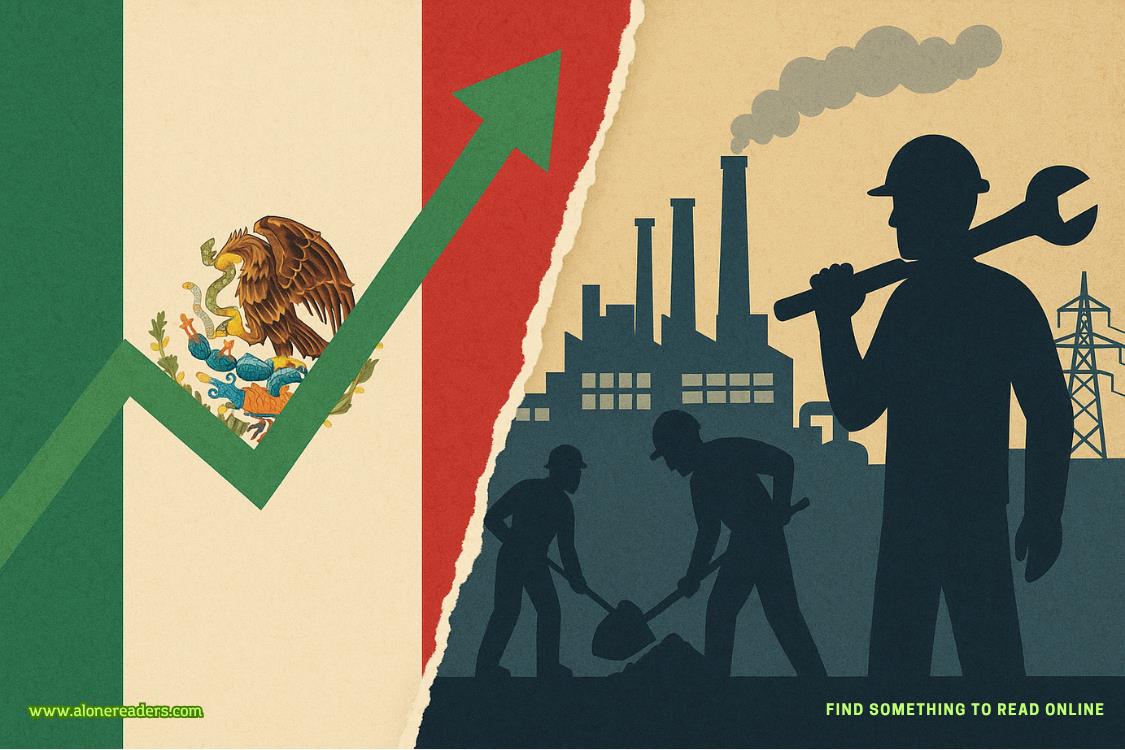
In 1994, Mexico embarked on a transformative economic journey by implementing the North American Free Trade Agreement (NAFTA), a landmark trade pact that linked Mexico closely with the United States and Canada. Under the leadership of President Carlos Salinas de Gortari, NAFTA was positioned as a vehicle for rapid economic growth, modernization, and integration into the global market. Salinas’ administration aggressively promoted the agreement as a way to stimulate foreign investment, increase exports, and foster overall prosperity. However, while the pact did generate significant economic expansion, it also ignited complex debates around labor rights, wage stagnation, and social inequality, laying bare the tensions between market liberalization and workers’ welfare.
NAFTA’s entry into force on January 1, 1994, marked a new era for Mexico’s trade and economic policy. For decades, Mexico had relied on protectionist policies and import substitution industrialization to nurture its economy. Salinas, however, championed a neoliberal agenda focused on privatization, deregulation, and export-led growth. NAFTA fit perfectly into this vision by removing tariffs and trade barriers between the three member countries. Mexican industries, especially manufacturing sectors such as automotive and electronics, experienced increased access to the vast U.S. and Canadian markets, which led to a surge in exports and foreign direct investment (FDI).
The economic data from the immediate post-NAFTA years painted a mostly positive picture. Mexico’s GDP growth accelerated, and its export sector expanded significantly. Manufacturing exports, particularly from maquiladoras—factories often located near the U.S. border—grew rapidly, creating millions of jobs. The agreement also facilitated technology transfer and integration into global supply chains. Many investors viewed Mexico as an attractive low-cost production hub with a growing skilled workforce. Salinas and his supporters highlighted these gains as proof that NAFTA would lift Mexico out of economic stagnation and poverty.
Despite these successes, the benefits of NAFTA were unevenly distributed, and the agreement generated significant concerns from labor advocates, unions, and many ordinary Mexican workers. One of the most pressing issues was the gap between economic growth and improvements in wages and working conditions. While maquiladoras and export sectors grew, many workers faced low pay, poor labor protections, and job insecurity. The influx of cheap labor-intensive manufacturing jobs did not translate into substantial wage increases for the broader workforce. This disparity led to criticism that NAFTA had created a “race to the bottom” in labor standards, pressuring workers to accept precarious conditions to remain competitive.
Labor unions in Mexico, which had historically been closely tied to the ruling Institutional Revolutionary Party (PRI), found their influence waning under the new economic order. Many union leaders were accused of being co-opted by political elites and employers, limiting their ability to effectively advocate for workers’ rights in the face of growing multinational corporations. NAFTA’s provisions themselves contained limited enforceable labor protections, with the agreement’s labor side accord established only as a parallel agreement rather than an integral part of the treaty. This weakened labor’s bargaining position and left many workers vulnerable.
Moreover, NAFTA’s impact on rural and agricultural communities was particularly fraught. The elimination of tariffs on agricultural products exposed Mexican farmers to direct competition from heavily subsidized U.S. agribusiness. Small-scale farmers struggled to compete with cheaper imports of corn and other staples, leading to income loss and increased rural poverty. This disruption fueled migration from rural areas to cities or across the U.S. border in search of work, intensifying social challenges. The rural backlash against NAFTA was one of the driving factors behind the Zapatista uprising in Chiapas, which erupted on the very day NAFTA took effect in 1994. The Zapatista movement highlighted the deep grievances of indigenous and rural populations who felt excluded from the benefits of economic reforms.
The tension between economic liberalization and social justice became a defining feature of Mexico’s experience with NAFTA. Salinas’ vision of modernization clashed with the realities faced by many workers and marginalized communities. While macroeconomic indicators showed progress, underlying issues of inequality and labor exploitation persisted. Critics argued that the economic growth driven by NAFTA was insufficient to generate broad-based development that improved living standards across all segments of society.
In response to mounting labor concerns, subsequent Mexican governments and civil society groups pushed for reforms to strengthen labor rights and improve working conditions. Although Mexico made some efforts to comply with labor provisions under NAFTA’s side agreements, progress was slow and uneven. The debate over how to balance competitiveness with workers’ welfare remains central to Mexico’s ongoing economic policy discussions.
Looking back, Salinas’ NAFTA implementation in 1994 was undeniably a watershed moment in Mexico’s economic history. It opened the country to unprecedented trade and investment opportunities, accelerating economic integration with its northern neighbors. Yet, the challenges that accompanied this growth—especially those related to labor and social equity—revealed the complexities of transitioning from a protectionist economy to an open-market system. The experience underscored that economic policies must carefully weigh both growth and social protections to achieve sustainable development.
In summary, Mexico’s NAFTA era under Salinas was characterized by a dual legacy. On one hand, it drove significant economic modernization and integration into the global economy, boosting exports and attracting foreign investment. On the other hand, it exposed deep labor vulnerabilities, wage stagnation, and rural dislocation, raising critical questions about who truly benefited from the reforms. The economic growth achieved came with social costs that continue to shape Mexico’s political and economic landscape decades later.



 Top 10 Highest-Paid Professions in the United States (2025): Salaries, Roles, and Career Paths
 Top 10 Largest U.S. Companies by Revenue in 2025 (Fortune 500 Analysis)
 Top 10 Highest-Earning Global Tech Companies in 2025: Revenue, Strategy, and Market Power
 Top 10 Highest-Earning Mobile Apps in 2025: Revenue, Monetization, and Market Dominance
 ZombieAgent: Inside the Zero-Click AI Attack That Turns ChatGPT Agents into Persistent Data-Leaking Zombies
 China’s Urban Air Is a Hidden Plastic Reservoir: Inside the Microplastic Clouds Over Megacities










