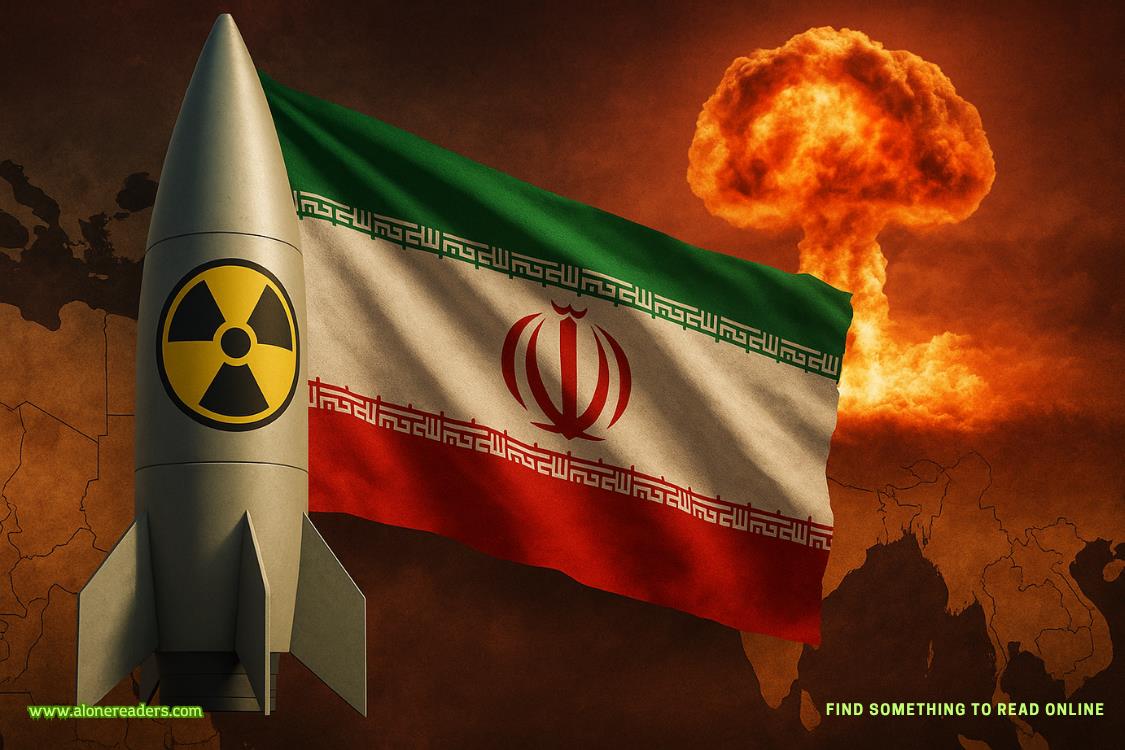
The Middle East has long stood at the crossroads of history, culture, and conflict, but few events could match the seismic shift that would occur if Iran were to successfully acquire nuclear weapons. Such a development would not only alter the political and military balance in the region but would also have deep repercussions for international security, global energy markets, and the complex web of alliances and rivalries that define Middle Eastern geopolitics. Understanding the effects and aftermath of Iran’s nuclear breakthrough requires examining the responses of key regional actors, the likely changes in deterrence dynamics, and the broader global implications.
First and foremost, Iran’s possession of a nuclear weapon would disrupt the long-standing nuclear monopoly held by Israel in the region. For decades, Israel’s undeclared but widely acknowledged nuclear arsenal has served as a strategic deterrent against existential threats. If Iran joins the nuclear club, Israel would no longer enjoy its unique position, raising the stakes of any potential confrontation. Israel’s traditional military superiority, especially its ability to strike Iranian nuclear facilities, would be severely constrained by the risk of nuclear retaliation. The very logic of deterrence would shift, making any direct conflict between the two countries exponentially more dangerous, as the possibility of escalation to nuclear exchanges, however remote, would now be present.
The immediate effect on neighboring Arab states would be profound. Many Gulf Cooperation Council (GCC) countries, especially Saudi Arabia and the United Arab Emirates, view Iran as both a rival and a potential threat due to historical, sectarian, and geopolitical tensions. The emergence of a nuclear-armed Iran would likely trigger a regional arms race, as Saudi Arabia and others would move rapidly to seek their own nuclear deterrents—either by accelerating indigenous nuclear programs or by seeking security guarantees, and perhaps even nuclear-sharing arrangements, with the United States or other Western powers. The proliferation of nuclear weapons in the Middle East would raise the risk of nuclear weapons or materials falling into the hands of non-state actors or rogue elements within unstable regimes, amplifying the global threat.
On the political front, Iran’s nuclear capability would embolden its regional foreign policy. Tehran would likely perceive itself as shielded from direct military intervention, giving it greater freedom to support proxy groups in Lebanon, Syria, Iraq, Yemen, and beyond. Iran’s leadership could use its newfound deterrent to project power more assertively, challenging the interests of the United States, Israel, and Saudi Arabia with less fear of conventional retaliation. This could lead to increased funding and logistical support for groups like Hezbollah, the Houthis, and various Shia militias, as Iran pushes its agenda in the ongoing struggle for regional dominance. Conversely, U.S. and Israeli freedom of action would be significantly constrained, making it more difficult to check Iranian influence through traditional military means.
The impact on internal Iranian politics should not be overlooked. The regime would gain domestic legitimacy by fulfilling a long-standing nationalist aspiration. Hardliners within Iran’s political system would likely be strengthened, arguing that the nuclear achievement validates their approach and deters foreign threats. However, this could also deepen the regime’s sense of isolation, as international sanctions and diplomatic pressure intensify in response to its nuclear defiance. The economic effects would be mixed: while the regime might feel more secure, continued or expanded sanctions could worsen the country’s economic difficulties, increasing domestic discontent over time.
For the global community, Iran’s nuclearization would pose a grave challenge to the international nonproliferation regime. The Treaty on the Non-Proliferation of Nuclear Weapons (NPT), already under strain from the actions of North Korea and the ambiguous status of other nuclear-armed states, would face a credibility crisis. Other countries, both within and outside the Middle East, might reassess their own security postures and nuclear ambitions, undermining decades of nonproliferation efforts. The United Nations Security Council would be forced to confront a new crisis of authority and effectiveness, likely leading to deep divisions among the major powers over how to respond.
Energy markets would also be affected by Iran’s nuclear status. The Middle East remains the world’s most important oil-producing region, and any instability—perceived or real—can send energy prices soaring. A nuclear-armed Iran might feel empowered to take bolder actions in the Persian Gulf, whether through blockades, threats to shipping lanes, or proxy conflicts. Even the perception of increased risk could drive up insurance premiums and investment costs, affecting the global economy. Conversely, some analysts believe that nuclear deterrence could bring a measure of stability, making large-scale wars less likely and reducing the frequency of direct military clashes. The outcome would depend heavily on the credibility of deterrence and the willingness of all parties to avoid catastrophic escalation.
U.S. policy in the region would be forced to adapt to the new reality. Washington has long committed itself to preventing Iranian nuclearization, but if that line were crossed, the credibility of American security guarantees would be called into question. Allies across the Middle East would demand reassurances, potentially drawing the U.S. deeper into regional defense arrangements or even prompting the redeployment of nuclear assets to the area. U.S.-Iran relations, already deeply strained, could oscillate between intensified confrontation and tentative engagement, as both sides recalibrate their strategies in light of the new balance of power.
Diplomatic efforts to contain or roll back Iran’s nuclear program would likely continue, but with reduced leverage. The possibility of negotiating limits on Iran’s arsenal, as was attempted with North Korea, could arise, but history suggests such efforts are fraught with difficulty and prone to setbacks. The trust deficit between Iran and the West, combined with the complex interplay of domestic politics in Tehran and Washington, would complicate any future arms control initiatives. Meanwhile, the specter of covert operations, sabotage, and cyber warfare would remain high, as rival states seek to delay or disrupt Iranian nuclear advancements through non-military means.
Public opinion in the region would also shift in unpredictable ways. For some, Iran’s nuclear achievement could be a source of nationalist pride and proof of resistance to Western pressure. For others, particularly in neighboring Sunni states, it would be seen as a grave threat, fueling anti-Iranian sentiment and prompting calls for their own governments to pursue matching capabilities. Sectarian tensions, already a defining feature of Middle Eastern politics, could be further inflamed by the new nuclear reality, adding another layer of complexity to an already volatile region.
In the aftermath of Iran’s nuclear breakthrough, the risk of miscalculation and unintended escalation would become a constant concern. Crisis management mechanisms, communication hotlines, and confidence-building measures would become more urgent, as the costs of misunderstandings or accidents would be far greater than before. The learning curve for new nuclear states is steep, and the history of the nuclear age is filled with close calls and near misses. With multiple actors, high levels of distrust, and active conflicts in play, the Middle East would become a far more dangerous place.
In summary, if Iran successfully makes a nuclear weapon, the political, military, and economic dynamics of the Middle East would undergo a profound transformation. The region would become more multipolar and uncertain, with heightened risks of proliferation, miscalculation, and proxy warfare. While the hope might exist that nuclear deterrence would prevent large-scale wars, the reality is that the introduction of nuclear weapons into an already volatile environment is more likely to increase instability, deepen divisions, and pose significant challenges for global security. The world would watch anxiously, knowing that the next chapter in Middle Eastern history could be shaped not just by ancient rivalries and new ambitions, but by the shadow of the ultimate weapon.



 Top 10 Highest-Paid Professions in the United States (2025): Salaries, Roles, and Career Paths
 Top 10 Largest U.S. Companies by Revenue in 2025 (Fortune 500 Analysis)
 Top 10 Highest-Earning Global Tech Companies in 2025: Revenue, Strategy, and Market Power
 Top 10 Highest-Earning Mobile Apps in 2025: Revenue, Monetization, and Market Dominance
 ZombieAgent: Inside the Zero-Click AI Attack That Turns ChatGPT Agents into Persistent Data-Leaking Zombies
 China’s Urban Air Is a Hidden Plastic Reservoir: Inside the Microplastic Clouds Over Megacities