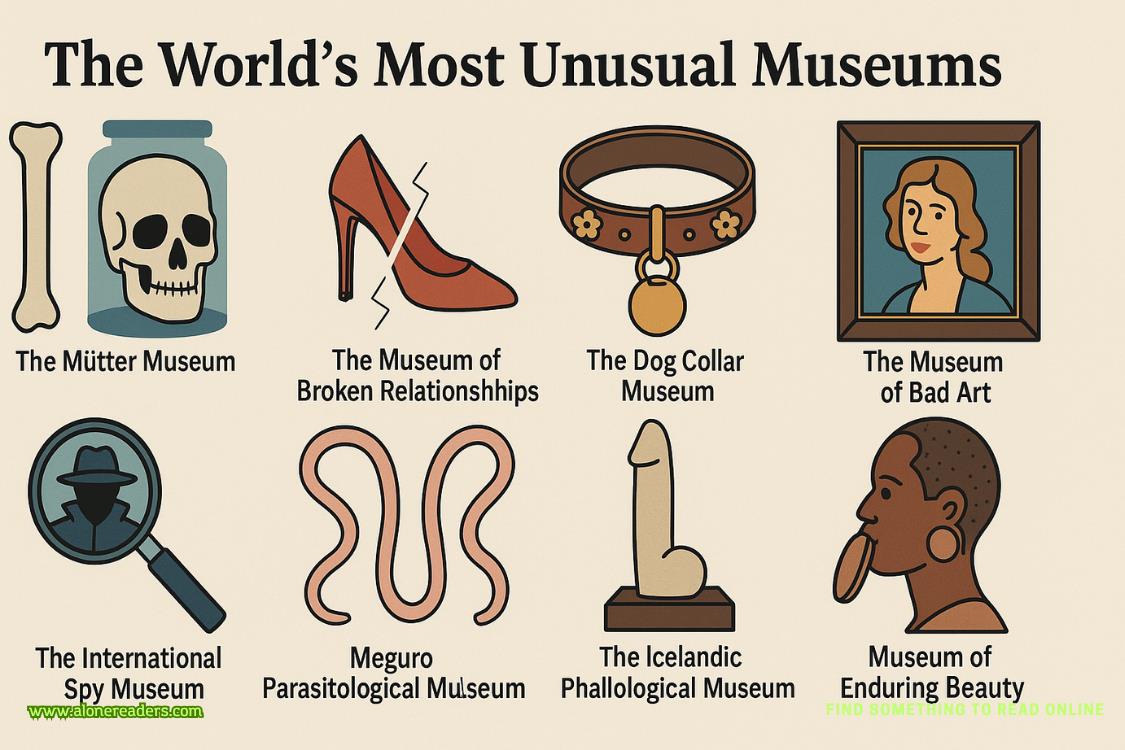
Museums have long been places where humanity’s greatest achievements, natural wonders, and cultural treasures are preserved and celebrated. But outside the well-trodden halls of the Louvre and the Smithsonian lie institutions that defy convention entirely—museums devoted to the odd, the obscure, and sometimes the downright bizarre. These unusual museums are more than mere curiosities; they reflect the eccentricities, passions, and overlooked stories of the human experience. Let’s journey through the world’s strangest museums, each with its own peculiar focus and a story worth telling.
Medical Marvels and Morbid Curiosities
One of the world’s most famous cabinets of medical oddities, the Mütter Museum in Philadelphia, is operated by The College of Physicians. This museum is not for the squeamish. Its meticulously curated galleries offer an intimate look at the history of medicine, with an emphasis on the abnormal and pathological. Here, visitors encounter preserved human organs, conjoined twins in glass jars, and an extensive skull collection used for the study of cranial disease.
The Soap Lady and Other Legends
Among its most legendary exhibits is the Soap Lady, a woman whose body turned into a waxy substance called adipocere after her burial. The Hyrtl Skull Collection—containing 139 skulls from various European backgrounds—challenges visitors to consider the relationship between identity, medicine, and mortality. The museum’s approach isn’t just sensational; each display is paired with educational material that delves into the science and ethics behind these medical marvels.
Love Lost, Art Gained
Housed in a historic baroque palace, the Museum of Broken Relationships in Zagreb is an emotional experience unlike any other. Instead of artifacts of historical value, this museum collects objects that symbolize personal heartbreak: a shoe, a wedding dress, an axe, or a simple note—each donated anonymously with a story attached.
Human Stories, Global Connections
Every exhibit is a vignette into someone’s emotional landscape, offering an intimate look at love, loss, and healing. The museum’s participatory approach—anyone can donate—has resulted in a deeply human, ever-changing collection that travels worldwide. Visitors often leave with a renewed sense of empathy, seeing the commonality in heartache across cultures and time.
A Noble Niche: The History of Dog Collars
At Leeds Castle in Kent, England, an entire museum is devoted to a single subject: dog collars. The Dog Collar Museum is home to over 130 rare and historic dog collars, ranging from fearsome iron collars of the Middle Ages—designed to protect hunting dogs from wolves—to ornate, jewel-encrusted creations owned by aristocratic canines.
A Window Into Social Status and Canine Care
This collection, which began as a bequest from historian Gertrude Hunt in memory of her husband, not only delights dog lovers but also sheds light on social class, fashion, and human-animal relationships through the centuries. Each collar tells a story: some are inscribed with messages, others bear evidence of their wear and tear in the field. It is a rare insight into the intertwined lives of humans and their most loyal companions.
Celebrating Artistic Misfires
The Museum of Bad Art, located in the basement of the Somerville Theatre near Boston, is dedicated to pieces of art too bad to be ignored. Its collection features paintings, sculptures, and drawings that—by traditional standards—miss the mark entirely, whether through odd perspectives, baffling themes, or eccentric execution.
From Laughter to Reflection
MOBA’s approach is both humorous and philosophical. Rather than ridiculing its artists, the museum celebrates the sheer determination, creativity, and sometimes accidental brilliance behind each work. Exhibits like “Lucy in the Field with Flowers” (a painting so beloved it was once stolen and later recovered) provoke laughter, but also invite questions about what art truly means—and who gets to decide what is ‘good’ or ‘bad.’
The Secret World of Espionage
While not as “bizarre” as others on this list, the International Spy Museum in Washington, D.C., stands out for its commitment to revealing the shadowy world of espionage. Its massive collection includes real-life gadgets—lipstick pistols, buttonhole cameras, and cipher machines—alongside detailed histories of famous spies from Mata Hari to Cold War agents.
Interactive and Immersive
Visitors are invited to adopt a cover identity and complete spy missions as they explore. The museum goes beyond simple displays to create an immersive, interactive environment. In doing so, it demystifies the reality of spycraft, highlighting the blend of psychology, technology, and daring that defines intelligence work.
The Intimate Lives of Parasites
For those intrigued by biology’s dark side, the Meguro Parasitological Museum in Tokyo is a hidden gem. Devoted exclusively to the study of parasites, this museum’s collection spans over 60,000 specimens—some preserved in fluid, others displayed in startling three-dimensional detail. The infamous 8.8-meter-long tapeworm draws gasps from even the most seasoned scientists.
Educational and Unsettling
Founded by Dr. Satoru Kamegai in 1953, the museum combines rigorous scientific research with public education. Its exhibits reveal not only the fascinating complexity of parasites but also their impact on human health and society. The museum underscores the importance of understanding parasites, especially in a world where globalization and climate change bring humans and parasites ever closer.
A Singular Collection: The Study of Phalluses
Perhaps the most famously unusual of all, the Icelandic Phallological Museum is devoted to the study of penises—from over 280 animal species, including whales, seals, and even humans. Located in Reykjavik, this museum’s founder, Sigurður Hjartarson, began the collection as a joke among friends, but it quickly grew into a scientific and cultural institution.
Challenging Taboos, Embracing Science
Far from being merely provocative, the museum offers insight into biology, mythology, and folklore. Detailed descriptions explain the significance of each specimen, and the displays challenge visitors to confront cultural taboos with curiosity and humor. Educational lectures and guided tours provide a thoughtful context, making the museum both entertaining and genuinely informative.
Redefining Beauty Through Pain
The Museum of Enduring Beauty in Malacca showcases global standards of beauty, focusing on practices that dramatically alter the human body. Exhibits feature artifacts and photographs of foot binding in China, neck stretching among the Kayan women of Myanmar, and lip plates from Africa’s Mursi tribe.
A Critical Look at Cultural Norms
The museum’s narrative isn’t voyeuristic—it encourages visitors to question the shifting definitions of beauty and the lengths to which people go to conform to social ideals. Through deeply researched explanations and immersive displays, the museum inspires reflection on the ways culture, history, and pain are often intertwined in the pursuit of beauty.
Sanitation Through the Ages
A testament to the vital but often overlooked role of sanitation in human history, the Sulabh International Museum of Toilets in New Delhi traces the evolution of toilets from ancient times to the present. Its displays range from ornately decorated commodes of 18th-century France to the latest innovations in eco-friendly sanitation.
Humor and Humanity
The museum approaches its subject with humor but never loses sight of its serious mission: promoting sanitation and dignity worldwide. Rare artifacts, detailed dioramas, and explanatory panels combine to make a surprisingly engaging case for the toilet as a key factor in human civilization.
Unusual museums offer more than oddities; they are windows into the diverse, inventive, and often unspoken sides of humanity. By exploring these unique institutions, we uncover the passions of collectors, the shifting boundaries of culture and science, and the common threads that connect us all—even in the strangest of places. In the world’s most unusual museums, curiosity finds its truest home.



 Top 10 Highest-Paid Professions in the United States (2025): Salaries, Roles, and Career Paths
 Top 10 Largest U.S. Companies by Revenue in 2025 (Fortune 500 Analysis)
 Top 10 Highest-Earning Global Tech Companies in 2025: Revenue, Strategy, and Market Power
 Top 10 Highest-Earning Mobile Apps in 2025: Revenue, Monetization, and Market Dominance
 ZombieAgent: Inside the Zero-Click AI Attack That Turns ChatGPT Agents into Persistent Data-Leaking Zombies
 China’s Urban Air Is a Hidden Plastic Reservoir: Inside the Microplastic Clouds Over Megacities










