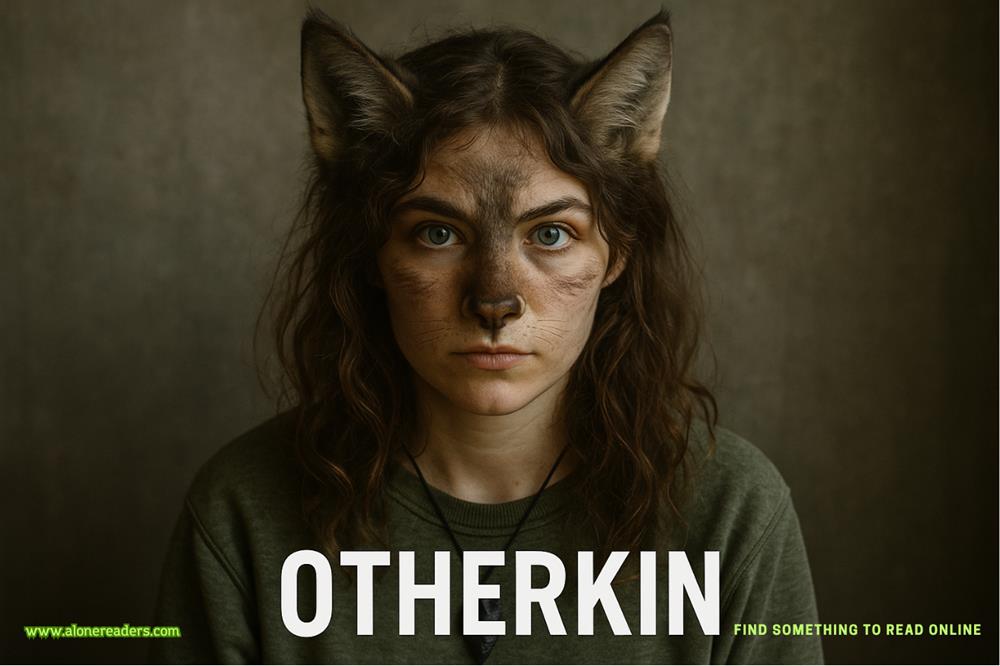
The term “Otherkin” refers to a subculture of people who identify as partially or entirely nonhuman in nature. For members of this community, this is not simply a matter of fantasy role-playing or artistic expression—it is a deeply held identity. They genuinely believe that their essence, spirit, or even ancestral origin is tied to something beyond humanity. The sources of these identities vary widely, with explanations rooted in spiritual phenomena, symbolic connections, metaphoric interpretations, or even beliefs about past lives and alternate realities. Although often misunderstood or met with skepticism, the Otherkin movement has persisted for decades and continues to evolve in the age of online communication.
For some, Otherkin identity is spiritual. These individuals may believe that their soul originates from a nonhuman source, such as mythical beings, animals, or extraterrestrial entities. They might feel that their consciousness once belonged to a dragon, an elf, a wolf, or another being entirely, and that this essence continues to define their inner self. This spiritual interpretation often draws from ideas of reincarnation, soul migration, and the existence of realms beyond the physical world. For others, the identity is more symbolic, where nonhuman traits and archetypes become powerful metaphors for personality, worldview, or emotional experience. A person who resonates deeply with the independence and solitude of a wildcat, for example, may see themselves as feline in essence, even if they acknowledge their human biology.
Another segment of the Otherkin community approaches their identity through ancestry, whether literal or metaphysical. While not supported by scientific evidence, some believe their lineage traces back to mythical or magical beings. Others interpret this in a more allegorical sense, feeling that their familial or cultural heritage embodies certain traits associated with these beings. In this way, ancestry becomes a form of spiritual heritage, not unlike how some cultures pass down sacred myths that shape a community’s sense of self.
The internet has played a central role in the growth and visibility of the Otherkin community. In the 1990s, the earliest Otherkin groups formed on forums and mailing lists, allowing individuals who felt different from mainstream society to connect and share their experiences. Today, platforms like Tumblr, Reddit, and Discord host thriving discussions where members explore identity, exchange resources, and offer emotional support. These spaces also serve as a refuge against the ridicule or dismissal often faced in offline environments. However, increased visibility has also brought increased scrutiny, with outsiders frequently misunderstanding Otherkin identity as mere role-play or attention-seeking behavior.
Within the community, diversity is vast. Some identify as “therians,” who believe their spirit or consciousness is that of an earthly animal. Others are “mythkin” or “fictionkin,” identifying with beings from folklore, mythology, or even fictional universes. The intensity of belief varies—some embrace a fully literal interpretation, while others frame their identity as a psychological truth rather than a metaphysical one. For instance, a dragonkin individual may believe they truly possess the soul of a dragon, whereas another might simply feel a deep psychological alignment with the traits and imagery of dragons.
Daily life for Otherkin individuals can range from subtle personal expression to active lifestyle choices. Many incorporate elements of their nonhuman identity into clothing, accessories, or art. Others adopt behaviors or mannerisms inspired by their kin type, such as animalistic movement, unique speech patterns, or rituals aligned with their spiritual beliefs. In some cases, these expressions are private, reserved for trusted friends or community gatherings, while others may be openly visible in public. For some, these acts are not performances but affirmations of who they are at the deepest level.
Critics of the Otherkin identity often challenge its legitimacy, arguing that there is no empirical evidence for nonhuman souls or ancestries. From a psychological perspective, some researchers suggest that Otherkin experiences could be linked to identity exploration, coping mechanisms, or the human tendency to create symbolic narratives about the self. However, supporters argue that the value of identity lies in its personal meaning, not in external validation. They note that many Otherkin lead healthy, functional lives, holding jobs, maintaining relationships, and contributing to society, all while embracing an identity outside the bounds of traditional human categories.
One of the more compelling aspects of the Otherkin phenomenon is its intersection with broader discussions about identity and authenticity. In a world increasingly open to fluidity in gender, sexuality, and culture, Otherkin identity challenges our assumptions about the limits of human self-conception. It asks us to consider whether identity must be tied to physical reality or whether the internal experience of self can transcend biology. While this does not mean society must universally accept every claim without question, it highlights the complexity of human subjectivity and the many ways people find meaning in their existence.
For many Otherkin, their identity is not about rejecting humanity entirely but rather acknowledging that their sense of self cannot be fully contained by it. They may feel “part human, part other,” existing in a space between worlds. Some describe this as a spiritual dual citizenship, belonging both to the physical realm of humans and to a metaphysical heritage of nonhuman origin. This duality can be a source of empowerment, offering a framework for understanding personal strengths, struggles, and emotional landscapes.
The Otherkin subculture remains niche but enduring, shaped by the interplay of ancient myth, modern psychology, and the boundless possibilities of the internet. Whether seen as a spiritual truth, a symbolic framework, or a form of deep personal expression, it represents a fascinating example of how identity can stretch beyond the boundaries of biology. In a time when more people are exploring nontraditional forms of self-definition, the Otherkin remind us that human imagination—and the need to belong—is not limited to human forms alone.



 Château de Vincennes: France’s Forgotten Royal Fortress and Medieval Stronghold
 Château de Carcassonne: Europe’s Greatest Medieval Citadel and Fortress
 Château de Chenonceau: The Castle Built by Remarkable Women
 Château de Chambord: France’s Magnificent Renaissance Castle and Architectural Wonder
 Tehri Dam: India's Tallest Dam and the Debate Behind It
 Bhakra Nangal Dam: India's Temple of Modern Development










