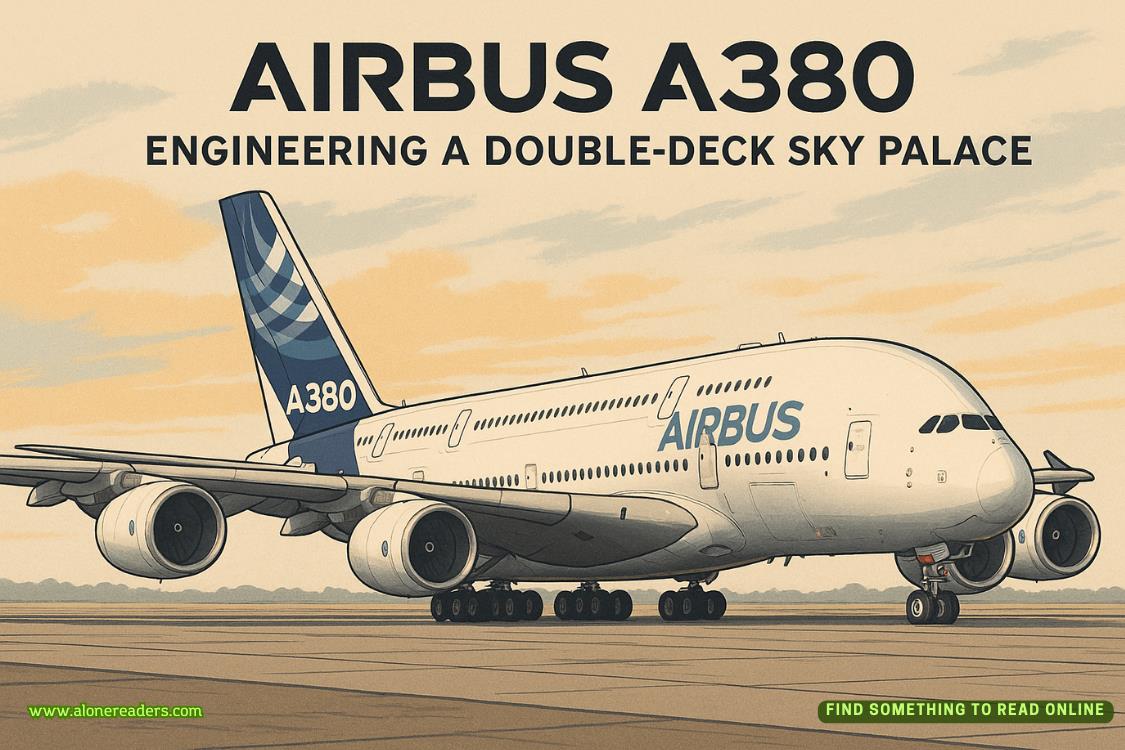
The Airbus A380 is often referred to as the “Sky Palace,” a name that captures both its massive scale and its reputation for luxury. Since its first commercial flight in 2007, this aircraft has stood as an engineering marvel, reshaping the way people imagine long-haul travel. Unlike any passenger jet before it, the A380 introduced a full-length double deck design, the widest cabins in the skies, and an unprecedented passenger capacity. For Airbus, the A380 was more than just another aircraft; it was a bold statement that the future of aviation could combine size, efficiency, and comfort in ways that had never been achieved.
When Airbus first conceptualized the A380, the main objective was to compete directly with Boeing’s dominance in the long-haul market, particularly with the Boeing 747, which had been known for decades as the “Queen of the Skies.” Airbus engineers set out to design an aircraft capable of carrying more passengers than ever before while delivering improved fuel efficiency and comfort. The result was a double-deck aircraft that could accommodate up to 853 passengers in an all-economy configuration, though most airlines chose layouts ranging from 450 to 600 passengers, balancing luxury with capacity. The engineering challenges were immense. Building an aircraft of this size required innovations in materials, aerodynamics, and systems integration that had never before been attempted on this scale.
Structurally, the A380 was a revolution. The aircraft features a wingspan of nearly 80 meters (261 feet), just under the maximum allowed for international airport gates. These wings were designed to handle the massive weight while reducing drag, incorporating advanced wingtip fences to improve efficiency. The use of advanced composite materials, including carbon-fiber-reinforced plastics and advanced alloys, helped reduce the aircraft’s weight without compromising strength. At takeoff, the A380 weighs over 1.2 million pounds, requiring four powerful Rolls-Royce Trent 900 or Engine Alliance GP7200 turbofans, each delivering over 70,000 pounds of thrust. Yet despite its size, the A380 manages to maintain impressive performance, cruising at Mach 0.85 with a range of over 8,000 nautical miles, enough to connect virtually any two major cities on the globe.
The double-deck layout of the A380 transformed passenger expectations. Airlines used the extra space to create cabins that went beyond the traditional seat configurations. Onboard lounges, bars, and even shower spas were introduced by carriers such as Emirates, Etihad, and Singapore Airlines. The upper deck, often reserved for business and first-class passengers, became a symbol of luxury air travel, with fully flat beds, private suites, and spacious seating. For economy passengers, the wider cabin meant more comfort, wider seats, and quieter flights thanks to advanced noise insulation. The A380 offered not only the largest aircraft interior but also one of the quietest, making long-haul journeys significantly more pleasant.
Behind the passenger experience, the A380 was a triumph of engineering systems. Its avionics suite was among the most advanced at the time of launch, with fly-by-wire controls, digital cockpits, and redundant safety systems. The cockpit itself was designed with a common Airbus philosophy, meaning pilots already trained on other Airbus models could transition more easily. The aircraft also featured state-of-the-art landing gear, with 22 wheels designed to distribute its enormous weight across airport runways and taxiways. Even ground handling had to be reimagined, as the A380 required specialized jet bridges, wider taxiways, and dual-level boarding gates to handle its unique size.
The environmental considerations were equally groundbreaking. Airbus designed the A380 to burn less fuel per passenger than the 747, reducing emissions on long-haul flights. With its ability to carry more passengers in a single flight, it offered airlines the potential for greater efficiency on high-demand routes. However, the very size of the aircraft limited its operational flexibility, as only certain airports were capable of accommodating it. This led to a unique situation where the A380 became the star of flagship routes—London to Dubai, New York to Singapore, Paris to Tokyo—while being impractical for smaller or less popular destinations.
Financially, the story of the A380 is complex. While Airbus invested billions of euros in its development, expecting demand for very large aircraft to grow, the reality of the aviation market shifted. Airlines increasingly favored smaller, more fuel-efficient twin-engine aircraft like the Boeing 787 Dreamliner and Airbus A350, which offered similar long-range capabilities without the limitations of airport infrastructure. The A380, while beloved by passengers, proved challenging for many airlines to operate profitably. In 2019, Airbus announced it would end production of the A380 by 2021 due to declining orders, marking the end of an era.
Yet, despite its production ending, the legacy of the Airbus A380 continues. The aircraft remains in service with several major airlines, particularly Emirates, which built much of its brand identity around the A380 fleet. Passengers still actively seek out flights on the A380 for its comfort and unique experience. For engineers, the lessons learned in designing and building such a colossal machine continue to influence new aircraft designs. Innovations in materials, systems integration, and cabin design pioneered in the A380 have filtered down into smaller, more efficient aircraft.
The A380 also symbolizes the pinnacle of ambition in commercial aviation. It was the largest passenger aircraft ever built, an icon that redefined the possibilities of global travel. While market realities limited its long-term production, it succeeded in pushing boundaries, both technologically and experientially. For many, flying on the A380 is not just another flight; it is an event, a chance to experience the closest thing to a flying palace. Its presence on airport tarmacs, towering over other aircraft, continues to inspire awe and admiration among aviation enthusiasts and casual travelers alike.
In retrospect, the Airbus A380 was as much a cultural achievement as it was an engineering one. It demonstrated what human ingenuity could accomplish when the goal was not just to meet demand but to redefine it. The double-deck sky palace will remain a symbol of luxury and ambition in aviation history, remembered for its grandeur, its quiet cabins, and its bold vision of connecting the world in unparalleled comfort. Even as the aviation industry pivots toward efficiency and sustainability, the Airbus A380 endures as a reminder that sometimes the most daring ideas leave the most lasting impact.



 Château de Vincennes: France’s Forgotten Royal Fortress and Medieval Stronghold
 Château de Carcassonne: Europe’s Greatest Medieval Citadel and Fortress
 Château de Chenonceau: The Castle Built by Remarkable Women
 Château de Chambord: France’s Magnificent Renaissance Castle and Architectural Wonder
 Tehri Dam: India's Tallest Dam and the Debate Behind It
 Bhakra Nangal Dam: India's Temple of Modern Development










