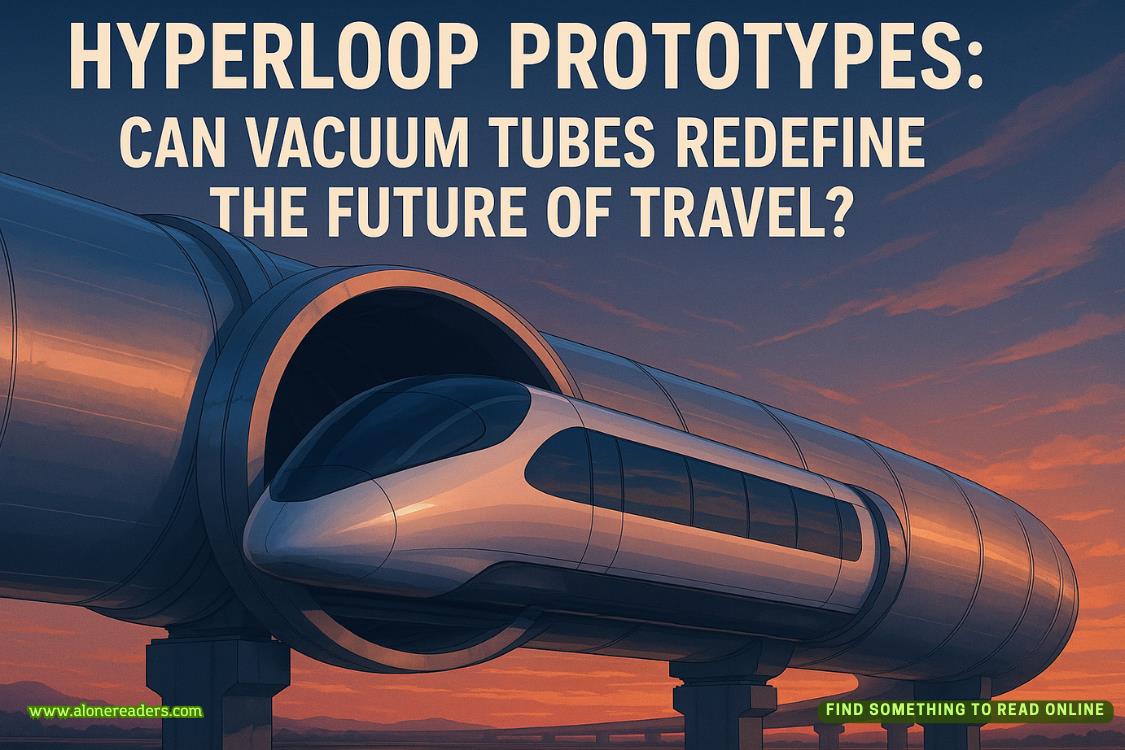
The idea of traveling in near silence at airline speeds inside sleek pods propelled through vacuum tubes has captivated engineers, investors, and travelers alike. This concept, widely known as the Hyperloop, first gained global attention when Elon Musk released a white paper in 2013 describing a futuristic mode of transportation capable of reaching speeds exceeding 1,000 kilometers per hour. Since then, several companies and research institutions have been racing to develop working prototypes, each with the ambition to revolutionize not just how fast we travel, but how cities and economies connect in the twenty-first century. The critical question, however, remains: can vacuum tubes truly change travel, or will the Hyperloop remain an ambitious dream?
At its core, the Hyperloop relies on the idea of minimizing friction and air resistance to allow passenger or cargo pods to move at extreme speeds. In conventional transport, whether it is a car, a train, or an aircraft, energy is lost fighting against drag and surface resistance. By placing pods inside low-pressure or near-vacuum tubes, engineers aim to drastically reduce drag, enabling far greater efficiency. The pods themselves are designed to levitate using magnetic levitation or air bearings, eliminating wheel-to-track contact. Propulsion can then be achieved using linear induction motors or magnetic forces. Theoretically, this allows pods to cruise at incredible speeds while consuming less energy compared to traditional rail or aviation.
Multiple organizations across the globe have undertaken prototype development. Virgin Hyperloop, perhaps the most publicized effort, has successfully conducted small-scale tests with passengers at its Nevada desert test site, reaching speeds of over 300 kilometers per hour in controlled runs. Other players, such as Hyperloop Transportation Technologies (HTT), Zeleros in Spain, and Hardt Hyperloop in the Netherlands, are experimenting with their own variations, focusing on capsule design, safety systems, and scalable infrastructure. Each prototype adds to the understanding of whether this concept can transition from the testing phase to full-scale commercial deployment.
One of the most compelling arguments for the Hyperloop lies in its potential to transform intercity travel times. A journey from Los Angeles to San Francisco that currently takes six hours by car or about one hour by plane (plus airport procedures) could theoretically be reduced to just 30 minutes in a Hyperloop system. This could make travel between cities faster than flying, while avoiding many of the inefficiencies of air travel, such as long check-ins, baggage handling, and security delays. If implemented on a continental scale, Hyperloop corridors could reshape commuting, allowing people to live in one city and work in another hundreds of kilometers away without sacrificing time.
The sustainability argument is equally significant. With global pressure mounting to reduce carbon emissions, the Hyperloop promises to be powered by renewable energy, particularly solar panels along tube structures. By minimizing friction and drag, its energy consumption per passenger is projected to be significantly lower than air travel and potentially even better than high-speed rail. This combination of speed and sustainability positions Hyperloop as a future-forward alternative to carbon-heavy aviation and congested highways, aligning with worldwide goals for greener transport.
Despite the optimism, formidable challenges remain. Engineering vacuum-sealed tubes across hundreds of kilometers presents massive technical and economic obstacles. Maintaining low-pressure conditions is energy-intensive and vulnerable to leaks or external damage. Passenger safety is another major concern. At speeds approaching those of commercial aircraft, even minor malfunctions could be catastrophic. Emergency evacuation procedures within sealed tubes, rapid deceleration systems, and fail-safe designs are all still being researched. Furthermore, the infrastructure costs are staggering. Estimates range into tens of billions of dollars for a single route, comparable to or exceeding high-speed rail projects. Convincing governments and investors to commit such capital to an unproven system is a significant hurdle.
Another layer of complexity is regulation. Unlike trains or airplanes, the Hyperloop does not fit neatly into existing transportation categories. Safety standards, insurance frameworks, and international guidelines will need to be developed from scratch. Legal battles over land acquisition and urban integration also loom large, particularly in densely populated regions. Communities may resist construction through their areas, given the sheer scale of tube infrastructure required. Until regulatory clarity is achieved, many large-scale projects may remain stalled.
Nonetheless, prototypes play a crucial role in bridging the gap between theory and reality. Small-scale test tracks provide valuable data on pod dynamics, magnetic levitation stability, passenger comfort, and energy efficiency. They allow engineers to refine designs, enhance reliability, and identify unforeseen challenges. As technology matures, incremental advances may first be applied to cargo transport rather than passenger services. Moving goods through Hyperloop corridors could be a lower-risk application, easing supply chain bottlenecks and demonstrating economic viability before carrying human passengers becomes widespread.
The vision of Hyperloop also extends beyond transport. Advocates believe it could fundamentally reshape urbanization patterns. Cities linked by Hyperloop lines could function more like interconnected hubs rather than isolated centers, reducing pressure on overcrowded urban cores. Workers could commute across regions without being tethered to expensive housing markets. Businesses could expand logistics operations with unprecedented speed. The knock-on effects could redefine real estate values, regional economies, and even national competitiveness.
Skeptics, however, argue that the Hyperloop may ultimately remain a technological curiosity rather than a mainstream mode of transport. Critics point out that high-speed rail, while slower, is already proven, safe, and increasingly efficient. Airlines continue to modernize fleets with fuel-efficient aircraft. The question becomes whether the enormous investment required for Hyperloop is justified when existing technologies could meet most needs with incremental improvements. Moreover, the cost of tickets, once infrastructure is considered, may not be affordable for the average traveler, restricting Hyperloop’s use to premium passengers rather than mass adoption.
Despite these debates, the allure of Hyperloop prototypes persists. They embody the spirit of technological disruption, challenging centuries-old assumptions about how humans move across land. Every test track and experimental pod pushes the limits of engineering and inspires further investment in futuristic infrastructure. Even if Hyperloop itself does not achieve mainstream deployment, the research it stimulates in aerodynamics, materials science, and energy efficiency may benefit other sectors. Much like the space race yielded countless spin-off technologies, the Hyperloop race may generate innovations far beyond its original scope.
The future of Hyperloop travel remains uncertain, but it is undeniable that its prototypes have already sparked a global conversation about what transportation could look like in the decades to come. As cities swell, carbon reduction goals intensify, and global connectivity deepens, the demand for revolutionary solutions grows stronger. Whether vacuum tubes truly change travel or simply inspire the next generation of engineers, the Hyperloop marks a bold step toward reimagining the way we connect with one another in a rapidly shrinking world.



 Château de Vincennes: France’s Forgotten Royal Fortress and Medieval Stronghold
 Château de Carcassonne: Europe’s Greatest Medieval Citadel and Fortress
 Château de Chenonceau: The Castle Built by Remarkable Women
 Château de Chambord: France’s Magnificent Renaissance Castle and Architectural Wonder
 Tehri Dam: India's Tallest Dam and the Debate Behind It
 Bhakra Nangal Dam: India's Temple of Modern Development










