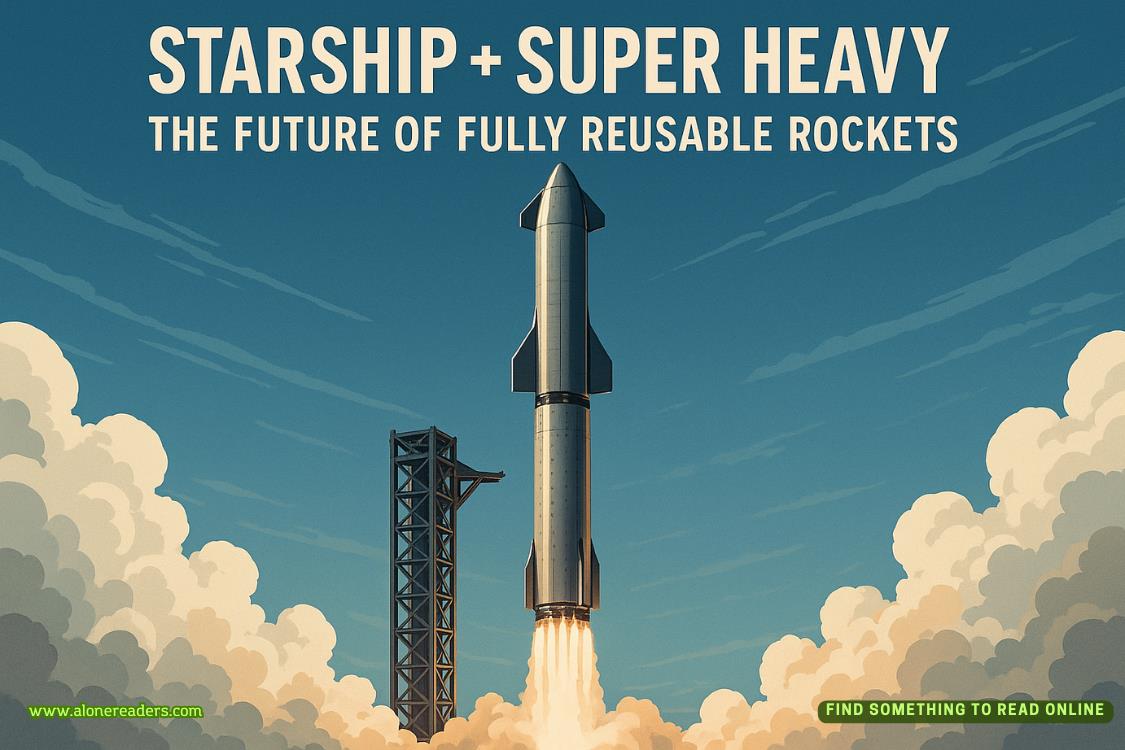
The development of SpaceX’s Starship and Super Heavy represents one of the most ambitious engineering projects in modern aerospace history. Designed as a fully reusable rocket system, the Starship-Super Heavy combination aims to redefine space travel, cut launch costs dramatically, and open the door to missions beyond Earth’s orbit. Unlike previous rockets that were expendable or partially reusable, this two-stage vehicle is intended to return both its booster and spacecraft for rapid turnaround flights, making space transport more akin to commercial aviation than one-off experimental ventures. The implications extend far beyond the technical novelty: a successful fully reusable rocket would revolutionize economics, logistics, and the scope of human exploration in space.
At its core, the system consists of two main components: Super Heavy, the massive booster responsible for lifting Starship out of Earth’s atmosphere, and Starship itself, the spacecraft that carries crew, cargo, or satellites to orbit and beyond. Standing nearly 120 meters tall when stacked together, the vehicle is the tallest and most powerful rocket ever developed, dwarfing even NASA’s Saturn V that carried Apollo astronauts to the Moon. The Super Heavy booster is equipped with dozens of Raptor engines, SpaceX’s methane-fueled powerhouses, providing over twice the thrust of the Saturn V. On top, Starship acts as a second stage and spacecraft, designed to be versatile enough to perform a wide range of missions: from satellite deployment to deep space exploration.
One of the defining features of this system is full reusability. Super Heavy, after propelling Starship toward orbit, will separate and perform a controlled return to Earth, using grid fins and engine burns to precisely land back at the launch site or on an ocean platform. Meanwhile, Starship itself is designed to withstand the rigors of reentry, protected by advanced heat shield tiles, and to land vertically under its own power, much like SpaceX’s Falcon 9 boosters but on a larger and more complex scale. This full-cycle reusability is intended to slash costs from tens or hundreds of millions per launch to mere millions or even less, fundamentally changing the business model of space access.
The engineering challenges behind this vision are immense. Both stages must endure extreme stresses during ascent and reentry, requiring materials that balance lightweight construction with high durability. Starship’s stainless-steel structure, while unconventional compared to traditional aerospace composites, provides strength, resistance to thermal expansion, and cost-effective production. Its heat shield consists of thousands of hexagonal ceramic tiles that can withstand the fiery plunge back through Earth’s atmosphere. Meanwhile, the Raptor engines themselves represent a leap in propulsion technology. Using methane and liquid oxygen as propellants, they are optimized for both power and reusability, capable of multiple restarts and refurbishments. Methane, unlike kerosene, offers cleaner combustion and the possibility of being produced on Mars, which aligns directly with long-term interplanetary colonization plans.
The broader implications of Starship and Super Heavy’s success extend well beyond Earth orbit. NASA has already selected a modified version of Starship as part of its Artemis program, aiming to return astronauts to the Moon’s surface. Unlike the Apollo lunar module, which was limited in size and capacity, Starship could deliver massive payloads, infrastructure, and crew in much larger numbers. Beyond the Moon, SpaceX envisions Starship as the backbone of Mars colonization. With its large cargo capacity and ability to be refueled in orbit, it could enable the transportation of habitats, vehicles, supplies, and eventually large groups of settlers to the Red Planet. The long-term strategy involves creating a self-sustaining settlement on Mars, something that until now has been confined to science fiction.
Another area where Starship could transform spaceflight is satellite deployment and commercial ventures. Its vast payload bay—significantly larger than any rocket in history—could launch entire constellations of satellites in a single mission, reducing the number of launches required for global internet or communication networks. It also opens the possibility for space-based manufacturing, large telescopes, or even space tourism. If successful, companies could feasibly launch industrial-scale projects into orbit at a fraction of today’s costs, accelerating technological growth in ways difficult to predict.
Yet, despite the promise, Starship remains a work in progress. Test flights have demonstrated both the risks and achievements of pushing aerospace engineering to its limits. Early prototypes suffered explosive failures during landing attempts, but each iteration brought improvements in engine reliability, flight control, and heat shield durability. SpaceX’s rapid test-and-learn approach has allowed the program to make visible progress in years rather than decades. Still, challenges remain in scaling up production, perfecting the heat shield for multiple reentries, achieving reliable orbital refueling, and satisfying stringent regulatory requirements for human spaceflight. Until these are resolved, the dream of routine, low-cost, fully reusable launches will remain aspirational rather than operational.
Financially, the project represents a high-stakes gamble. SpaceX has invested billions of dollars into development, often funding the work through its successful Falcon 9 launches and the Starlink satellite network. The long-term bet is that once Starship becomes operational, its low costs and high capabilities will dominate the global launch market, rendering older rockets economically obsolete. This bold strategy carries risks, but if successful, it could cement SpaceX’s dominance in space transport for decades to come.
On a geopolitical scale, Starship also carries significance. A fully reusable heavy-lift system provides unmatched capabilities for both civil and military applications. Nations and competitors are closely watching SpaceX’s progress, as success could shift the balance of power in space exploration and utilization. While NASA has chosen to partner with SpaceX, other nations may pursue parallel technologies to ensure they are not left behind in what some describe as the next space race.
Looking forward, the Starship and Super Heavy project embodies both vision and uncertainty. It represents humanity’s drive to push boundaries, achieve the seemingly impossible, and expand into new frontiers. Whether for commercial, scientific, or exploratory purposes, a fully reusable rocket would mark a fundamental turning point in our relationship with space. The leap from expendable launch vehicles to a system that can be reused dozens or hundreds of times mirrors the transition in aviation from experimental flights to mass commercial air travel. If successful, it will not only change how we reach orbit but also redefine what destinations are within humanity’s grasp.
In essence, Starship and Super Heavy are more than just rockets—they are a pathway toward a future where humanity is not confined to Earth. They symbolize the ambition to make interplanetary life a reality, lower the barriers of access to space, and set the stage for an era of unprecedented exploration. The dream of cities on Mars, permanent lunar bases, and industries in orbit may seem distant, but with every test flight, that dream edges closer to reality. The outcome of this ambitious project will shape not just the future of space exploration but the trajectory of humanity itself.



 Château de Vincennes: France’s Forgotten Royal Fortress and Medieval Stronghold
 Château de Carcassonne: Europe’s Greatest Medieval Citadel and Fortress
 Château de Chenonceau: The Castle Built by Remarkable Women
 Château de Chambord: France’s Magnificent Renaissance Castle and Architectural Wonder
 Tehri Dam: India's Tallest Dam and the Debate Behind It
 Bhakra Nangal Dam: India's Temple of Modern Development